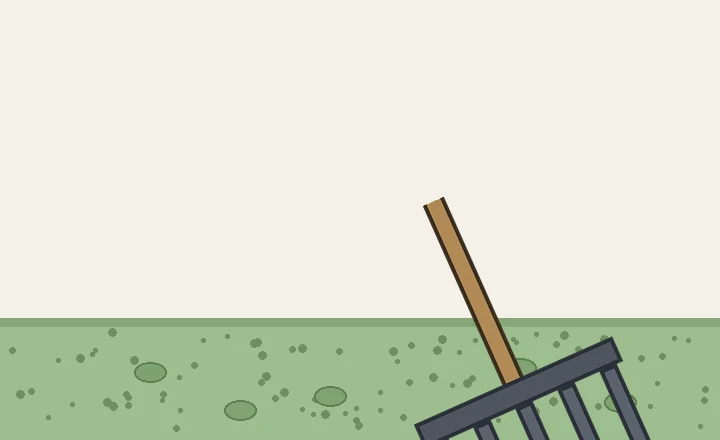
What a broadfork is
A broadfork, also called a broad fork, has a horizontal bar carrying several long, strong tines and a tall handle at each end. The bar is built to take the weight of your boot as the tines enter the ground, and the two handles give leverage when you pull them back. It is a loosening tool, not a lifting tool: it fractures soil in place instead of bringing the lower layers to the surface.
Why loosen without turning
Repeatedly inverting the soil with a spade breaks up its structure, brings buried weed seeds up to germinate, and buries the organic matter and soil life that work at the surface. Forking instead fractures the ground in place, which improves aeration and drainage while keeping the soil profile intact. For that reason, forking is the preferred way to prepare new beds and to work established beds in no-dig and low-disturbance systems.
How to use a broadfork
Work when the soil is moist but not waterlogged, so it fractures rather than smears. Check the area for buried irrigation, cables and other services first. Set the tines across the bed, step on the horizontal bar to drive them in, then pull both handles back together to lift and fracture the soil slightly without turning it over. Return the handles upright, withdraw the tines and move backwards along the bed in overlapping passes. Keep your back neutral, use your body weight rather than a twisting pull and stop if the tool meets an obstruction.
Opening a new bed
To open a new bed with minimal disturbance, remove persistent weeds and surface debris, then broadfork from one end in overlapping passes without lifting or flipping clods. Add compost or another suitable amendment at the surface after loosening. This is broadforking, not conventional double digging: double digging excavates the topsoil in sections so the subsoil can be loosened beneath it, whereas a broadfork can loosen the profile without first removing that upper layer.
Broadfork versus digging fork and spade
A digging fork has longer, narrower tines and is better for lifting root crops, turning compost and working around established roots. A spade inverts the soil and is the wrong choice when you want to preserve structure. A broadfork sits between the two: wider and heavier than a digging fork, with tines made for fracturing rather than lifting. If you mainly lift crops or turn compost, a digging fork is the better buy; if you prepare beds and want to avoid turning the soil, the broadfork is the purpose-built tool.
When a broadfork is the wrong tool
The wide head is awkward in narrow borders, containers and around dense root systems, where a digging fork or hand fork works better. It is also difficult to use in very stony ground or heavy clay when wet. Because the tool is heavy and the strokes are repetitive, take regular breaks and keep your back neutral; if you have a back condition, choose a lighter tool or get help with large areas.
Care and maintenance
Knock off clinging soil without striking the head against hard masonry, wash persistent dirt away and dry the metal before storage. Check that the tines are straight and firmly joined to the bar, and that both handles and their joints show no cracks or movement. Straightening hardened or damaged tines can cause them to fail, so seek a competent repair or replace the tool when necessary. Store the broadfork under cover, with a light coating of oil on non-stainless steel before long storage.
Sources and review basis
- University of Minnesota Extension, reducing tillage in your garden — broadfork construction and low-disturbance use.
- Health and Safety Executive, manual handling technique — basis for the posture and lifting guidance in the usage section.
- Penn State Extension, using the right tool is self-care — basis for matching the tool to the task and the comparison section.
- BBC Radio 4, Gardeners' Question Time, Lewes episode — practical context for forking versus digging in established beds.
The distinction between broadforking and conventional double digging follows the different physical operations involved: a broadfork loosens from the surface, while double digging excavates the upper layer to reach the subsoil. This page was reviewed against the cited sources and the site's tool-reference conventions in August 2026.