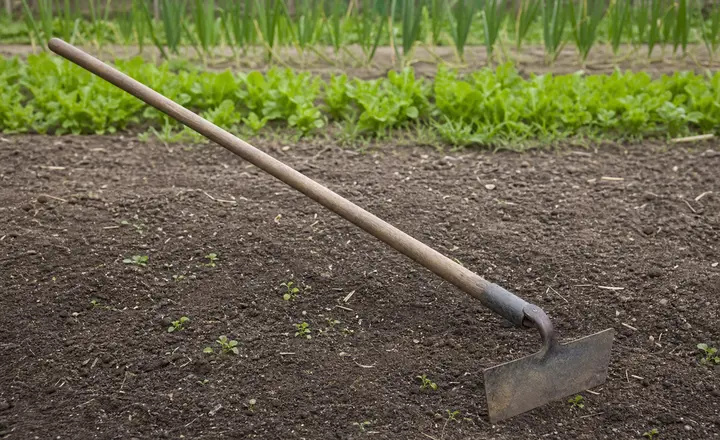
Choose the hoeing action first
A draw hoe has a blade set roughly across the shaft and is pulled toward the user. It can make shallow planting drills, draw soil around crops and deal with slightly larger weeds. A Dutch or push hoe slices on a forward stroke, while a stirrup or oscillating hoe cuts on both the push and pull. The latter two are efficient between established rows where the surface is reasonably even.
Head width should reflect crop spacing. A broad blade clears open beds quickly but risks crop stems in close rows; a narrow hoe gives more control. The cutting edge should be replaceable or easy to sharpen, and the head must be firmly fixed at an angle that works with the intended motion.
Fit the shaft to an upright stance
Choose a shaft long enough to work with relaxed shoulders and only a slight forward lean. Grip it lightly and test whether the cutting edge sits flat when your hands are in a natural position. A tool that forces you to stoop or lift the blade on every stroke will become tiring over a full bed.
Weight can help a draw hoe bite, but a light, balanced head is usually better for frequent surface hoeing. Clear the bed of hose lines, labels and loose netting that could catch the blade before starting.
Hoe early, shallowly and often
Target weed seedlings on a dry or drying day. Slice just below the surface so roots are separated from shoots, taking care around shallow-rooted crops. Deep chopping uses more effort, disturbs soil structure and exposes more buried weed seed.
Work facing the area being cut and keep feet outside the blade's path. Leave annual weed seedlings on a dry surface to desiccate if they carry no mature seed. Remove perennial roots and any seeding weeds, because chopping or leaving them in place may spread the problem.
Maintain a clean cutting edge
Brush soil from the head, dry it and inspect the attachment after use. Restore the original bevel with a file when the edge becomes rounded; secure the head and wear eye protection while sharpening. A modestly sharp edge should slice seedlings without requiring force.
Hang the hoe under cover rather than leaving the head in wet soil. Check wooden shafts for splinters and metal shafts for bends or corrosion, especially at the joint with the head.