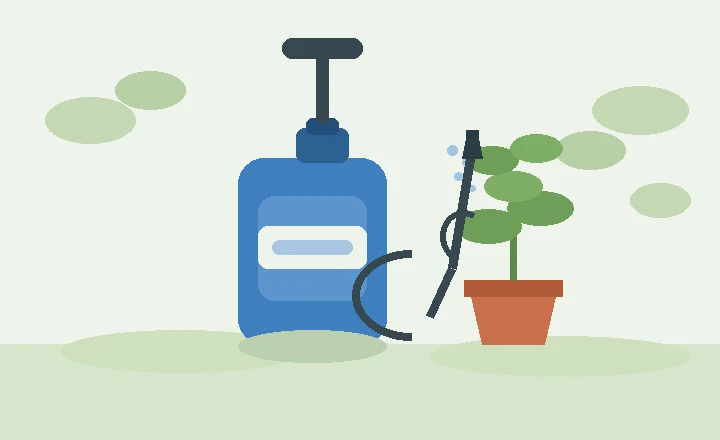
Match the sprayer type to the job
Trigger sprayers hold half a litre to two litres and are squeezed by hand. They suit small, precise jobs: spot-treating a few plants, drenching seed trays, or applying a ready-mixed product to containers. The pressure is low and the range short, so they are not a good fit for open beds.
A hand pump, or pump-up, sprayer is the standard choice for a vegetable garden or allotment. You pump the tank to build pressure, then spray from a wand with an adjustable nozzle. A four to eight litre tank covers most home growing areas in a single fill, and the unit is light enough to carry one-handed while you walk the rows.
Battery or electric pressure sprayers hold pressure automatically, which reduces pumping on larger areas, but they are heavier, depend on a charged battery and cost more. Knapsack sprayers carry larger volumes for bigger plots and are worn on the back. Choose by the area you actually cover and how often: a 5 litre pump-up handles most home gardens, and a trigger sprayer is enough if you only treat a few pots at a time.
Choose capacity, pressure and nozzle
Size the tank to the job, not to the shelf. A tank that is too small means constant refilling mid-bed; one that is too large is heavy to carry and tempts you to mix more product than you will use. Most garden sprayers deliver a few bar of pressure, roughly 30 to 60 psi, which is plenty for foliage and soil drenching. Higher pressure gives a finer mist and longer reach, but it also increases drift onto nearby plants and people.
The nozzle sets the pattern. A fan pattern wets a wide area evenly and is the default for foliage; a solid jet reaches further and suits targeting a single plant or drenching a root zone. Check that the nozzle turns smoothly, that the pattern is even across its arc, and that the tip can be cleared when it clogs. Polyethylene tanks are light and chemical-resistant; look for a unit with a replaceable nozzle, seals and gasket, because those are the parts that wear.
Keep the roles separate. Use a dedicated, clearly labelled sprayer for feeds and treatments, and never use a food or drink container for mixed products, as the watering can guide advises for its own container. If a sprayer has held a treatment, it should not later be used for drinking water, food washing or anything that touches the mouth.
Mix and apply at the label rate
Before any product goes in the tank, try the non-chemical options first. The RHS guidance on avoiding chemical use recommends healthy growing conditions, good spacing, regular inspection and targeted removal as the first line of control, with chemical treatment only as a last resort used in a minimal, highly targeted way.
When you do treat, the product label is the instruction manual. The RHS guide to chemical labels explains that the label states when, where and how to use the product, the dose rate, the personal protective equipment required and the interval before re-treatment or harvest. Measure the product with a proper measuring device, add it to a partly filled tank, swirl to mix, then top up with water. Do not guess the dose from the cap or the bottle neck.
If the label gives a rate per area, calibrate the sprayer with clean water before mixing any product. The Penn State Extension calibration guide describes the standard method: spray a measured area at your normal pace, pressure and nozzle setting, then measure how much water the sprayer used. If the application volume is unsuitable, change the walking speed, pressure or nozzle as appropriate and repeat the water-only test. Once the sprayer is calibrated, use its measured application volume and the label rate to calculate how much product belongs in the tank; never change the labelled dose to compensate for poor calibration.
Apply on a calm, dry day with no rain close, so the spray stays where you aim it and does not wash off. Spray until the foliage is evenly wetted, not dripping, and keep the spray off plants, flowers and water features that are not the target. Wear the gloves and eye protection the label requires, and keep children and pets out of the area while it is wet.
Clean the sprayer after every use
Rinse the sprayer promptly, not at the end of the week. Give the tank, wand and nozzle several washes of water, and spray the diluted rinse water onto the plants or areas listed on the product label, rather than pouring it onto paths or into drains, as the RHS cleaning advice recommends. Run the rinse through the wand and nozzle, remove the nozzle tip and clear the orifice, and empty the tank completely.
Do not store made-up solutions. The RHS storage guide notes that diluted mixtures lose effectiveness quickly and should be used up or disposed of, not kept in the tank. Store the empty, rinsed sprayer in a cool, dry, frost-free place with the lid off so it dries out, and keep any products it has held in their original containers with the tops firmly closed.
Check the seals, gasket and pump plunger at each cleaning. A weeping pump or a nozzle that will not hold a pattern is usually a worn seal, and replaceable parts are cheap compared with a new unit. Retire a sprayer whose tank is cracked, whose pump no longer holds pressure or whose fittings cannot be cleaned, and store the unit out of reach of children, in a locked cabinet if you keep chemicals at all.
Sources and review basis
- Understanding and avoiding chemical use — Royal Horticultural Society
- Storing and disposing of chemicals safely — Royal Horticultural Society
- Chemical labels explained — Royal Horticultural Society
- Calibration How Tos: How to Calibrate a Backpack Sprayer — Penn State Extension
Non-chemical-first treatment, rinsing the unit and disposing of rinse water follow the RHS chemical use guidance; storage, original-container and no-stored-solutions rules follow the RHS storage guide; label reading follows the RHS chemical labels guide; and the calibration method follows Penn State Extension. Sprayer types, tank sizes and pressure ranges are working generalisations for home gardens, so adjust to your area, and the product label and the manufacturer's instructions for a specific unit take precedence.