Choose for the paths and materials
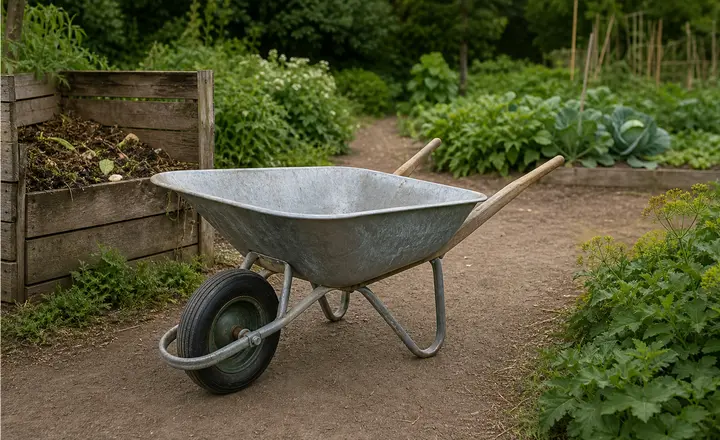
Measure gates, paths, ramps and storage before comparing tray volume. A deep tray contains compost and loose crops, while a strong shallow tray can make loading soil, stones or logs easier. Metal trays tolerate rough material but can corrode; moulded trays resist rust and are lighter, though quality and repairability vary.
A single wheel turns easily on narrow paths but relies on the user for side-to-side stability. Twin wheels can feel steadier on level ground yet need more width and resist tight turns. Choose the arrangement for the real route rather than the largest possible load.
Check handles, frame and tyre
Stand between the handles and lift an empty barrow. The grips should be comfortable, far enough apart for a stable stance and high enough to avoid excessive bending. Check that the frame supports the loaded part of the tray and that all fasteners are present and tight.
Pneumatic tyres cushion rough ground and grip well but need pressure checks and puncture repair. Solid tyres avoid punctures but transmit more shock and may be heavier. Confirm that replacement wheels, bearings or bushes are available.
Load over the wheel
Place dense material low and toward the wheel so the axle carries much of the weight. Keep the load even from side to side and below the point where it blocks your view or spills. Test-lift the handles before setting off; divide the material if steering or stopping feels uncertain.
Plan the route, clear obstacles and use deliberate steps, particularly on slopes or wet ground. Push rather than pull in normal use, avoid sharp turns at speed and never allow passengers to ride in the tray. When tipping, keep a firm stance and control the rising handles.
Maintain a smooth-running barrow
Remove wet soil and corrosive residues promptly. Let the tray dry, touch up damaged protective finishes where appropriate and store the barrow under cover. Do not leave water standing in the tray.
Keep a pneumatic tyre at its specified pressure and inspect all tyres for damage. Tighten tray and frame fasteners, check the axle for play and lubricate serviceable bearings as recommended. Replace split handles or cracked frames before carrying another load.