Quick answer
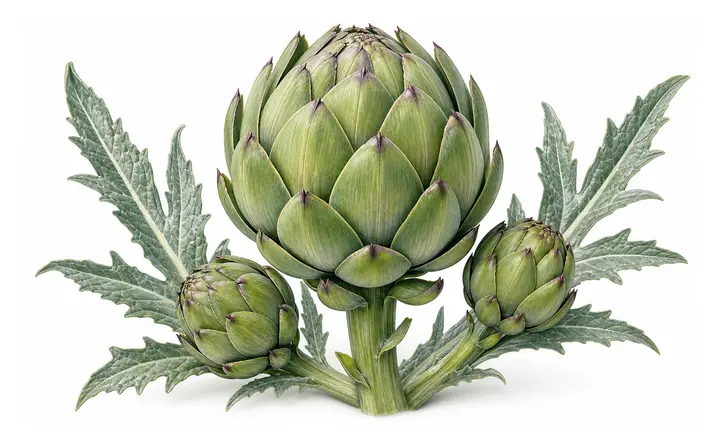
Globe artichokes are large herbaceous perennials grown for their unopened flower buds. Give one plant a sheltered position in full sun, fertile soil that holds moisture but drains freely, and 75–90cm of space. Water through its first season and during dry weather as buds form.
Set hardened young plants outside after the last frost. Remove any flower stalks in the first summer so roots and leaves establish; harvest from the second summer, cutting full-sized buds while their scales are still tightly closed. In cold or wet gardens, cultivar hardiness, winter drainage and crown protection determine whether plants return reliably.
Choose plants, seed and cultivars
This guide covers globe artichoke, Cynara cardunculus Scolymus Group, not the unrelated Jerusalem artichoke. Cultivars vary in hardiness, mature size, spines and green or purple bud colour. The RHS globe artichoke guide recommends hardier choices for colder parts of the UK; check the supplier's mature size and regional suitability.
Seed is economical but seedlings can vary, so retain vigorous plants with useful buds. Named potted plants, rooted offsets and divisions preserve the parent cultivar. Start with clean, healthy material rather than dividing a clump with unexplained rot or persistent distortion.
Site, light and soil
Choose a warm, open site receiving at least six hours of direct sun, with shelter from strong wind. Mature leaves spread widely and flower stems can reach well above surrounding crops, so avoid shading smaller plants or obstructing a path.
Artichokes need deep, reasonably fertile soil with both moisture retention and free drainage. A soil pH of about 6.0–6.5 is a useful target from University of California IPM; test before adding lime or trying to correct pH. Avoid frost hollows and ground that remains saturated in winter. Remove perennial weeds before planting and improve soil structure with mature organic matter where needed.
Sow, divide or take offsets
Sow seed individually in modules or small pots from late winter to mid-spring, about 2cm deep in free-draining seed compost. Keep seedlings warm, bright and evenly moist, then pot on before roots become congested. Harden them off and plant only after the last frost, once each has a strong root system.
Seed can also be sown in warming soil in spring at the final spacing, placing two or three seeds at each station and retaining the strongest seedling. Indoor sowing is usually more reliable in cool districts and gives plants longer to establish before their first winter.
Divide established healthy clumps in spring every four or five years as vigour declines. Each division needs sound roots and a strong growing point. Alternatively, detach a vigorous outside rosette with a piece of root and replant it immediately. Discard soft or discoloured tissue rather than spreading it.
Plant in the ground or a container
Plant at the same depth as the young plant or division grew previously, firm gently and water thoroughly. Space plants 75–90cm apart and allow room to reach them from all sides. Remove any flower stalk that forms during the first summer.
Ground culture is more forgiving. For one container plant, use a stable pot at least 45cm wide and deep—roughly 50 litres or larger—with unobstructed drainage and peat-free multi-purpose growing medium. Large leaves make the pot top-heavy, while restricted roots dry quickly, so a container needs closer watering and feeding than open soil.
Water, mulch, feed and support
Keep newly planted artichokes evenly moist through their first growing season without leaving roots saturated. Established plants tolerate some dryness, but prolonged drought while buds form can reduce bud number and size. Check moisture below the surface and water deeply when needed rather than following a fixed calendar.
Apply mature organic mulch in late winter or spring to conserve moisture and suppress weeds. If growth or cropping remains weak after drainage, light and water are corrected, use a soil test or container-feed label to guide nutrients. The RHS suggests a high-potassium feed in spring for poorly cropping or container plants; never exceed the product rate.
Shelter is usually better than elaborate support, but tie leaning flower stems loosely to a sturdy stake before exposed plants lodge. Keep ties below developing buds and check that they do not constrict expanding stems.
Bud development, pruning and renewal
In the second summer, the largest terminal bud develops first; smaller side buds follow after it is cut. Regular harvesting therefore extends the crop. A bud allowed to open becomes a large purple thistle-like flower useful to pollinators, but it is no longer a tender edible head.
Cut spent flower stems after harvest. Once foliage fades in late autumn, remove it at the base. Dividing or replacing ageing clumps every four or five years helps maintain vigour and provides true-to-type new plants.
Diagnose common problems
| Symptom | Likely causes to investigate | First checks |
|---|---|---|
| Young leaves are ragged or disappear | Slugs, snails or wind damage | Night-time pests, slime and shelter |
| Buds are few or small | First-year plant, drought, shade, crowding or weak nutrition | Plant age, direct sun, soil moisture and spacing |
| Bud scales open early | Bud left too long or rapid development in warm weather | Harvest frequency and bud firmness |
| Crown or lower stems soften | Waterlogging or crown/root rot | Winter drainage, planting depth and tissue condition |
| Leaves or buds carry colonies of small insects | Aphids or other sap feeders | Shoot tips, undersides and natural predators |
| Plant does not return in spring | Severe cold, wet soil, an unsuitable cultivar or crown failure | Drainage, winter protection and crown condition |
Use cultural controls first: correct drainage and watering, remove badly diseased material, and identify a pest before acting. If a pesticide is genuinely needed, use only a current product labelled for edible globe artichokes in your country and follow its harvest interval.
Harvest, store and finish the season
From June onwards, cut the main bud with clean secateurs when it is full-sized for the cultivar but still firm and tightly closed. Cut just above a leaf joint and leave a short length of stalk attached. Harvest smaller side buds in turn and inspect plants often in warm weather.
Cool harvested buds promptly, refrigerate them and use them while fresh; quality declines after cutting. Follow a tested preserving method rather than improvising room-temperature storage. Remove tough outer material during preparation as the recipe requires, and cook mature heads before eating the fleshy bract bases and heart.
After the final harvest, remove old flower stems but allow healthy leaves to feed the crown until they fade. Protect young plants in their first winter with a generous loose mulch and temporary fleece or a cloche during severe frost, while keeping the site freely drained. Containers need protection from prolonged saturation and repeated root-zone freezing.
Sources and review basis
- How to grow globe artichokes — Royal Horticultural Society
- Cultural tips for growing artichoke — University of California IPM
- Artichoke — NC State Extension Gardener Plant Toolbox
UK sowing, planting and harvest timing follows the RHS. Soil-test results, cultivar instructions, current product labels and local frost guidance take precedence over general ranges.