Quick answer
Give asparagus a permanent sunny bed with deep, freely draining soil and reliable moisture. Plant healthy one-year crowns while dormant, spread their roots carefully and keep the bed weed-free without damaging the shallow crown. Let every spear grow into fern during establishment.
Begin only a light harvest after the bed has established for two growing seasons from crowns, or three from seed. Stop after a short spring harvest and allow strong fern growth to recharge the crowns. A well-sited bed can remain productive for many years, so drainage, weeds and access matter more than a quick first crop.
Choose crowns, seed and varieties
Crowns shorten the wait and are the usual starting point. Buy firm dormant crowns from a reliable supplier and plant them promptly; dried, damaged or already exhausted roots establish poorly. Seed costs less and offers more varieties, but seedlings need an extra year before harvest and must be separated carefully.
Modern all-male hybrids avoid self-sown seedlings and generally direct more energy into spears. Older mixed varieties can produce female plants with berries and volunteer seedlings. Choose for local adaptation, spear size, harvest season and disease resistance rather than colour alone.
The RHS asparagus guide advises allowing two years before harvesting crowns and three years for seed-grown plants. Treat this as a minimum: weak fern growth means the crown needs another unharvested season.
Site and soil
Choose full sun and shelter from strong wind, because mature fern becomes tall and catches gusts. Position the bed where it will not shade shorter crops. Avoid frost hollows and ground that remains wet after rain.
Asparagus accepts several soil textures but not prolonged waterlogging. Aim for deep, weed-free soil with a tested pH around 6.5–7.0. Improve drainage before planting rather than putting crowns above a saturated layer. Use a soil test to guide lime and fertiliser; repeated phosphorus-rich additions are not automatically helpful.
Remove persistent perennial weeds before planting. Bindweed, couch grass and similar weeds are difficult to extract later without injuring crowns.
Plant crowns or raise seedlings
Plant dormant crowns in early spring when the soil is workable. Space plants about 30–45cm apart and allow generous row spacing for fern growth and access. Set each crown on a low mound with roots spread outward, growing points uppermost, then cover according to supplier and regional guidance. Water to settle soil without compacting it.
For seed, sow under protection or outdoors when conditions are suitable, thin seedlings and grow them without harvest through establishment. Keep labels because young asparagus resembles other fine foliage once fern develops.
Mulch with clean mature organic material after planting, keeping emerging spears visible. Do not bury the crown beneath repeated deep annual layers.
Containers and small spaces
Asparagus performs best in the ground. One crown can grow temporarily in a container at least 30cm wide and deep, but restricted roots, rapid drying and winter temperature swings usually shorten its productive life. Use a stable pot, free-draining growing medium and a position where mature fern can be supported.
Where ground space is scarce, compare the years occupied and short harvest window with repeat-cropping vegetables before committing a large container.
Water, feeding and fern care
Keep new crowns evenly moist through establishment. Mature plants need water during dry spring weather and while fern is building reserves after harvest. Check the soil below mulch rather than watering by calendar.
Apply nutrients from soil-test recommendations. Excess nitrogen can produce weak lush fern, while feeding cannot correct waterlogging or severe weed competition. Support fern before it falls across paths, and leave it until it naturally yellows in autumn. Cut dead growth near ground level and remove it where disease has been a problem.
Protecting and diagnosing the bed
| Symptom | Likely causes to investigate | First checks |
|---|---|---|
| Few thin spears | Young crown, overharvest, drought or competition | Bed age, previous harvest and fern strength |
| Spears bend or emerge distorted | Physical damage, pests, cold or herbicide injury | Pattern, recent weather and nearby treatments |
| Fern yellows early | Drought, root damage, disease or poor drainage | Soil moisture, crown area and lesion pattern |
| Crown fails to emerge | Rot, planting damage, desiccation or deep burial | Drainage, crown condition and planting depth |
| Fern falls across the bed | Wind exposure or inadequate support | Site shelter and support position |
Asparagus beetles and foliar diseases differ by region. Identify the organism before treatment, remove crop debris where local guidance recommends it and use only products currently labelled for edible asparagus.
Harvest without exhausting crowns
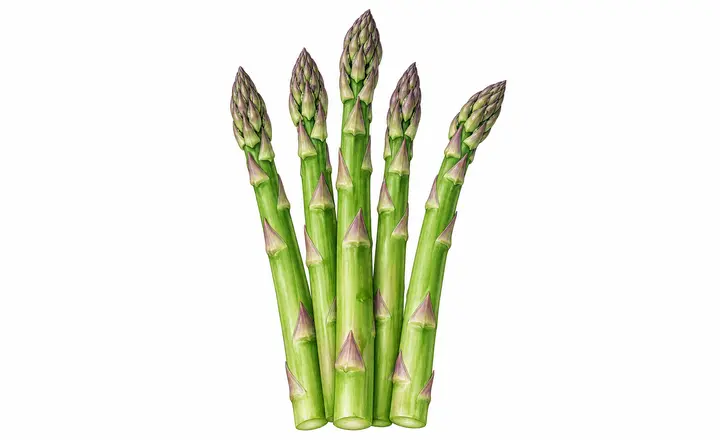
Cut or snap spears when they are firm, tightly closed and at the useful size for the variety. Harvest frequently during active emergence. Stop after the locally recommended period, or sooner if new spears become consistently thin, then allow every remaining shoot to form fern.
Cool spears promptly and use them fresh. Record crown source, planting year, harvest start and stop dates, and summer fern condition. Those records prevent accidental overharvesting and reveal whether the permanent bed justifies its space.
Sources and review basis
- How to grow asparagus — Royal Horticultural Society
- Growing asparagus in home gardens — University of Minnesota Extension
Supplier planting depth and locally tested varieties take precedence where they are more specific. Soil-test recommendations should guide pH and fertility changes.