Quick answer
Grow basil in strong light, warmth and freely draining soil or potting mix. Sow after frost danger has passed or start seed indoors with heat and bright overhead light. Plant into a sheltered position only when nights are reliably mild, then keep moisture steady without leaving roots saturated.
Harvest shoot tips just above a pair of leaves to encourage branching. Take small regular pickings and remove unwanted flower buds before they open. Cold, low light and persistent leaf wetness cause more problems than a lack of fertiliser.
Choose a basil type
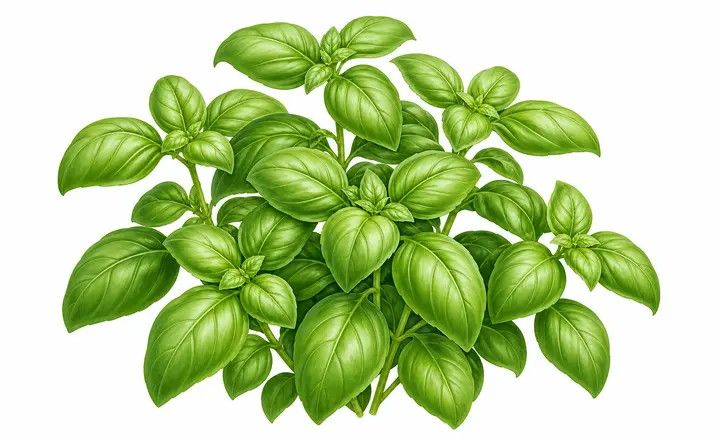
Sweet or Genovese basil has broad aromatic leaves and is the usual pesto type. Thai basil is more upright with a distinct anise-like flavour. Greek or bush basil stays compact with small leaves, while purple and lemon types provide different colour and aroma.
Match the plant to its use and space. Compact forms suit window boxes; vigorous broad-leaved varieties need greater spacing and airflow. Where basil downy mildew is common, select varieties advertised with current resistance, understanding that resistance reduces risk rather than guaranteeing immunity.
The RHS basil guide treats basil as a tender warmth-loving crop for sunny outdoor sites, greenhouses or bright windowsills.
Site, warmth and soil
Provide at least six hours of direct sun outdoors, with shelter from cold wind. In very hot climates, light afternoon shade can reduce stress, but deep shade produces weak, sparse plants. Indoors, keep plants close to the brightest suitable window or use a planned grow light.
Use fertile but freely draining soil with a tested pH around 6.0–7.5. Avoid heavy feeding, which can produce soft growth without improving aroma. Basil is damaged by frost and can stall in cool soil, so a late healthy planting often overtakes seedlings placed outside too early.
Sow and transplant
Sow seed thinly on moist seed compost, cover lightly and provide warmth. As soon as seedlings emerge, give them strong light and slightly more air movement. Thin or pot them before roots and leaves become crowded.
Harden indoor-raised plants gradually. Transplant after frost risk when nights are mild, keeping the root ball intact and the stem at its previous depth. Space compact plants about 15cm apart and larger forms up to 30cm, using the seed supplier's mature dimensions.
Supermarket basil pots often contain many crowded seedlings intended for short-term use. Divide them gently into smaller groups or thin them, but expect variable recovery from root congestion.
Containers and indoor growing
Use a pot at least 20cm wide with drainage, allowing one established plant or a small compatible group depending on cultivar. A larger pot buffers moisture better than several tiny containers. Empty saucers after watering and keep foliage away from cold window glass.
Indoor basil needs more than a generally bright room. Weak winter light causes long stems, small leaves and slow recovery after harvest. Combine adequate intensity with a regular dark period and gentle airflow.
Water, feed and pinch
Water when the surface begins to dry while the root zone still contains moisture. Soak the growing medium evenly, drain excess and avoid repeated shallow splashes. Drought triggers wilting and early flowering; constant saturation damages roots.
Garden basil in suitable soil usually needs little feeding. Container plants can receive a dilute balanced feed when growth and the product instructions justify it. Pinch the leading shoot above a leaf pair once plants are established, then repeat through harvest to maintain several productive branches.
Protecting and diagnosing basil
| Symptom | Likely causes to investigate | First checks |
|---|---|---|
| Long weak stems | Insufficient light, crowding or excess warmth | Light at canopy and plant spacing |
| Blackened leaves after a cold night | Chilling or frost injury | Overnight temperature and exposure |
| Yellowing lower leaves | Wet roots, low light, hunger or disease | Drainage, light and recent feeding |
| Grey-purple growth beneath yellow leaves | Possible basil downy mildew | Leaf underside, humidity and cultivar |
| Brown dry margins | Drought, salt buildup or excessive heat | Root moisture, feed strength and pot heat |
| Leaves distorted or sticky | Aphids or other sap-feeding insects | Shoot tips and leaf undersides |
Remove badly affected material and improve spacing and leaf drying. Do not compost serious disease material unless local plant-health guidance confirms the home system is suitable. Use only treatments labelled for edible herbs.
Harvest and storage
Cut shoot tips above a leaf pair so buds below the cut can branch. Do not strip all leaves from one stem. Harvest before flowering for the most tender growth, or allow selected plants to bloom for pollinators and seed while accepting reduced leaf production.
Use basil promptly. Refrigeration can darken tender leaves, while bunches can sometimes be held briefly with stem ends in water away from direct sun. For longer storage, follow a tested freezing or drying method. Record cultivar, sowing date, outdoor planting date and first flowering to refine the local season.
Sources and review basis
- How to grow basil — Royal Horticultural Society
- Basil, a summer favorite — Penn State Extension
- Growing herbs in home gardens — University of Minnesota Extension
Use cultivar descriptions for mature size and disease resistance. Move outdoor planting dates with local frost and night-temperature conditions.