Quick answer
Grow bok choy as a fast, cool-season leaf crop in spring and again from late summer into autumn. Sow direct or in modules, keep growth uninterrupted with fertile soil and steady moisture, and space plants according to whether you want baby leaves, small rosettes or mature heads. Harvest promptly while the white or green stalks are crisp and before a flower stem elongates.
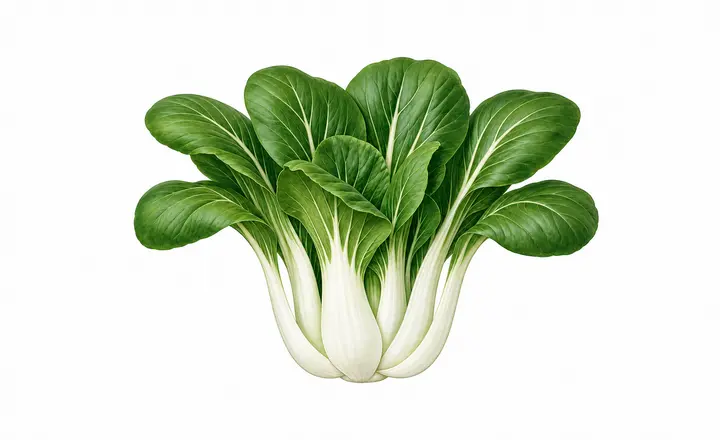
Bok choy and pak choi are common names for the same crop. It forms an upright, non-heading rosette, unlike the dense barrel-shaped head of Napa or Chinese cabbage. Heat, drought and prolonged chilling of young plants can all encourage bolting, so timing is usually more important than heavy feeding.
Choose a crop size and season
Seed catalogues offer green-stemmed, white-stemmed, purple-leaved, dwarf and full-sized cultivars. Some are intended mainly for baby leaves; others make a substantial mature rosette. Check the packet for final size, bolt resistance, sowing window and days to harvest rather than assuming that every bok choy behaves alike.
The RHS pak choi guide recommends small, repeated sowings and identifies spring/early summer and late summer/autumn as the most dependable UK periods. A bolt-resistant cultivar can improve the odds in warmer weather, but it does not make hot, dry soil harmless.
Conditions that determine success
Choose full sun in cool weather. Light shade can reduce heat and water stress for a summer crop, although deep shade produces slower, softer growth. A sheltered position helps young leaves avoid wind damage.
Use fertile, well-drained soil that retains moisture. A pH of 6.0–7.5 is a useful target, supported by the University of Minnesota Extension bok choy guide. Add mature compost before sowing if the soil is low in organic matter, then rake a fine surface.
Rotate bok choy with non-brassica crops where practical. It shares clubroot, flea beetles, caterpillars and root pests with cabbage, kale, broccoli, turnips and other brassicas. Do not raise soil pH or apply fertiliser on a guess: use a soil test and local recommendations.
Sowing and transplanting
Direct sow thinly into a shallow drill, about 2cm deep, and keep the seedbed damp until seedlings establish. For an earlier or more controlled start, sow one or two seeds per module and thin to the stronger seedling. Modules reduce root disturbance when the plant is moved.
Harden indoor-raised plants gradually and transplant them while young, before their roots become congested. Water the row before and after planting. Avoid exposing seedlings to a long cold spell: established plants tolerate light frost, but extended chilling followed by warmth can trigger premature flowering.
Make small sowings every few weeks within a suitable weather window. In a hot midsummer garden, waiting for shortening days and cooler conditions is usually more reliable than repeatedly resowing into heat.
Spacing in the ground and containers
Thin or transplant about 8–10cm apart for baby leaves, around 20cm for semi-mature plants and 25–30cm for full-sized rosettes. Keep rows at least 30cm apart where you need access for weeding and harvest. Crowding may be acceptable for a deliberately young cut, but it will not produce a row of large heads.
Bok choy also suits containers. For one compact mature plant, use at least about four litres of compost and choose a pot around 30cm wide so the root zone does not dry too abruptly. A wider trough or growing bag can hold several plants at their final spacing. Baby-leaf plants can grow more densely because they are removed young. The NC State Extension container guidance lists a one-gallon minimum for bok choy, while the RHS advises a 30cm-wide pot.
Use fresh peat-free potting compost and clear drainage holes. Containers need closer moisture checks than open ground, especially in sun or wind.
Watering, feeding and protection
Keep the whole root zone evenly moist but not waterlogged. Drought slows leaf expansion, toughens stalks and encourages bolting; saturation excludes air and increases root problems. Water in the morning where practical and mulch established full-sized plants on damp soil.
Ground enriched with mature compost may need no extra feed during this short crop. If container growth becomes pale and slow after roots have filled the compost, use a balanced feed suitable for edible crops at the labelled rate. More nitrogen cannot correct heat, shade, root damage or poor drainage.
No support or pruning is required. Keep weeds small with shallow hoeing, taking care not to cut the crop's roots. Fine insect mesh can exclude flea beetles and egg-laying butterflies if it is fitted before damage begins, sealed at the edges and raised as plants grow. Check beneath covers for slugs and trapped pests.
Rosette development and flowering
Healthy leaves should overlap into a compact, upright rosette with crisp, widening stalk bases. Bok choy does not need to form a hard cabbage head before harvest. Mature size varies greatly, so use the cultivar description and stalk quality rather than waiting for every plant to match a supermarket specimen.
A rising central stem and separating leaves signal bolting. Once this starts, remove the plant promptly; cutting off the flower stalk will not return it to vegetative growth. Tender unopened shoots are edible, but the remaining leaf quality declines.
Diagnosing common problems
| Symptom | Likely causes to investigate | First checks |
|---|---|---|
| Central stalk elongates | Bolting after heat, drought, cold stress or delayed harvest | Weather history, moisture and cultivar |
| Many tiny round holes | Flea beetles | Young leaves and gaps in mesh |
| Large holes or stripped leaves | Caterpillars, slugs, snails or pigeons | Leaf undersides, droppings and cover edges |
| Plant wilts and roots are swollen | Clubroot | Root shape, drainage and brassica history |
| Plant collapses or fails to thrive | Root fly larvae, stem damage or waterlogging | Stem base, roots and soil condition |
| Yellow wedges from leaf margins | Possible black rot | Leaf veins, affected neighbours and tool hygiene |
| Brown inner leaf margins | Moisture interruption, root stress or rapid growth | Moisture depth, drainage and feeding history |
Remove badly diseased plants and avoid moving contaminated soil on tools or footwear. Diagnose before choosing a control, and follow local guidance and the product label for anything used on an edible crop.
Harvest, storage and end of the crop
Baby leaves may be ready in about 30 days, while semi-mature and mature plants commonly take about 45–75 days under suitable conditions. Pick a few sound outer leaves while leaving the centre to grow, or cut the whole rosette through the base when it is compact and crisp. Harvest immediately if flowering begins.
Cool harvested plants promptly, keep them unwashed or well dried in a refrigerator, and use them soon. The Minnesota guidance notes that bok choy may keep for one to two weeks, but garden quality is best close to harvest. Discard slimy or badly damaged leaves.
After the final harvest, remove roots and crop debris. Compost only sound material that your system handles safely; remove suspected clubroot or serious disease according to local waste guidance. Record the cultivar, sowing date, weather and first harvest before rotating the bed to a non-brassica crop.
Sources and review basis
- How to grow pak choi — Royal Horticultural Society
- Growing Chinese cabbage and bok choy in home gardens — University of Minnesota Extension
- Bok Choy — NC State Extension Gardener Plant Toolbox
- Plants grown in containers — NC State Extension Gardener Handbook
Sowing dates, mature size, cold response and bolt resistance vary by cultivar and climate. Use the seed packet and regional advice to refine this general reference.