Quick answer
Sow broad beans in full sun and free-draining soil, using a hardy cultivar for autumn sowing only where winters and drainage are suitable. Space plants 15–23cm apart, support tall rows before wind pushes them over and water deeply as flowering begins. Pick pods frequently while the beans are still tender.
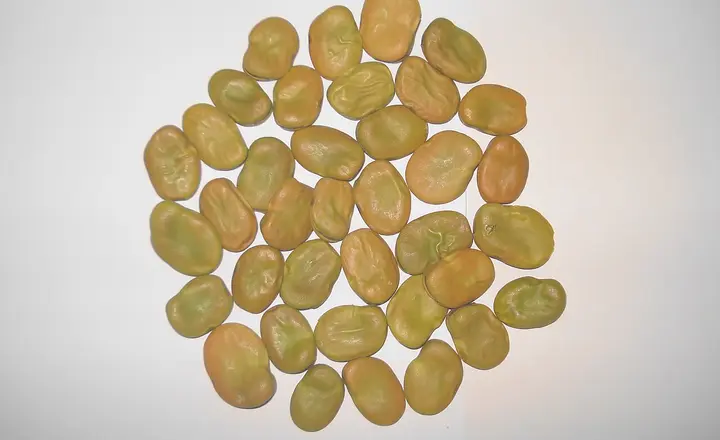
Broad beans, also called fava beans, prefer cool conditions and can crop before warm-season beans begin. Dwarf cultivars fit containers and exposed plots; taller long-pod types need more support but can provide a larger harvest.
Choose a sowing season and cultivar
Autumn sowing can produce an earlier crop, but it extends the period in which seed and young plants face waterlogging, frost, mice and disease. Use a cultivar sold for overwintering and reserve this method for free-draining ground in a mild or protected position.
Late-winter or spring sowing is more dependable in cold, wet gardens. The RHS broad bean guide distinguishes dwarf plants around 45–50cm from taller types near 1m or more. Match height to wind exposure, container size and the support you can install.
Site, soil and rotation
Choose full sun with shelter from strong wind. Broad beans prefer fertile, moisture-retentive but well-drained soil. Oregon State University notes that fava beans perform best in neutral to slightly acidic soil and that sandy soil needs more frequent irrigation.
Add mature compost where structure or water retention needs improvement. Avoid routine high-nitrogen feeding: legumes form associations with nitrogen-fixing bacteria, and excess nitrogen can favour soft growth over pods. Rotate away from peas and other beans where soil-borne disease has occurred.
Sowing and spacing
Direct sow seed at the depth and season on the packet. In cold, saturated ground, start individual seeds in deep modules or small pots under protection, then plant out before roots become restricted. Harden indoor-raised plants gradually.
Set plants 15–23cm apart in single or double rows. Broad beans need enough plants for a useful picking, but crowding reduces airflow and makes chocolate spot harder to manage. Protect emerging seed from mice and birds where they are persistent.
Supports and containers
Place sturdy stakes around tall rows and run string around the outside at several heights. This corrals stems without tying every plant. Install support early so roots are not damaged later. Dwarf plants often support one another but can still lean in exposed positions.
Grow a small group of dwarf broad beans in a container at least 40cm across and around 20 litres. Use peat-free potting compost, maintain drainage and keep the pot in full sun. Container plants need more frequent watering and may need a labelled liquid feed once flowering begins.
Watering and pod formation
Keep seedlings growing steadily without saturating the soil. Give a thorough watering when flowers open and again as pods begin to fill if rainfall is insufficient. Dry roots during flowering can reduce pod set; permanently wet roots invite rot.
Once the lowest flowers have formed small pods, the tender shoot tip can be removed. This may limit the soft growth favoured by black bean aphid and directs attention to the developing crop. Do not strip healthy leaves, which supply the pods.
Diagnosing common problems
| Symptom | Likely causes to investigate | First checks |
|---|---|---|
| Seedlings missing | Mice, birds, slugs or seed rot | Seed remains, tracks and soil saturation |
| U-shaped notches on leaves | Pea and bean weevil | Leaf edges and seedling vigour |
| Dense black insects on tips | Black bean aphid | Shoot tips and beneficial predators |
| Chocolate-coloured leaf spots | Chocolate spot | Airflow, crowding and damp weather |
| Flowers but few pods | Dry roots, heat or poor pollination conditions | Moisture and recent temperatures |
| Stems lodge or snap | Wind, weak support or exposed rows | Stakes, strings and root anchorage |
Harvest and kitchen handling
Pick young pods whole when only a few centimetres long, or wait until the beans have swollen for shelling. For tender shelled beans, harvest while the scar where each seed joins the pod is pale rather than dark. Lower pods mature first, so check every few days.
Hold the stem while removing pods or use secateurs. Regular picking prevents mature pods being overlooked. Cook broad beans before eating and follow appropriate medical advice if anyone who may eat them has a known broad-bean sensitivity or G6PD deficiency.
Sources and review basis
- How to grow broad beans — Royal Horticultural Society
- Beans, fava — Oregon State University
- Growing beans in home gardens — University of Minnesota Extension
Use the seed supplier's instructions for cultivar-specific hardiness, sowing time, final height and maturity.