Quick answer
Direct sow coriander into its final position in spring, then sow a small batch every few weeks rather than one large crop. Give it bright light, freely draining soil and steady moisture. In hot, dry conditions, light afternoon shade and prompt watering can delay flowering, but every leaf crop will eventually bolt.
Harvest a few outer leaves once plants are 10–15cm tall, or cut young plants as a bunch. Leave selected plants to flower if you want edible blooms, pollinator value or coriander seed. Choose a slow-bolting cultivar when leaves are the priority.
Leaves, flowers or seeds
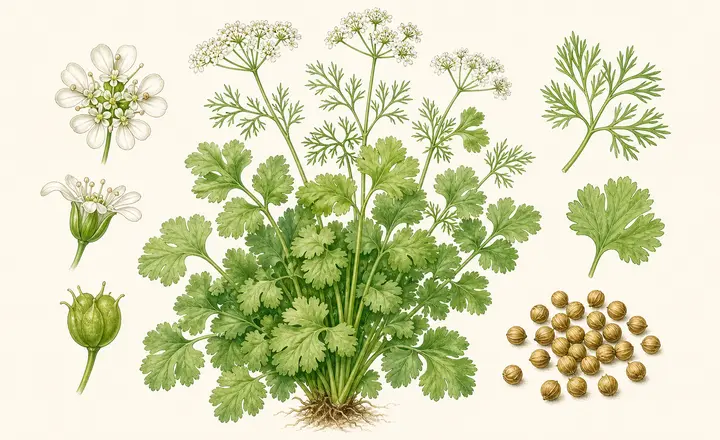
Coriander and cilantro are names for the same plant, Coriandrum sativum. In UK usage, coriander commonly describes both its fresh leaves and dried seed; cilantro usually means the fresh leaf. The plant changes form as it matures: rounded lower leaves give way to finer upper foliage, then white flower umbels and round fruits.
Decide on the intended harvest before sowing. Leaf cultivars selected for slower bolting extend picking, while a seed crop needs an early enough sowing for fruits to ripen. Microgreens are a separate, very short crop and can be sown densely because they are harvested as seedlings.
The RHS coriander guide recommends small repeated sowings for leaves and notes that the plant dislikes transplanting.
Light, soil and temperature
Provide four to six hours of direct light or more in mild weather. Spring and autumn crops can use full sun; in a hot site, afternoon shade may reduce heat and water stress. Deep shade makes weak growth and should not be used as a general cure for bolting.
Use weed-free, crumbly soil or fresh peat-free potting compost that drains while retaining some moisture. Avoid very rich feeding, which can produce soft growth without preventing flowering. Coriander has a taproot, so loosen compacted ground and choose pots deep enough for stable moisture and root development.
Cool conditions are not a problem for established plants, but cold saturated soil slows germination. Wait until a seedbed is workable, or make the earliest sowings under simple protection.
Direct and succession sowing
Sow seed shallowly in rows or small stations and keep the top layer moist through germination. The dry round “seed” is a fruit containing seeds; it does not need aggressive crushing. Thin crowded seedlings so air and light reach each plant, using sound thinnings in the kitchen.
Direct sowing avoids root disturbance and usually produces stockier plants. If starting in modules, sow a small cluster in each cell and transplant the intact plug promptly before roots circle. Do not tease individual seedlings apart.
For a continuous leafy crop, repeat a modest sowing every two to four weeks through suitable weather. The RHS herb-growing advice specifically recommends succession sowing fast-bolting herbs such as coriander.
Containers and indoor crops
Use a pot at least 20cm wide with unobstructed drainage. A deeper trough is more forgiving than a shallow windowsill tray. Sow several plants, then thin enough to keep the remaining foliage open; do not expect a crowded supermarket pot to develop into a long-lived specimen.
Indoors, place coriander at the brightest suitable window or beneath a planned grow light. A generally bright room is often too dim. Warm, dry indoor air can accelerate flowering, while repeated waterlogging causes root loss. Turn the pot and provide gentle airflow so stems remain upright.
Microgreens can be grown in a shallow tray for a one-time cut. Use clean seed sold for sprouting or edible cropping and follow safe microgreen hygiene.
Water, feed and manage bolting
Water the root zone when the surface begins to dry, soaking the medium evenly and allowing excess to drain. Alternating drought and saturation stresses the plant. A light mulch around established outdoor rows can buffer moisture without touching young stems.
Garden plants in reasonable soil rarely need extra feed. Container crops can receive a dilute balanced feed only if growth and product instructions justify it. High feed rates do not stop bolting.
Bolting is the natural transition to flowering, intensified by heat, drought, root restriction and increasing day length. Remove early flower stems if leaves are the only goal, but replace the crop through succession sowing rather than repeatedly cutting a plant that is committed to seed.
Diagnosing coriander problems
| Symptom | Likely causes to investigate | First checks |
|---|---|---|
| Uneven germination | Dry seedbed, cold wet soil or old seed | Moisture at sowing depth and seed date |
| Long pale stems | Insufficient light or crowding | Light level and spacing |
| Plant flowers while small | Heat, drought, root restriction or season | Pot depth and recent weather |
| Yellow lower leaves | Saturated roots, low light or crowding | Drainage and root-zone smell |
| Distorted sticky tips | Aphids | New leaves and nearby ant activity |
| White or grey leaf coating | Mildew or persistent leaf wetness | Airflow and whether coating spreads |
Use physical barriers and hygiene before reaching for treatments. Any product used on a herb must be labelled for edible crops, with its harvest interval followed.
Harvest leaves and seed
Begin leaf harvest when plants are about 10–15cm tall. Take a few outer stems from each plant and leave the centre growing, or cut a whole short-term crop just above soil level. Cool harvested leaves quickly and use them within a few days.
Flowers are edible and useful to insects. For seed, allow selected heads to turn from green to tan, then cut them before ripe fruits scatter. Dry the heads in a ventilated paper bag, rub out the fruits and store them dry and labelled. Green coriander seed can also be used fresh for a different flavour.
Record which sowing dates gave the longest leafy window. Local temperature and day length will reveal a more useful schedule than assuming one spring sowing can supply the whole season.
Sources and review basis
- How to grow coriander — Royal Horticultural Society
- Growing and harvesting herbs — Royal Horticultural Society
Sowing intervals are working ranges. Adjust them to crop speed, temperature and the amount your household actually uses.