Quick answer
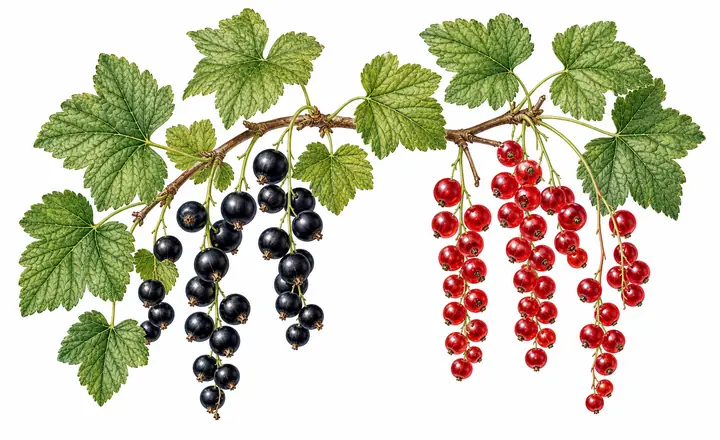
Choose a currant type before deciding how to prune it. Blackcurrants (Ribes nigrum) make multi-stemmed bushes and fruit best on vigorous young wood. Redcurrants (Ribes rubrum), including white and pink forms, carry fruit at the base of the previous year's shoots and on spurs on older wood; they can be bushes, cordons, fans or standards.
Grow currants in full sun for the sweetest, heaviest crop, or light partial shade where some reduction in yield and later ripening is acceptable. Use moist, fertile but freely draining soil, mulch the root zone and protect open flowers from late frost. Space red, white and pink bushes about 1.2–1.5m apart and blackcurrant bushes 1.5–1.8m apart. Most UK cultivars are self-fertile, but some blackcurrants need a compatible second cultivar, so check the nursery description. Harvest early blackcurrants from late June, with most currants ripening in July and August.
Choose the type, cultivar and form
Blackcurrants have strongly aromatic leaves and dark, intensely flavoured fruit. Their natural form is a stool-like bush with stems rising from the base. Cultivars differ in vigour, ripening time, frost avoidance, mildew resistance, big bud mite resistance and self-fertility. A later-flowering cultivar can be useful in a frost-prone garden, but no cultivar removes the need to match local conditions.
Redcurrants form long trusses of translucent red berries. White and pink currants are pale-fruited forms grown in the same way and are often milder in flavour. An open-centred bush gives a large crop, while a supported cordon or fan uses less ground space. Standards are grafted plants with a clear stem and require permanent staking.
One red, white or pink currant normally sets fruit alone. Many blackcurrants do too, but not all; where a cultivar is described as needing a pollination partner, plant a compatible cultivar with overlapping bloom. The Oregon State University Extension guide also advises checking cultivar resistance and self-fertility rather than treating every currant alike.
Buy named, healthy nursery plants; for blackcurrants in the UK, look for certified planting material where available. Outside the UK, check current local rules before ordering any Ribes, because restrictions associated with white pine blister rust still apply in some areas.
Conditions that determine success
Choose a sheltered position with good air movement, away from a frost pocket. Currant shrubs are winter-hardy in suitable regions, but their spring flowers can be damaged by freezing temperatures. Full sun improves fruit number, colour and sweetness. Red and white currants tolerate partial shade particularly well, although their fruit usually ripens later and is less sweet; blackcurrants also tolerate light shade.
The root zone should remain usefully moist without becoming saturated. Currants struggle in a dry, weed-filled bed, but standing water and compacted soil can cause root decline. Remove perennial weeds before planting and keep grass from competing beneath the canopy.
A tested pH of about 5.6–6.5 is a useful target from Oregon State University Extension. Do not add lime, sulphur or fertiliser by routine: use a soil test and regional advice, then correct a measured limitation. Improve poor soil with well-decomposed organic matter spread through the planting area rather than putting concentrated fertiliser against new roots.
Buy, propagate and plant
Dormant bare-root currants are normally planted from late autumn to early spring while the soil is workable and neither frozen nor waterlogged. Container-grown plants can be planted at other times, but establishment is harder in hot or dry weather. Keep bare roots cool and damp, water dry root balls, spread roots without sharply bending them and firm the backfill gently.
Plant an ordinary blackcurrant bush about 5cm deeper than its previous soil mark to encourage new basal shoots, as specified by the RHS blackcurrant guide. Plant a standard at its previous depth so the grafted stem is not buried. For red, white and pink currants, preserve the short clear stem of a bush or the trunk of a trained plant and follow the nursery's planting-depth instructions. Water thoroughly and label the cultivar.
Allow 1.2–1.5m between red, white or pink bushes and 1.5–1.8m between blackcurrant bushes, using the wider end for vigorous cultivars. Supported redcurrant cordons can be 30–40cm apart; do not use this spacing for free-standing bushes. Dormant newly planted blackcurrants are usually cut down to one or two buds above ground to build strong basal growth, which sacrifices the first crop. Red and white bushes need form-building cuts instead, not blackcurrant stool pruning.
Seedlings will vary and are not a reliable way to reproduce a named cultivar. Take roughly 20cm hardwood cuttings from vigorous, young, healthy stock between mid-autumn and late winter and insert them in pots of suitable peat-free propagation medium or a prepared outdoor bed. Both RHS currant guides caution against propagating older plants that may carry debilitating disease or viruses.
Containers and supports
One compact currant can grow in a stable container at least 45cm wide and deep—typically about 40 litres or more—with several clear drainage holes. Use a durable peat-free, soil-based growing medium. Red, white and pink currants adapt better to long-term container culture; compact blackcurrants can crop in a pot for several years but often perform better in open ground as they mature.
A free-standing bush generally needs no support. Install wires before planting a redcurrant cordon or fan; the RHS redcurrant guide uses horizontal wires at about 60cm intervals. Tie shoots with soft material and check ties annually. Stake a standard permanently to just below its head, including when it grows in a pot.
Check container moisture frequently, repot before the roots become severely congested and top-dress with fresh medium between repotting years. Dimensions, drainage and stability matter more than a nominal litre figure, especially for a top-heavy standard.
Water, mulch and feed
Water new currants during dry spells through their first two growing seasons. Established bushes in the ground may need little routine irrigation in a temperate, reliably moist site, but check below the mulch during prolonged drought and while fruit is swelling. Keep container medium evenly moist through active growth. Water thoroughly and let surplus drain; avoid alternating severe dryness with flooding as berries approach ripeness.
Apply an organic mulch in spring to conserve moisture and suppress weeds, keeping it clear of stems. Hand-weed the shallow root zone rather than cultivating deeply.
Regularly mulched, reasonably fertile ground may need no additional feed. Investigate weak growth or pale foliage with the soil, drainage, roots and recent weather in mind before applying fertiliser. Container currants exhaust nutrients more quickly; follow the growing-medium or fruiting-plant feed label rather than inventing a stronger schedule. Excess nitrogen encourages soft, crowded growth and cannot correct shade, frost damage or waterlogging.
Flowering, fruit development and protection
Currants produce small, insect-pollinated flowers in spring. If frost is forecast during bloom, support horticultural fleece or hessian above the flowers overnight and remove it in the morning so insects can visit and heat cannot build up. Poor fruit set can also result from a non-self-fertile blackcurrant grown alone, poor flowering overlap, shade, drought or removal of the wrong fruiting wood.
Keep the moisture supply steady as the berries enlarge. Install a well-built fruit cage or taut wildlife-safe netting before fruit colours if birds are taking the crop. Secure every edge, inspect it frequently and remove temporary netting promptly after harvest so wildlife cannot become trapped.
Prune according to the fruiting wood
Prune with clean, sharp tools while plants are dormant, first removing dead, damaged, diseased, crossing and ground-level growth. Do not apply one pruning diagram to every currant.
For an established blackcurrant, remove up to one-third of the oldest, darkest stems at the base each winter, retaining strong new stems and a balanced open bush. The aim is continuous replacement because blackcurrants crop most heavily on vigorous young growth. Young plants need only weak or low shoots removed after their initial post-planting cut, unless growth is poor.
For an established red, white or pink bush, retain an open goblet of up to ten well-spaced main branches. Shorten new extension growth where needed, prune established side-shoots back to one or two buds, and gradually replace one or two ageing main branches rather than removing all older wood. The fruiting spurs are valuable. Optional summer pruning from mid-June into July shortens vigorous new side-shoots to about five leaves while leaving replacement shoots intact. Cordons and fans require their own annual summer and winter sequence, set out in the RHS pruning guide.
Common-problem diagnosis
| Symptom | Likely causes to investigate | First checks |
|---|---|---|
| Few flowers or berries | Late frost, shade, young plant, incompatible blackcurrant pollination or wrong pruning | Recent minimum temperature, flowering overlap, plant age and last cuts |
| Abnormally large, rounded buds on blackcurrant; weak growth | Blackcurrant big bud mite, sometimes associated with reversion disease | Compare affected buds with normal pointed buds and check the whole bush before propagating |
| Red or yellow-green puckered leaf blisters | Currant blister aphid | Look beneath affected leaves in late spring for pale yellow aphids; established plants often still crop normally |
| White powdery growth on leaves or shoots | Powdery mildew | Cultivar susceptibility, canopy crowding, drought stress and excess nitrogen |
| Brown leaf spots followed by early leaf fall | Currant and gooseberry leaf spot or another foliar disease | Both leaf surfaces, fallen infected leaves, airflow and symptom progression |
| Shoots wilt or die back from the tip | Stem damage, currant borer, root stress or disease | Split or sunken stem tissue, entry holes, drainage and root-zone moisture |
| Ripening fruit disappears | Birds or mammals | Damage timing and the security and wildlife safety of netting |
RHS guidance on currant blister aphid notes that its conspicuous leaf damage usually has little effect on vigour or yield, so treatment is normally unnecessary. For mildew and leaf spot, begin with resistant cultivars, an open canopy, even moisture and removal of affected debris. Do not spray an unidentified symptom. If a plant-protection product is considered, confirm the diagnosis and follow the current product label and regional rules.
Harvest, storage and end-of-season care
Red, white and pink currants are ready when the truss is evenly coloured, firm and juicy, usually from July into August. Cut the whole truss, known as a strig, and strip the berries in the kitchen. Early blackcurrants can start in late June; modern cultivars may ripen together and can also be cut by the strig, while older cultivars often ripen unevenly, so pick individual fully black berries without crushing them. Taste is a better final test than calendar date alone.
Harvest dry fruit into shallow containers and cool it promptly. Refrigerate unwashed, sound berries in a covered container and check them frequently; wash only before use. Freeze berries or whole strigs, or use a tested preservation recipe. Slightly underripe fruit has more useful pectin for jelly, while fully ripe fruit is usually better for fresh flavour.
After leaf fall, remove mummified fruit and diseased debris, inspect stakes, wires, ties and guards, and plan dormant pruning. Record the cultivar, flowering frost, pruning method, first harvest and any enlarged buds, mildew or leaf fall. Those observations are more useful for adjusting next year's care than a blanket feeding or spraying schedule.
Sources and review basis
- How to grow blackcurrants — Royal Horticultural Society
- How to grow redcurrants — Royal Horticultural Society
- Redcurrants and whitecurrants: pruning and training — Royal Horticultural Society
- Growing currants and gooseberries in the home garden — University of Minnesota Extension
- Growing berries on the Oregon Coast: gooseberries, currants and other minor berry crops — Oregon State University Extension
- Ribes nigrum — Kew Plants of the World Online
- Ribes rubrum — Kew Plants of the World Online
Species, cultivar vigour, self-fertility, disease resistance and harvest timing vary. Confirm the nursery description and local guidance, use measured soil conditions, and check current Ribes restrictions outside the UK.