Quick answer
Endive is a compact cool-season salad crop grown as frilly frisée or broad-leaved escarole. Give it fertile, moisture-retentive but drained soil, four to six hours of sun and 20–30cm spacing for full heads. Direct sow or transplant small plants in spring and again in summer for autumn harvests.
Keep growth steady: dry roots, heat and long days encourage tough, very bitter leaves and premature flowering. Harvest baby leaves from close sowings or cut mature heads at the base. Blanching the heart for about two weeks before harvest makes it paler, milder and more tender, but only dry, healthy heads should be tied or covered.
Choose frisée, escarole or baby leaves
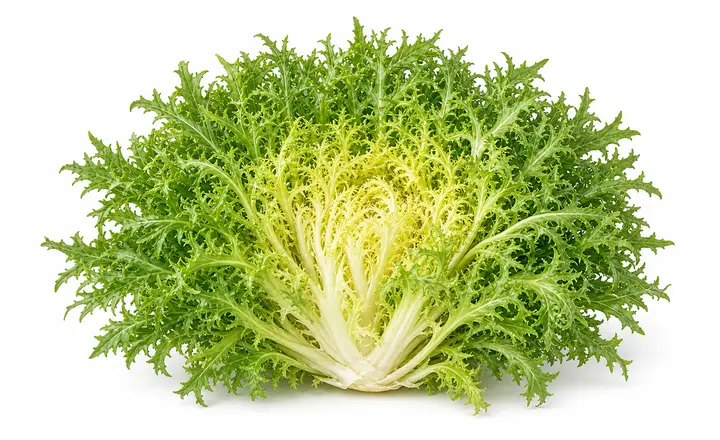
Endive, Cichorium endivia, is distinct from forcing chicory and radicchio, although all are related. Curly endive or frisée has narrow, finely divided leaves and a pale heart. Escarole has broader, smoother leaves and a more substantial head. Both can be picked young; cultivar descriptions indicate whether a variety is intended for baby leaf, full heads, self-blanching or a particular season.
For spring, choose a cultivar described as slow to bolt. For late crops, prioritise cold tolerance and a development time that fits before winter growth stalls. Endive seed is small, so pelleted seed can help with accurate spacing but is not essential.
Site, light and soil
Choose a position with at least four hours of direct sun. Full sun is useful in spring and autumn, while light afternoon shade can reduce heat stress in summer. Good airflow helps leaves dry, but a very exposed site increases water loss.
The crop prefers well-drained, moisture-retentive soil with a pH around 6.0–6.8. The University of Minnesota Extension guide notes that most water and nutrients are taken up by shallow lateral roots, even though the plant can form a taproot. Prepare a fine, level seedbed and remove weeds before sowing.
Sow and transplant
For baby leaves, sow thinly in shallow drills about 1cm deep from spring onwards, repeating every few weeks. Thin only enough to prevent a congested, damp canopy. Cut leaves young, then replace the sowing after a few harvests.
For heads, sow outdoors once the soil has warmed or start small batches in modules. Transplant promptly at four to six true leaves, handling the root ball gently and setting it at the same depth. Harden plants raised under cover. Space compact or self-blanching plants about 20cm apart and larger frisée or escarole heads 25–30cm apart, with 30cm or more between rows.
Avoid sowing a whole season's crop at once. A spring batch followed by a mid- to late-summer batch usually uses endive's preference for cool conditions better than plants forced through the hottest part of the year. Check cultivar-specific sowing windows.
Grow endive in containers
Plant one full head in a pot about 25cm across, or use a wider trough for several plants at their final spacing. For baby leaves, a container 15–20cm deep is adequate. Fill with peat-free multipurpose growing medium, leave a watering rim and keep drainage holes clear.
Container compost warms and dries quickly. Check it frequently, water thoroughly when the upper layer begins to dry and move the container out of fierce afternoon sun during hot spells. Replace spent medium between crops rather than trying to correct recurring disease or severe compaction with more feed.
Water, feed and weed
Maintain steady moisture from germination to harvest. A severe dry spell followed by heavy watering can damage leaf edges and encourages uneven growth. Direct water to the soil in the morning and avoid keeping tied heads wet. Mulch established plants lightly if conditions are dry.
Endive needs sufficient fertility for prompt leaf growth, but a soil test should guide ground-grown crops. In containers, begin a balanced liquid feed only when the product's base nutrients are likely to be depleted, following its label. Weed shallowly because much of the useful root system is close to the surface.
Blanch the heart safely
Blanching excludes light from the inner leaves, reducing green colour and some bitterness. Many modern plants self-blanch when spaced moderately close. For a paler heart, gather dry outer leaves around the centre and tie them loosely, or place an opaque cover over the heart, around two weeks before the planned harvest.
Only blanch a dry, sound head. Trapped moisture encourages decay, so untie plants after rain, inspect them and never bind damaged or slimy foliage. Mark the date and harvest promptly rather than leaving a closed head forgotten. Blanching is optional: unblanched leaves remain edible and have a stronger flavour.
Manage heat, frost and bolting
Endive grows best in cool weather and tolerates light frost once established, but hard freezes damage marketable leaves. Use fleece or a cold frame for late heads, making sure covers do not keep foliage continuously wet.
An extending flower stalk means the plant is bolting. Heat, long days, drought and transplant stress can contribute. Keep moisture steady, choose the correct seasonal cultivar and harvest promptly. Once a stalk develops, pick usable leaves or remove the plant; extra feed will not restore a tight head.
Diagnose common problems
| Symptom | Likely causes to investigate | First checks |
|---|---|---|
| Leaves are excessively bitter | Mature crop, heat, drought or bolting | Plant age, weather, moisture and central stem |
| Heart turns brown or slimy | Moisture trapped during blanching or poor airflow | Ties, rain, damaged tissue and canopy density |
| Brown leaf margins | Irregular water supply, heat or root stress | Moisture below the surface and recent weather |
| Seedlings vanish or leaves are ragged | Slugs and snails | Night-time inspection, slime and shelter |
| Plants remain small | Crowding, low fertility, dry soil or root damage | Spacing, moisture, soil test and roots |
| Plant sends up a flower stalk | Heat, long days, drought or transplant check | Sowing window, cultivar and watering |
Remove decaying leaves, improve airflow and identify pests before acting. If a control product is needed, it must be currently labelled for edible endive in your country and used exactly as directed.
Harvest and store
Pick baby leaves individually or cut them a few centimetres above the crown for possible regrowth. For a mature head, cut at soil level with a clean knife once it is firm and before the central stalk lengthens. Harvest blanched plants as soon as the heart reaches the colour and tenderness you want.
Cool heads promptly. Remove damaged outer leaves, keep the crop dry and refrigerate in a loosely closed bag or container. Endive stores better as an intact head than as cut leaves, but quality is best soon after harvest. Wash immediately before use rather than storing wet foliage.
Sources and review basis
- How to grow endive — Royal Horticultural Society
- Growing lettuce, endive and radicchio in home gardens — University of Minnesota Extension
UK sowing, blanching and harvest timing follows the RHS. Cultivar instructions, local frost guidance, soil-test results and current edible-crop product labels take precedence over general ranges.