Quick answer
For crisp swollen bases, buy seed labelled Florence or bulb fennel and sow outdoors in June or July once the soil and weather are warm. Give plants a sunny, sheltered position, thin full-size crops to about 30cm apart and never let the root zone dry out. Direct sowing is simplest; if you start under cover, use one seed per module and transplant the whole plug after frost to avoid disturbing the roots.
Florence fennel is ready from late summer into autumn. Harvest at any useful size before the base elongates and a flower stem forms. Cold checks, damaged roots, heat and drought can all trigger bolting, so cultivar choice, sowing date and uninterrupted growth determine success more than a rigid feeding schedule.
Choose bulb fennel or herb fennel
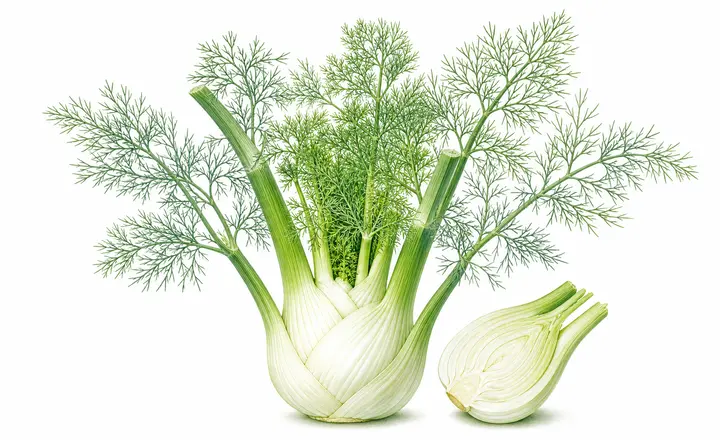
Fennel, Foeniculum vulgare, is a member of the carrot family. Florence fennel, commonly written F. vulgare var. azoricum, is the annual vegetable crop that makes a rounded white-green base from overlapping, swollen leaf stalks. It is not a true bulb. Common, sweet and bronze fennel are taller perennial herbs grown mainly for feathery leaves, flowers and aromatic fruits commonly called seeds; they do not make the same dense base.
Choose a Florence cultivar advertised for the sowing period you can provide. A bolt-resistant description reduces risk but does not make the plant immune to cold, drought or transplant shock. The RHS Florence fennel guide lists compact and bolt-resistant choices, but seed suppliers may change their ranges and cultivar performance varies with climate.
This guide concentrates on Florence fennel because it is the more demanding crop. Herb fennel can be direct sown into a permanent sunny site, allowed more room and harvested lightly for leaves; selected flower heads can ripen for seed. Keep the two types labelled so a non-bulbing herb plant is not mistaken for a failed Florence crop.
Conditions that determine success
Choose a warm, sheltered position in full sun, ideally receiving at least six hours of direct light. Weak light makes loose, stretched growth. Strong exposure increases water loss and can rock taller stems, while a heat-trapping, drought-prone site makes bolting more likely.
Florence fennel needs fertile, moisture-retentive but freely draining soil. Heavy clay that remains saturated is a poor fit; improve structure well before sowing or use a large container. A soil pH of about 6.5–8 is the range given by Utah State University Extension, but test before adding lime or fertiliser. Work mature compost into genuinely poor soil, avoiding fresh manure around the crop.
The awkward balance is warmth without stress. Early cold and root disturbance can induce flowering, but extreme heat and dry soil also stop the base swelling well. In much of the UK, sowing in early to midsummer lets seedlings establish in warm conditions and the bases enlarge as late-summer temperatures moderate. Treat the seed packet and local forecast as more specific than a national calendar.
Sow and establish fennel
For a direct-sown crop, prepare a weed-free seedbed, water a shallow drill, sow thinly about 1–1.5cm deep and cover lightly. Keep the seed zone evenly damp. Gradually thin seedlings without loosening the roots of those left behind; aim for 30cm between plants for full bases. A final spacing of 10–15cm is useful only when the intention is to harvest mini fennel.
To start under cover, sow one seed per small module in late spring. Provide strong light, steady moisture and enough root space to prevent seedlings becoming checked. Harden them off gradually, then plant after frost into settled warm conditions. Hold the intact rootball, place it at its previous depth and water immediately; do not prick out, tease apart or bury the crown.
Direct sowing avoids transplant shock and is usually the dependable choice. Modules can help in cold districts or where slugs repeatedly remove emerging seedlings, but there is little advantage in starting very early. The RHS guidance recommends direct sowing outdoors in June or July and using individual modules when an indoor start is needed.
Plant in the ground or a container
Space full-size plants about 30cm apart in rows that can be watered and weeded without brushing the bases. Do not crowd them among vigorous crops: competition for light and moisture produces smaller, looser bases. Fennel can follow an early crop if the bed is replenished appropriately and water remains available through summer.
Use a container at least 40cm across and roughly 30 litres for up to three full-size plants, or give one plant a smaller share of the same generous root volume. Fill it with fresh peat-free multi-purpose compost and leave a clear watering space below the rim. Drainage holes must stay open, but the compost should not swing from saturated to completely dry. Closer 10–15cm spacing is suitable for mini bases rather than three mature large ones.
Position the container before filling because a planted pot is awkward to move. A large pot buffers moisture better than several small ones, but it still needs checking often in warm or windy weather. If regular watering cannot be maintained, ground soil with an organic surface mulch is usually safer.
Water, feed and care for swelling bases
Water deeply whenever the upper soil begins to dry, then recheck rather than watering by calendar alone. Keep moisture even during establishment and as the bases swell. Alternating drought and heavy watering can split stalks, while persistent saturation deprives roots of air. Apply an organic mulch around established plants to slow evaporation, keeping it clear of the crown.
Base feeding on a soil test and visible growth. Fennel needs moderate fertility, but extra feed cannot correct cold roots, poor drainage, crowding or drought. Where the ground was properly prepared, additional fertiliser may not be needed. In containers, use a feed approved for edible vegetables at the label rate after the compost's initial nutrients decline; avoid repeated high-nitrogen feeding that drives soft foliage at the expense of a firm base.
Florence fennel normally needs no pruning or staking. Do not remove large amounts of foliage while the base is swelling. Hand-weed close to the plant so a hoe does not cut the shallow developing base or roots. Once the base begins to enlarge, you may draw a little loose soil around it to keep it pale and mild; do not bury the centre or trap water between the stalks.
Manage bolting and crop development
Healthy Florence fennel first builds feathery leaves, then the overlapping lower stalks broaden into a compact rounded base. Check the base rather than judging maturity from plant height. A young firm base is useful even if it never reaches the size pictured on a seed packet.
An elongating centre and rising flower stalk mean bolting has begun. The base will stop improving and becomes woody, so harvest it promptly rather than trying to reverse flowering by cutting the stem. Pinching flowers does not restart bulb development. For a planned seed or pollinator crop, grow common herb fennel separately and allow its yellow umbels to mature.
Stagger small sowings only when the cultivar and remaining season leave enough time to mature. Weather can make one batch catch another, so observe the previous sowing instead of assuming a fixed succession interval will always produce separate harvests.
Diagnose common fennel problems
| Symptom | Likely causes to investigate | First checks |
|---|---|---|
| Centre elongates and flower stem appears | Cold check, drought, heat, root disturbance or natural maturity | Sowing date, recent weather and watering history |
| Plenty of foliage but no rounded base | Herb fennel seed, crowding, shade, excess nitrogen or stress | Packet name, spacing and direct light |
| Base stays small or loose | Uneven moisture, weak fertility, competition or unsuitable cultivar timing | Root-zone moisture, weeds and soil test |
| Stalks split | Rapid change from dry to wet conditions | Recent irrigation and rainfall |
| Seedlings disappear or have ragged edges | Slugs, snails or chewing caterpillars | Plants after dark and leaf undersides |
| Young growth curls or feels sticky | Aphids | Shoot tips and undersides of leaves |
| Foliage is pale and growth stalls | Waterlogged or compacted roots, low nutrients, cold or insufficient light | Drainage, root smell, soil test and exposure |
| Base or crown softens and browns | Saturated soil, deep planting or trapped debris | Crown level, drainage and airflow |
Fennel is generally not heavily troubled by disease, but stressed plants attract problems and damaged crowns can rot. Confirm the cause before treatment. Remove badly decayed material, correct water and airflow, hand-pick larger pests where practical and protect seedlings with physical barriers. Any pesticide must be specifically labelled for the pest and edible fennel in your region; follow its dose and harvest interval exactly.
Harvest, store and finish the season
Harvest Florence fennel from late summer through autumn when the base is firm and before the centre elongates. Mini crops can be cut from about 5cm across; full-size bases are often taken around 10–15cm, but tenderness matters more than maximum size. Slice just below the swollen base with a clean sharp knife or lift the whole plant. A cut stump may make small leafy shoots, but it will not produce another full base.
Trim most stalks, leaving a short handle, and cool the crop promptly. Keep unwashed bases in a ventilated bag or loosely wrapped in the refrigerator and inspect them regularly; they lose crispness and flavour in storage, so plan to use them fresh. Freeze only for cooked dishes because thawed fennel will not retain its raw crunch.
Take leaves sparingly at any stage. For herb fennel seed, cut brown, dry umbels before they shatter and finish drying them in a ventilated paper bag. Store fully dry seed in an airtight labelled container away from heat and light. Do not save seed from an unidentified or diseased plant for sowing.
Florence fennel is normally cleared after harvest. Compost healthy remains, dispose of rotted tissue appropriately and remove unwanted flower heads before seed drops. Herb fennel is perennial and can self-sow, so cut it back after seed harvest and control volunteers where its mature size or local invasive status makes spread undesirable.
Sources and review basis
- How to grow Florence fennel — Royal Horticultural Society
- How to grow fennel in your garden — Utah State University Extension
- Foeniculum vulgare — Plants of the World Online, Royal Botanic Gardens, Kew
Reviewed on 28 July 2026 against current UK horticultural guidance, a peer-reviewed university extension fact sheet and Kew's taxonomic record. Cultivar, sowing window, frost date, soil-test recommendations and product labels take precedence where they are more specific to the site or crop.