Quick answer
Sow green beans after the soil has warmed and frost risk has passed. Choose compact bush beans for fast concentrated harvests or climbing beans for a longer crop from less ground area. Install supports before sowing climbers, keep plants watered as flowers and pods form, and pick young pods every few days.
Cold, wet soil is a common cause of failure: seed can rot before it germinates. Starting beans in individual modules under protection can bridge a cold spring, but plants should be moved while young because their roots dislike prolonged confinement.
Bush, climbing and harvest type
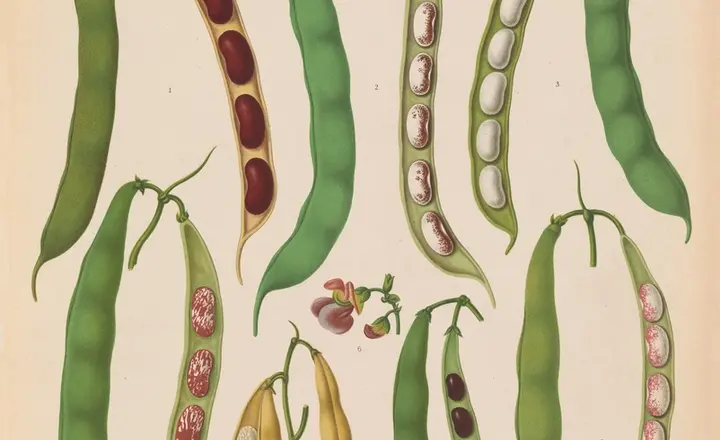
Green bean, snap bean and French bean usually refer to tender-podded forms of Phaseolus vulgaris. Bush or dwarf plants grow about knee-high and need little support. They crop quickly over a relatively short window, so repeat sowings extend harvest. Climbing or pole beans need a tall trellis and begin later, then continue producing when picked regularly.
The RHS French bean guide describes dwarf plants as useful for containers and climbers as a way to produce heavily from a small footprint. Choose pod colour and shape for the kitchen, but also check resistance to locally common disease.
This guide covers snap beans harvested with immature seed. Shelling and dry beans stay on the plant longer and have different maturity and storage rules.
Site, soil and supports
Use a warm, sunny, sheltered site. Beans grow best in soil that retains moisture but drains freely, with a pH around 6.0–7.0. The University of Minnesota Extension advises waiting for warm soil because cold-planted seed may rot.
Add mature compost to improve poor structure, but avoid excessive nitrogen. Beans form a relationship with Rhizobium bacteria that can supply nitrogen. Inoculant may help in soil where compatible beans have not grown, but it must be the correct strain and does not replace all other nutrient needs.
Build climbing support before planting. A trellis, net or cane structure should be anchored for the mature weight and wind exposure. Keep the top within safe harvesting reach.
Sowing and planting
Direct sow seed about 2.5–5cm deep once soil is warm, using the packet depth for seed size and soil type. Space bush beans around 15cm apart in blocks or double rows so plants can support one another. Climbing beans can be sown at the base of each pole, later thinned to the strongest plants.
For an earlier start, sow one or two seeds per small pot. Provide warmth and very bright light, then harden seedlings after emergence. Plant outside after frost risk has passed with minimal root disturbance.
Succession-sow bush beans every two or three weeks until there is no longer enough frost-free season for the cultivar to mature. Climbing beans usually need only one main sowing because they flower repeatedly.
Containers and spacing
Bush beans grow in containers at least 30cm wide; a 20-litre volume gives a more stable root zone. Sow roughly four plants in that space and let stems lean on short twiggy supports. Climbing beans need a much broader, heavier container and a securely anchored trellis.
Containers lose water quickly once leaves cover the surface. Check moisture below the top layer and water until surplus exits the drainage holes. A top-heavy climbing frame can overturn, so treat stability as part of container sizing.
Do not place pots in deep shade to reduce watering. Beans need strong light to flower and fill pods.
Watering, feeding and crop care
Water thoroughly during dry periods, especially from first flower through pod expansion. Avoid shallow daily sprinkling that wets leaves but not the root zone. Mulch after the soil warms to slow evaporation.
Garden beans in reasonable soil need little added nitrogen. Container plants can receive a balanced liquid feed at label strength once reserves decline. Excess nitrogen creates leaves and delays flowers.
Guide climbing shoots around their support at first; they then twine. Stop them at the top if necessary to keep growth manageable. Do not work among wet foliage, because contact can spread bacterial and fungal disease.
Flowers, pods and common problems
Beans are usually self-fertile. Very hot, cold or dry weather can cause flowers to drop, but plants often resume setting pods when conditions improve. Keep watering steady rather than responding with strong fertiliser.
| Symptom | Likely causes to investigate | First checks |
|---|---|---|
| Seed fails to emerge | Cold wet soil, rotting, old seed or animal damage | Soil temperature, seed condition and digging |
| Flowers fall | Heat, drought, cold or root stress | Recent weather and soil moisture |
| Leaves have pale stippling | Spider mites or other sap feeders | Leaf undersides and fine webbing |
| Angular spots or water-soaked lesions | Bacterial or fungal disease | Pattern, wet-weather spread and seed source |
| Pods become tough and stringy | Harvest delayed or variety trait | Pod size and seed swelling |
| Young plants clipped off | Slugs, snails or cutworms | Damage height, slime and night inspection |
Remove badly diseased plants only after identification. Save seed from healthy open-pollinated crops, not from plants with unexplained systemic symptoms.
Harvest and end of crop
Pick snap beans when pods are full length but seeds remain small and the pod snaps cleanly. Hold the stem while picking or cut pods so branches are not torn. Harvest every two or three days at peak production; mature pods signal the plant to slow flowering.
Cool beans promptly and use them within a few days for best texture. Surplus can be blanched and frozen or preserved with a tested food-safety method. Never eat mature dry beans raw; some beans contain lectins that require proper cooking.
After final harvest, cut vines at soil level. Healthy tops can be composted. Leaving roots to decompose avoids unnecessary disturbance, although the nitrogen fixed during growth is not an unlimited fertiliser credit for the next crop.
Sources and review basis
- How to grow French beans — Royal Horticultural Society
- Growing beans in home gardens — University of Minnesota Extension
Sow only when the measured soil temperature and frost outlook suit tender beans. Cultivar height and spacing on the packet take precedence.