Quick answer
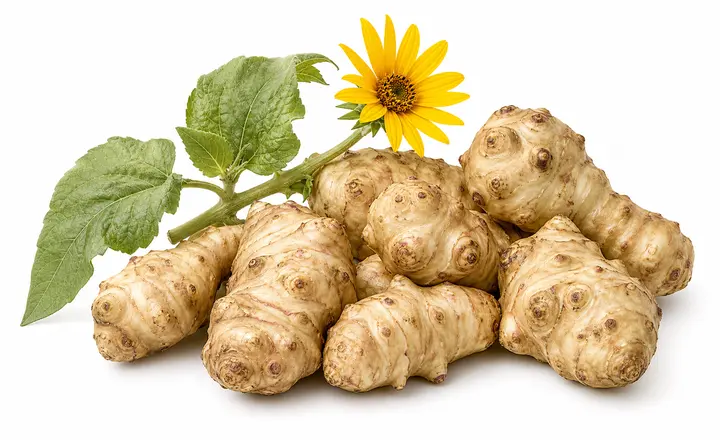
Jerusalem artichokes are hardy perennial sunflowers grown from tubers for a winter crop. Plant firm tubers 10–15cm deep and about 30cm apart from late winter to mid-spring. Give them sun or light shade, moisture-retentive but freely drained soil and a position where stems up to 2–3m will not shade smaller crops.
Water during summer drought while tubers swell, earth up the stems and stake them in exposed gardens. Cut yellowing growth down in autumn, then lift tubers as needed from late autumn through winter. Any piece left behind can regrow, so use a large container or search the bed carefully if you do not want a permanent colony.
Choose tubers and plan for their size
Jerusalem artichoke, Helianthus tuberosus, is unrelated to globe artichoke despite sharing the daisy family. It produces tall annual stems from persistent underground tubers. Smooth-skinned selections are easier to clean; compact cultivars suit exposed plots and very large containers better than tall forms.
Buy dormant, firm tubers without soft patches or mould. Small whole tubers establish readily. A large tuber can be cut into pieces with at least one sound bud each, but allow cut surfaces to dry briefly and discard damaged tissue. Do not plant a supermarket tuber that is shrivelled, decaying or treated in a way that prevents growth.
Site, light and soil
Choose the site before planting: mature stems can form a tall screen and roots are difficult to remove completely. Full sun gives the strongest crop, but plants tolerate partial shade with reduced yield. A northern boundary can turn the height into a useful windbreak without shading the rest of the plot.
The soil should be moderately fertile, moisture-retentive and freely drained, roughly pH 5.5–7.0. Avoid a winter-wet bed where stored tubers may rot. Incorporate mature organic matter or apply it as a no-dig mulch before planting. Very rich nitrogen feeding produces excessive top growth, so use a soil test rather than feeding by habit.
Plant tubers in the ground
Plant from late winter to mid-spring once soil is workable. Set tubers 10–15cm deep and about 30cm apart, with at least 1m between rows where you need access. In a block or screen, rows can be closer, but allow enough air and room to lift the crop. Water after planting if the soil is dry.
Shoots emerge in spring and grow rapidly as conditions warm. Mark the bed so emerging stems are not mistaken for volunteers. Remove unwanted shoots early and dig out the connected tuber rather than only cutting the top.
Grow in a large container
Use a rigid container at least 45cm wide and deep—about 50 litres or more—for one vigorous plant or one to two starting tubers of a compact cultivar. Ensure the base drains freely and use peat-free multipurpose growing medium with enough mineral content to remain stable. Position the container before filling because it becomes heavy and top-heavy.
Container culture helps contain spreading tubers but does not make a small plant. Water regularly throughout active growth and provide a strong support tied to the container or a fixed structure. At harvest, empty the medium methodically and remove every tuber if the container is to hold another crop.
Water, mulch and support
Water new growth during dry spells and continue as tubers enlarge in summer. Established plants tolerate some dryness, but drought produces smaller, more knobbly tubers. Check moisture below the surface and soak the root zone thoroughly rather than sprinkling the leaves.
Mulch in late winter or spring to retain moisture and suppress weeds. When stems reach about 30cm, draw a 15cm ridge of soil around the base to improve stability. In exposed positions, add stakes and soft ties before stems lean. Very tall plants can be shortened to about 1.5m in late summer if wind damage is otherwise likely, though this may reduce flowering.
Flowers, autumn cutting and containment
Small yellow sunflower-like blooms may appear in late summer, especially in warm sites. They are decorative and useful to pollinators but are not required for the tuber crop. Removing flowers redirects a modest amount of growth and makes very tall stems easier to handle.
Once leaves yellow in autumn, cut stems to about 8cm. The stumps mark the tubers below and help prevent accidental digging. Lay dry prunings loosely over the row or add a mulch to slow surface freezing, keeping heavy wet material away from the crowns.
Every overlooked tuber can form a new plant. For strict containment, grow in a container or a dedicated bed and inspect the surrounding soil each spring. Repeatedly remove whole shoots and attached tubers; mowing alone can leave the underground reserve intact.
Diagnose common problems
| Symptom | Likely causes to investigate | First checks |
|---|---|---|
| Stems lean or snap | Height, wind exposure or weak support | Stakes, ties, earthing-up and shelter |
| Tubers are small and very knobbly | Drought, shade, crowding or cultivar | Summer moisture, light and spacing |
| Tubers become soft or rot | Waterlogged soil, damage or poor storage | Drainage, wounds and temperature |
| New shoots appear outside the row | Missed or spreading tubers | Dig around the complete root connection |
| Young foliage is ragged | Slugs or snails | Night-time pests, slime and shelter |
| White cottony rot develops at stem bases | Possible sclerotinia or another rot | Affected tissue, drainage and crop history |
Remove and dispose of seriously rotted plants, and avoid moving suspect soil to clean beds. Diagnose disease before replanting a susceptible crop or using any control.
Harvest, store and replant
Lift from late autumn after the tops die back, using a fork set well outside the clump. Harvest only what you need: the thin-skinned tubers lose moisture quickly after lifting and usually keep best in cool soil. In waterlogged ground, lift the crop and store sound tubers cool and humid for a short period instead.
Scrub rather than peel smooth roots where appropriate, and cook them like other firm tubers. Jerusalem artichokes contain inulin, which can cause digestive discomfort; start with a small portion if you are unfamiliar with them.
Reserve firm, disease-free tubers for replanting. Either reset them in the prepared bed during the normal planting window or leave a deliberately spaced group in place. Remove all remaining pieces if you are ending the crop.
Sources and review basis
- How to grow Jerusalem artichokes — Royal Horticultural Society
- Quick guide to fertilising plants — University of Minnesota Extension
UK planting, support and harvest timing follows the RHS. Cultivar instructions, soil-test results, local frost and drainage conditions, and current edible-crop product labels take precedence over general ranges.