Quick answer
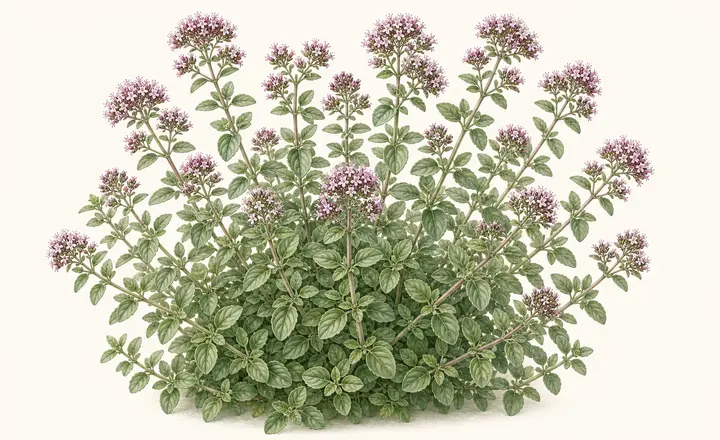
Grow culinary oregano in full sun and free-draining soil or potting mix. Plant hardened-off seedlings or bought plants after the last frost, spacing them 20–30cm from neighbouring plants. Water while they establish, but do not leave mature plants in saturated ground—winter wet is a greater risk than short dry spells.
Pick young shoots from late spring into autumn. Regular harvest keeps the clump bushy; trim established plants in late spring and remove faded flower stems after pollinators have used them. Protect containers from prolonged winter rain and check the label before assuming an unusual oregano species is fully hardy.
Choose oregano for flavour
Common oregano, Origanum vulgare, is a hardy herbaceous perennial, also called wild marjoram. Greek oregano (O. vulgare subsp. hirtum) is selected for strong culinary flavour. Golden and variegated forms may be more ornamental, and the aroma of plants raised from seed can vary.
Oregano and sweet marjoram are not interchangeable in the garden. Sweet marjoram (O. majorana) is milder and usually less winter-hardy in the UK. Check the botanical name, taste and expected mature spread rather than relying on a common name alone. The RHS oregano guide explains these naming and hardiness differences, while NC State Extension notes that cultivars may be chosen for culinary or ornamental qualities.
Sun, soil and planting
Give oregano at least six hours of direct sun; all-day sun is useful where the site is not waterlogged. A warm, open position supports compact, aromatic growth and lets wet foliage dry. Shade usually produces longer, softer shoots and a less dense clump.
Use average, free-draining soil. Heavy ground that stays damp is better handled with a raised bed or container than with a small pocket of amended soil, which can collect water around the roots. Oregano is comfortable around neutral pH, and most herbs grow well at pH 6.0–7.5 according to University of Minnesota Extension. Test the soil before trying to change its pH.
Plant at the nursery depth in late spring, or in early summer for indoor-raised seedlings. Harden seedlings off gradually and wait until frost danger has passed. Allow 20–30cm between young plants, increasing this if the cultivar label predicts a 60cm spread. Water the root ball and surrounding soil thoroughly at planting.
Sowing and propagation
Sow the tiny seeds indoors in spring on the surface of moist, free-draining seed compost; do not bury them. The RHS reports reliable germination at about 20°C, usually within one to three weeks. Keep the tray bright and just moist, ventilate covered trays, and pot seedlings on individually after several leaves develop.
Seed does not reliably preserve the flavour or foliage colour of a named cultivar. To copy a good plant, divide a healthy clump in spring or after flowering, layer low stems in spring or autumn, or take softwood cuttings from non-flowering new growth in summer. Pot divisions and rooted cuttings separately until they are growing strongly.
Ground and container growing
In the ground, avoid roof runoff, low pockets and irrigation intended for thirstier crops. Oregano combines well with thyme, sage and rosemary because they share a preference for sun and drainage. Give it a clear edge to spread into and keep vigorous neighbours from covering the crown.
A single young oregano can start in a container at least 15cm wide and deep, with open drainage holes. A larger pot is more stable in hot weather and gives a vigorous clump room to mature. Use a peat-free, soil-based mix with added grit where needed for drainage, and never leave the pot standing in water.
Mixed Mediterranean-herb containers can work if every plant has enough root room. Do not crowd oregano beside mint in a small trough: mint spreads quickly and needs more moisture. Repot oregano when roots congest the container or when old mix drains poorly.
Water, feeding and pruning
Water new ground plants during dry spells until they establish. Mature oregano in suitable ground rarely needs routine watering. Containers dry faster, so check below the surface and water thoroughly when needed, allowing excess to drain. Wilting in wet compost points to root trouble, not a need for more water.
Ground plants generally need no fertiliser in ordinary soil. Excess feeding produces lush growth without necessarily improving flavour. An oregano that has remained in the same pot for more than a year can receive a modest general-purpose feed in late spring or early summer, following the product label.
Trim dead and straggly stems from established clumps in late spring, cutting back to healthy growth. Pinch or harvest shoot tips to encourage branching. Oregano flowers in summer and early autumn; the small flowers feed bees and other pollinators. Cut faded stems back after flowering for a tidy second flush, but leave some flowers if wildlife value matters.
Diagnosing oregano problems
| Symptom | Likely causes to investigate | First checks |
|---|---|---|
| Wilt or dieback in damp soil | Root or crown rot | Drainage, buried crown and root smell |
| Long, pale, weak shoots | Too little light or excess feeding | Direct sun and fertiliser history |
| Dusty orange, yellow or black spots | Mint rust | Both leaf surfaces and nearby mint-family plants |
| Fine pale mottling | Leafhoppers or spider mites | Leaf undersides with a hand lens |
| Distorted sticky tips | Aphids | Young shoots and shed skins |
| Brown winter crown | Saturation, cold exposure or natural dormancy | Live buds, drainage and cultivar hardiness |
Oregano is usually healthy in sun and free-draining soil. Remove badly diseased debris, improve spacing and airflow, and avoid wetting foliage unnecessarily. Confirm an insect before intervening; small amounts of chewing can be tolerated. If treatment is necessary, use only a product currently labelled for that problem on edible herbs and follow its harvest interval.
Harvest, storage and winter care
Snip leafy shoots just above a pair of leaves from late spring through autumn. The strongest flavour is usually obtained just before the flowers open, but leaves and edible flowers can be gathered whenever the plant is healthy. Take a little from across the clump rather than stripping one side or removing most growth from a young plant.
Use oregano fresh, freeze clean leaves, or hang small leafy sprigs in a dark, dry, well-ventilated place. Once the leaves are completely crisp, strip them from the stems and store them in a labelled airtight jar away from heat and light. Discard any batch that develops mould or a musty smell.
In autumn, clear fallen leaves from the crown but do not stimulate soft growth with late feeding. O. vulgare is generally hardy in well-drained UK ground; unusual species and small pots need more protection. Move containers into a rain shadow or cold, airy shelter where appropriate, keep drainage holes open, and divide congested clumps in spring.
Sources and review basis
- How to grow oregano — Royal Horticultural Society
- Growing herbs in home gardens — University of Minnesota Extension
- Oregano, Origanum vulgare — NC State Extension
Final spacing, flavour and winter protection depend on the species and cultivar. Planting dates should follow local frost conditions, and soil tests and current product labels take priority over general guidance.