Quick answer
Sow parsley into consistently moist seed compost or fine garden soil and be patient: germination is naturally slow and uneven. Thin plants to about 15–25cm, provide sun or partial shade and keep the deep root zone evenly moist.
Harvest the oldest outside stems at their base while leaving the centre to grow. Parsley is biennial: it usually supplies leaves through its first season and over winter, then sends up a flower stalk in the second year. Make repeat sowings rather than expecting an old plant to return to leafy production after bolting.
Choose flat-leaf, curly or root parsley
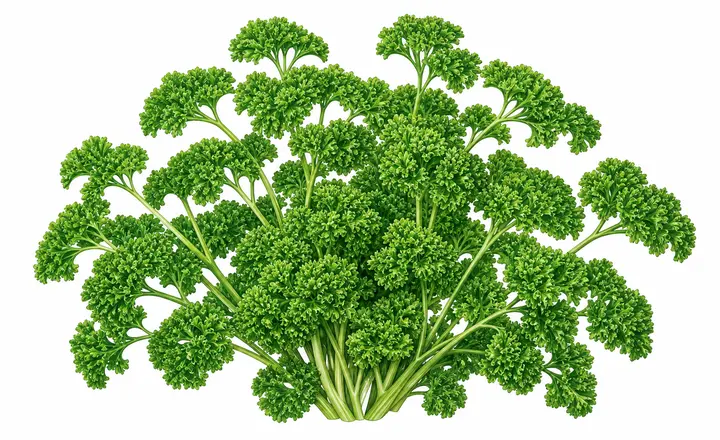
Flat-leaf or Italian parsley has broad divided leaves and a strong culinary flavour. Curly parsley forms tightly ruffled foliage and stays compact. Root parsley is selected for its enlarged edible root and needs deeper, stone-free soil; it should not be managed solely as a cut-and-come-again leaf crop.
Buy seed under the intended culinary type and maintain labels. Parsley belongs to the carrot family, whose seedlings and wild relatives can resemble other species. Do not eat an unidentified plant because it appears parsley-like.
The RHS parsley guide covers both curly and flat-leaf types and their long seed-to-harvest cycle.
Site and soil
Parsley grows in full sun or partial shade. In hot summers, afternoon shade and steady water extend leaf quality; in cool low light, excessive shade slows growth. Use fertile soil that holds moisture while draining freely, with a tested pH around 5.5–7.0.
The plant develops a substantial taproot and dislikes prolonged saturation or severe transplant damage. Remove stones for root parsley and avoid fresh concentrated manure around a crop whose foliage is eaten raw.
Sow and establish plants
Sow outdoors into a shallow pre-watered drill once soil is workable, or start in individual modules under protection. Soaking seed is sometimes suggested to speed germination, but moisture after sowing matters more than an improvised treatment. Keep the seed zone damp without waterlogging it and retain the label while emergence is delayed.
Thin seedlings to 15–25cm according to cultivar and desired leaf size. Transplant modules while young, preserving the root plug. Older root-bound plants can stall. Make a second sowing in early or midsummer for autumn and protected winter leaves.
Containers and indoor growing
Choose a pot at least 20cm wide and deep with clear drainage. Several baby plants can begin together, but full-sized crowns need room and are more productive after thinning. Large containers change moisture more slowly and give the taproots better conditions.
Indoors, use strong light and moderate temperatures. A sunny windowsill may support growth in the bright season, while winter plants often need planned supplemental light. Maintain airflow and do not keep the crown wet.
Water, feeding and overwintering
Water before plants wilt, soaking the root zone and allowing excess to drain. Drought toughens leaves and encourages early flowering. Mulch established outdoor plants where it helps retain moisture, leaving the crown open.
Suitable garden soil needs little additional feeding. Container parsley can receive a dilute balanced feed after initial nutrients decline. Protect selected plants with cloches or fleece where winters are cold, ventilating on mild days. Even protected plants remain biennial and will eventually flower.
Protecting and diagnosing parsley
| Symptom | Likely causes to investigate | First checks |
|---|---|---|
| Seed does not emerge | Slow germination, dry seedbed, cold or old seed | Sowing date, moisture and seed age |
| Leaves yellow from the base | Wet roots, hunger, age or crowding | Drainage, roots and spacing |
| Leaves have winding tunnels | Leaf miners | Mines and larvae within leaf tissue |
| Foliage curls or feels sticky | Aphids or other sap feeders | Shoot tips and leaf undersides |
| Root or crown collapses | Waterlogging, damage or rot | Planting depth and soil condition |
| Central stem elongates | Second-year flowering or stress | Plant age, temperature and moisture |
Carrot-family pests vary by region. Use fine mesh where locally recommended, installed before pests arrive. Identify caterpillars before removal because parsley can support swallowtail larvae in some regions; decide whether to share or protect the crop deliberately.
Harvest and storage
Cut complete outer stems close to the base rather than stripping individual leaflets. Keep several central stems so the crown can replace the harvest. Take modest regular pickings and remove yellowed leaves.
Wash in clean water, dry and refrigerate parsley for short use. Freeze or dry it with a tested method where longer storage is needed. Record cultivar, sowing date, emergence time, winter survival and bolting so future sowings close the seasonal gap.
Sources and review basis
- How to grow parsley — Royal Horticultural Society
- Growing parsley in home gardens — University of Minnesota Extension
Adjust sowing and winter protection to local conditions. Never use a parsley guide to identify an unknown wild plant for eating.