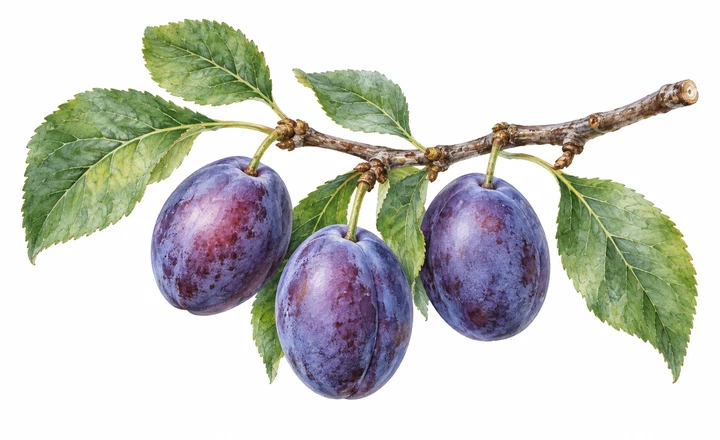
Quick answer
Grow plums in a sunny, sheltered position with soil that drains freely. Buy a named grafted tree on a rootstock that fits your garden, check its pollination needs and keep it watered while establishing. Thin heavy fruit sets before branches become overloaded. In UK conditions, prune established trees in summer rather than winter to reduce disease risk.
This guide centres on European plums, Prunus domestica, including familiar UK dessert and cooking cultivars. Japanese plums and cold-hardy hybrids need their own regional cultivar and pollination advice. The quick-reference spacing is for free-standing bushes on Pixy or St Julien A; trained forms differ. The planting temperature means workable, unfrozen soil, not a winter-hardiness limit. Container volume is a starting planning allowance, not a lifetime pot size.
Match plums to your conditions
Before buying, record summer sun, drainage after rain, spring frost exposure and the width available for the mature canopy. Use the site assessment guide to turn these observations into a shortlist. Include space to pick and prune safely, not just room for a trunk.
Full sun gives the best prospects. Our six-hour minimum and eight-hour preferred figure are planning targets, not precise biological cut-offs. Avoid a waterlogged site. University of Minnesota Extension recommends the sunniest available position and warns that early blossom is vulnerable to freezing temperatures.
Test soil before adjusting it: the RHS plum guide gives an ideal pH of 6–6.5. A frost pocket is a poor investment even if its soil is fertile. Shelter should reduce damaging wind without enclosing the tree in deep shade.
Winter chilling and winter survival are separate issues. A tree may survive a mild winter yet fail to flower normally if its chilling requirement is not met. University of Georgia's plum guide explains why European and Japanese types suit different climates. In warm-winter areas, ask a regional nursery for proven cultivars; in severe-winter areas, use locally tested hardy selections. A successful UK cultivar is not a universal recommendation.
Choose the fruit and the tree size
Choose for the crop you will use. Two trees that ripen together may overwhelm a household that wants a few fresh plums each day.
| Example for UK gardens | Main use | Broad season |
|---|---|---|
| 'Opal' | Dessert plum | Early August |
| 'Victoria' | Eating fresh and cooking | Late August to early September |
| 'Czar' | Cooking plum | Early August |
| 'Marjorie's Seedling' | Cooking and dessert | September |
The RHS cultivar guide lists these as self-fertile. Dates vary with region and weather. Gages offer another dessert choice; damsons are particularly useful for cooking. Do not assume that every gage or plum is self-fertile simply because these examples are.
A grafted tree combines the fruiting cultivar with a rootstock that influences vigour. For a predictable named crop, buy grafted nursery stock; a seedling is an experiment whose fruit and eventual size may differ from its parent.
| Rootstock for a free-standing bush | Planning spacing | Support |
|---|---|---|
| Pixy | About 4m between trees | Permanent stake |
| St Julien A | About 5m between trees | Stake for about five years; assess exposure |
These figures follow the RHS rootstock reference. Pixy is smaller, but still produces a substantial tree. Both may begin cropping after roughly three or four years; the first crop is not a full mature yield. Soil, cultivar and training change the eventual size. Follow the nursery's layout for a pyramid or fan, and do not use close trained-tree spacing for an ordinary bush.
Check pollination before ordering
A self-fertile cultivar can set fruit alone, though suitable neighbours may improve the crop. A self-incompatible cultivar needs pollen from a different compatible cultivar flowering at the same time. Two trees with identical cultivar names do not solve that problem. Flowering groups describe bloom timing, not harvest timing; an early and a late cropper may flower together.
Use the nursery's compatibility chart for the exact pair. The RHS fruit pollination guide explains why suitable pollen and insect access matter. Do not count on an unidentified ornamental tree nearby.
Japanese and hybrid plums require particular care with partner selection. Minnesota's guide, for example, lists compatible pollen sources for individual hardy hybrids. Do not apply a European plum's self-fertility label to another plum type.
Plant and establish
Plant dormant bare-root trees in UK late autumn to early spring when the ground is workable. Avoid frozen or saturated soil. In colder regions, spring planting may be more suitable. Keep exposed roots moist.
Dig a hole broad enough to spread the roots without bending them. Correct circling roots on potted trees. Backfill mainly with the excavated soil and keep the graft union clearly above the settled soil surface. Water thoroughly and check the level after settling. Minnesota's planting instructions illustrate the graft position and explain why a heavily enriched planting pocket can restrict root establishment.
Install the stake or training support at planting. Clear competing grass, mulch while leaving a gap around the trunk, and inspect ties as the trunk thickens. Water during dry spells while the tree establishes; inspect moisture beneath mulch before adding more. Check exposed wall-trained trees particularly carefully because rain may miss their roots.
Grow a plum in a container
Choose a compact cultivar on a suitable size-controlling rootstock, such as Pixy, and a stable pot at least 50cm wide and deep. The 75-litre quick-reference allowance is our practical starting estimate: shape, taper and the root ball affect usable volume. Check both dimensions and capacity, and plan for a larger pot as the tree grows.
Use peat-free, loam-based container compost with clear drainage holes. Position in sun, secure the tree against wind and water the whole root ball when needed. Do not leave it standing in collected water. Pots can require frequent summer attention, so include watering access in the decision to grow one.
The RHS container-fruit guide covers feeding, repotting and refreshing surface compost. Follow fertiliser label rates rather than combining several feeds. For a tree in the ground, review soil fertility and shoot growth before adding nutrients; a poor crop may reflect frost or pollination, not a shortage of fertiliser.
Prune at the right time
For UK gardens, train young trees in spring after growth starts and prune established trees in summer. Avoid routine winter pruning: plums are susceptible to silver leaf infection through wounds. Use dry weather and sharp tools. The RHS plum-pruning guide distinguishes bush, pyramid and fan methods.
For an established bush, retain a balanced, open framework. Remove crossing, weak and overcrowded shoots selectively; do not shorten every branch or strip out all young wood. Remove unwanted growth from below the graft. Fans and pyramids need their own training sequence, so keep the form supplied by the nursery in mind.
Renovate a neglected tree gradually over several summers. A single severe cutback sacrifices useful fruiting wood and encourages vigorous regrowth. Large, high or damaged limbs need an appropriately equipped professional. Where local disease or climate guidance differs, follow advice for your region rather than importing UK dates unchanged.
Thin fruit and follow the season
Thin young plums in early summer to roughly one fruit every 5–8cm, removing damaged and crowded fruit first. Heavy crops can break branches; thin while the load is still small and support vulnerable limbs if needed. These distances follow the RHS growing guide.
| Stage | Practical check |
|---|---|
| Dormancy | Order a suitable tree; check supports and planting conditions |
| Blossom | Watch frost forecasts and observe insect visits |
| Early fruit growth | Inspect crop load, moisture and fruit damage |
| Summer | Prune established trees in suitable weather and monitor ripening |
| After harvest | Record yield, flavour, losses and useful changes for next year |
On a small tree, temporary overnight frost protection can help; uncover flowers during the day for insects. Keep a record of blossom dates and frosts before deciding that a disappointing tree needs replacing.
Identify problems before treating
| Symptom | What to investigate | First response |
|---|---|---|
| Blossom but little fruit | Frost, poor insect activity or incompatible pollen | Compare bloom dates and weather |
| Brown fruit with pale spore patches | Brown rot | Remove affected fruit and inspect touching fruit |
| Gum and sunken dead bark | Bacterial canker or another injury | Photograph bark and seek a diagnosis |
| Early-ripening fruit with a caterpillar inside | Plum moth in affected regions | Cut open damaged fruit to confirm |
| Dropping fruit or scorched leaves in a pot | Moisture stress | Check the whole root ball and drainage |
Brown rot can persist in shrivelled fruit left on the tree. Remove these and fallen infected fruit; careful handling and avoiding fruit injury also help. Do not put rotting fruit into storage with sound fruit.
Bacterial canker can cause sunken bark, shoot death and small leaf holes, but gum alone does not establish that diagnosis. Physical injury and environmental stress can also cause gumming. Confirm the cause before removing substantial branches; follow regional guidance for diseased wood and tool hygiene.
Plum moth larvae feed near the stone, leaving droppings. Pheromone traps are mainly a monitoring aid, not a guarantee of control. Identify the pest before buying a treatment; a spray calendar from another country may target the wrong insect or timing. Use any approved product only according to its current crop label and harvest interval.
Harvest and use the crop
For UK planning, many European plums ripen during August and September. Taste a sample and check for the cultivar's mature colour and a little softness; purple colour is not a universal test because some cultivars remain green or yellow. Pick in several passes, handling fruit gently. Tree-ripened plums usually give the best flavour.
Plan the surplus before peak harvest. Sort damaged fruit from sound fruit promptly. For longer keeping, freezing stoned halves is a practical option. Oregon State University's preservation guide explains freezing and tested preserving methods. If bottling or canning, use a tested recipe and its processing instructions; filling a jar with hot fruit alone is not a validated preservation method.
Record rootstock, cultivar, flowering, thinning and picking dates in your garden journal. A useful first-year outcome is a healthy, well-established tree and evidence about its site, rather than the largest possible immediate crop.
Sources and review basis
- Growing plums — Royal Horticultural Society
- Plum cultivar selection — Royal Horticultural Society
- Fruit rootstocks — Royal Horticultural Society
- Fruit pollination — Royal Horticultural Society
- Fruit in containers — Royal Horticultural Society
- Pruning plums — Royal Horticultural Society
- Brown rot — Royal Horticultural Society
- Bacterial canker — Royal Horticultural Society
- Plum moth — Royal Horticultural Society
- Growing stone fruits — University of Minnesota Extension
- Home garden plums — University of Georgia Extension
- Preserving plums and prunes — Oregon State University Extension
Reviewed 23 September 2026. Calendar advice uses UK seasons. Numeric sun and container-volume figures are planning estimates; rootstock spacing and soil pH follow the cited RHS guidance. Adapt cultivars, pruning and pest management to local conditions and nursery instructions.