Quick answer
Grow rosemary in full sun, shelter and freely draining soil. Plant after the worst winter wet and cold have passed, then water through establishment. Once rooted in suitable ground, rosemary tolerates dry periods better than saturated soil; container plants still need regular checks.
Harvest shoot tips throughout the year and trim lightly after flowering to keep the shrub dense. Do not cut an old, leggy plant hard into bare wood, because it may not reshoot. Take cuttings before replacing an ageing plant.
Choose a rosemary habit
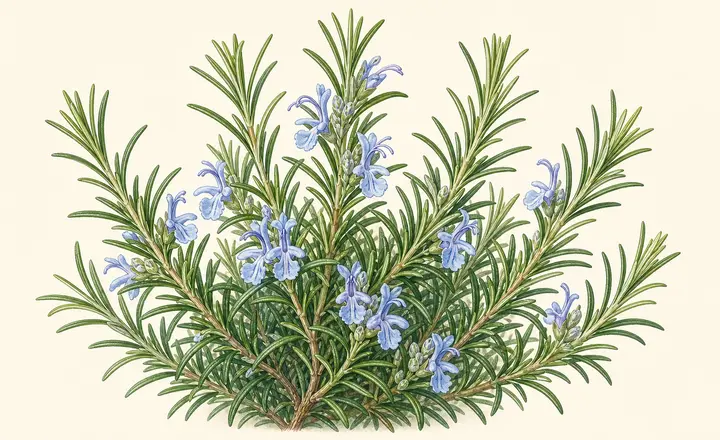
Upright rosemary forms a woody shrub and can become a structural garden plant or low hedge. Prostrate and trailing cultivars spread over raised edges and pots. Compare mature width and hardiness as well as flower colour, aroma and culinary value; a vigorous upright form can outgrow a windowsill container quickly.
Rosemary's accepted botanical name is Salvia rosmarinus, although the older Rosmarinus officinalis still appears on labels. This naming change does not indicate a different kitchen herb.
The RHS rosemary guide describes the plant as a sun-loving Mediterranean evergreen and notes that it may need winter protection in colder UK sites.
Sun, drainage and planting
Provide at least six hours of direct sun, ideally more, with airflow and shelter from severe wind. Rosemary grows leaner and sturdier in well-drained ground than in rich, wet soil. Heavy clay that remains damp through winter is a poor fit; use a raised bed, mound or container rather than adding a small pocket of gritty compost that can hold water like a sump.
Plant at the same depth as the nursery pot. Loosen circling roots gently, water the root ball and surrounding soil, and leave room for the cultivar's mature spread. A working range of 45–90cm suits many culinary forms, but the plant label should decide final spacing.
Do not place rosemary beneath roof runoff or beside irrigation intended for thirstier crops. Compatible neighbours include thyme, sage and other sun-loving herbs that prefer drainage.
Propagation
Buying a named plant gives a predictable habit and hardiness. Seed is possible but slow and variable. Cuttings are the practical way to copy a good plant: take non-flowering softwood shoots in late spring or semi-ripe growth in summer, remove lower leaves and root them in a clean, open medium.
Keep cuttings humid enough to avoid wilting but not sealed in stagnant wet conditions. Pot rooted cuttings individually and grow them on before exposing them to winter extremes. Layering also works where a low stem can be pinned against soil until it roots.
Propagate a replacement before an old plant becomes very woody. Even carefully maintained rosemary may become sparse after several years.
Containers and winter care
Use a pot at least 30cm wide for a young shrub, with multiple open drainage holes. A 20-litre root volume is a practical starting point; larger upright plants need proportionately larger pots or eventual planting out. Use a stable peat-free mix with added drainage appropriate to local materials.
Water thoroughly, then allow the upper medium to dry before watering again. Never leave the pot standing in water. During winter, protect the container from prolonged saturation and root freezing by moving it near a sheltered wall and insulating the pot when severe cold is forecast.
The RHS container-herb guidance emphasises drainage and protection from freezing or winter saturation. A warm indoor living room is not automatically safer: low light and dry air can weaken growth.
Water, feed and pruning
Water new ground plants in dry spells during their first growing season. Established plants in suitable ground rarely need routine irrigation. Pots dry faster, especially in sun and wind, so check the medium rather than watering on a rigid timetable.
Rosemary needs little fertiliser. Excess nitrogen can make soft, sappy growth and does not repair root damage from wet compost. Refresh the top layer of old potting mix and use a modest balanced feed only when growth indicates a need.
After flowering, shorten green shoots lightly to maintain shape. Keep foliage below every cut and avoid old bare stems. Regular harvest can perform much of this trimming. If the plant is already woody and open, take cuttings and plan replacement instead of attempting a severe renovation.
Diagnosing rosemary problems
| Symptom | Likely causes to investigate | First checks |
|---|---|---|
| Whole plant wilts in wet soil | Root rot or oxygen-starved roots | Drainage and root colour |
| Brown tips after winter | Frost, cold wind or wet roots | Exposure and pot saturation |
| Long sparse shoots | Insufficient light or no trimming | Direct sun and pruning history |
| Fine mottling or webbing | Spider mites, often under cover | Leaf undersides with a lens |
| Chewed leaves and shoot tips | Rosemary beetle or larvae | Plant at several times of day |
| White coating on foliage | Powdery mildew | Airflow and spread pattern |
Confirm pests before acting. Rosemary beetle adults are metallic striped beetles; not every beetle on a flowering herb is harmful. Use only treatments labelled for edible herbs.
Harvest and storage
Snip short green shoots as required, shaping the plant evenly rather than stripping one side. The soft growth of late spring and summer is especially useful, but evergreen leaves can be harvested all year. Avoid removing a large share from a young or stressed plant at once.
Use leaves fresh, freeze clean sprigs or dry them in a dark, warm, well-ventilated place. Store fully dried leaves airtight and label the year. Rosemary flowers are also edible when the plant has not been treated with an unsuitable product.
Sources and review basis
- How to grow rosemary — Royal Horticultural Society
- Growing herbs in containers — Royal Horticultural Society
Hardiness varies with cultivar, exposure, drainage and container conditions. Use local winter observations rather than a single temperature rating.