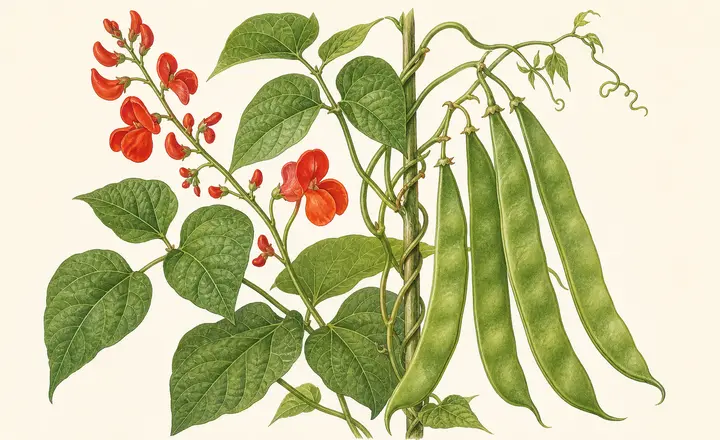
Quick answer
Grow runner beans in a sunny, sheltered position with tall, sturdy supports and soil that holds moisture without becoming waterlogged. Sow indoors in late spring for an earlier start, or sow directly after frost danger has passed and the soil has warmed. Harden indoor-raised plants carefully before setting them out.
Water deeply as flowers open and pods swell. Pick young pods every few days before they become stringy; regular picking keeps the plants flowering. A large container can work, but its small moisture reserve makes watering the limiting job.
Choose climbing or dwarf plants
Most runner beans are vigorous climbers that wind around poles and crop over a long vertical season. They are a strong choice where ground space is limited but a support 2m or taller is practical. Dwarf cultivars stay around knee height, mature sooner and suit exposed plots or pots, but generally produce fewer pods over a shorter period.
Flower colour does not determine eating quality. Compare pod texture, stringlessness, expected length, self-fertility and performance in local summer conditions. Runner/French bean hybrids can set more reliably during hot, dry weather than traditional runner beans.
The RHS runner bean guide describes them as productive UK veg-plot staples and recommends young, frequent harvests.
Site, soil and supports
Allow at least six hours of direct sun and shelter plants from persistent wind, which can damage foliage and discourage pollinating insects. Runner beans favour fertile soil with plentiful organic matter and steady moisture. Improve a suitable bed with mature compost or well-rotted manure; use a raised bed only where drainage is poor, because raised soil may dry quickly.
Build supports before planting. A double row of inward-leaning canes, a wigwam, strong trellis or tensioned netting can all work. Anchor the structure for the combined weight of wet foliage and pods. Leave the top reachable or pinch out climbing tips once they reach the support so harvest does not develop out of range.
Avoid placing canes where their base punctures irrigation lines or a container's drainage fabric. On balconies, secure the entire structure rather than relying on the weight of potting mix.
Sowing and planting
Sow one bean 5cm deep in an individual pot, then give emerging plants bright light. Starting a few weeks before the last expected frost is usually enough; very early plants become tangled and difficult to harden. Runner beans are tender, so plant outside only after frost risk has passed.
Direct sowing avoids transplant shock. Sow into warm, prepared soil and protect emerging shoots from slugs, snails and birds. If the first sowing fails in cold wet soil, remove rotting seed and wait for better conditions rather than repeatedly adding more seed.
Set climbing plants about 15–25cm apart according to the support and cultivar. Water them in well and guide the first stems loosely to their poles; runner beans normally begin twining without repeated tying.
Containers and small spaces
Use a deep container of at least 30 litres for a small group of climbing plants, or choose a dwarf cultivar. A 40cm-wide pot is a practical minimum, but a larger container buffers heat and drying. Keep drainage holes open and use fresh peat-free potting compost with enough structural material to resist slumping.
The RHS runner bean feature suggests a generous 30-litre container and stresses warmth and reliable water. Check pots at least daily in hot or windy conditions. Once growth is active, use a suitable general-purpose or tomato-type feed at the labelled rate; feeding cannot compensate for a dry root ball.
Water, flowers and pod set
Keep moisture reasonably even from establishment onward, increasing attention when flowering and pod development begin. Water the root zone thoroughly instead of wetting leaves with repeated shallow sprays. Mulch established in-ground plants after the soil is warm and moist.
Flowers may fall without forming pods during hot, dry spells, in persistent wind, or where pollinator activity is limited. Water stress at the roots is often more important than spraying the flowers. Encourage insects with nearby flowers and avoid unnecessary insecticide use. Self-fertile or runner/French hybrid cultivars can improve reliability where pod set is a recurring problem.
Pinching the main growing tips once plants reach the top of their supports can redirect growth and prevent an inaccessible tangle. Do not remove healthy side shoots carrying flowers.
Diagnosing runner bean problems
| Symptom | Likely causes to investigate | First checks |
|---|---|---|
| Seed fails to emerge | Cold wet soil, rot, mice or birds | Soil warmth, seed condition and disturbance |
| Young plant cut off or shredded | Slugs, snails or wind injury | Night inspection and shelter |
| Many flowers but few pods | Heat, drought, wind or poor pollination | Root moisture and recent weather |
| Curled or sticky shoot tips | Aphids or other sap feeders | Young growth and leaf undersides |
| Pale plants with wet soil | Root stress or poor drainage | Soil structure before adding feed |
| Pods tough and stringy | Harvest delayed or unsuitable variety | Pod size and picking interval |
Remove diseased residues at season's end and rotate beans with unrelated crops where practical. Do not assume that every leaf spot needs treatment; confirm whether symptoms are spreading and whether damage is affecting new growth.
Harvest and storage
Pick when pods are young, crisp and before the seeds make large bumps. Hold the stem with one hand and cut or snap the pod cleanly to avoid tearing a flowering shoot. During peak growth, inspect plants every two or three days.
Use pods promptly for best texture, or blanch and freeze them with a tested food-preservation method. Mature dry seed from a variety intended for that use must be cooked correctly before eating; raw or undercooked runner beans contain naturally occurring lectins.
Record the cultivar, sowing date, first flowering, first harvest and any period of poor pod set. Those observations make next year's timing and variety choice more useful than a fixed calendar date.
Sources and review basis
- How to grow runner beans — Royal Horticultural Society
- Growing runner beans: secrets of success — Royal Horticultural Society
Follow seed-packet spacing for named cultivars. Move sowing and planting dates with local frost, soil temperature and exposure.