Quick answer
Grow culinary sage, Salvia officinalis, in full sun and freely draining soil. Plant hardened-off young plants in spring as the soil warms, leaving 30–60cm between typical culinary forms and more room where the cultivar label predicts a wider shrub. Water through the first growing season, but protect established plants from waterlogging, especially in winter.
Harvest young shoots regularly and prune lightly in mid- to late spring to keep the plant bushy. Always leave leafy growth below a cut: old bare stems may not reshoot. A container should be at least 30cm wide and deep, drain freely and stay out of prolonged winter rain.
Choose culinary sage
Many unrelated plants include “sage” in their common name. Standard culinary sage is Salvia officinalis, an aromatic, short-lived evergreen sub-shrub in the mint family, Lamiaceae. Pineapple sage, Russian sage and ornamental salvias differ in flavour, hardiness and care, so confirm the botanical name before buying for the kitchen.
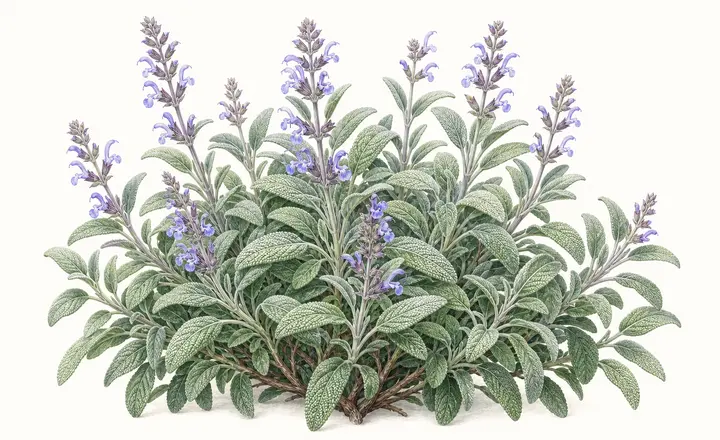
Common sage has soft, wrinkled, grey-green leaves and blue-purple summer flowers. Purple, golden and tricolour cultivars add foliage colour, while compact forms fit smaller spaces. Compare culinary quality, mature spread and winter hardiness rather than assuming all cultivars behave alike. The RHS sage guide gives a mature height and spread of 30–90cm, depending on variety.
Conditions that determine success
Give sage at least six hours of direct sun, shelter from severe wind and airflow around the leaves. Shade encourages open growth and keeps foliage damp for longer. Sage tolerates lean, dry conditions once established, but it does not tolerate a root zone that remains saturated.
Choose sandy, loamy or stony ground where water drains away readily. On heavy or compacted soil, use a raised bed, mound or container instead of creating a small amended hole that can collect water. The NC State Extension profile places common sage in well-drained soil around pH 6.0–8.0. Do not add lime or fertiliser solely to reach a number; use a soil test and local recommendations first.
Plant at the same depth as the nursery root ball, firm gently and water the surrounding soil. Allow at least 30cm between compact plants and about 45–60cm for many ordinary culinary forms; vigorous plants may need closer to their labelled mature width. Sage needs no routine support, although a tall, spreading specimen in an exposed place may benefit from a discreet stake.
Sow, take cuttings or layer
Bought plants and cuttings are the quickest route to a predictable cultivar. For seed, sow common sage indoors in spring in moist, free-draining seed compost, cover thinly and keep warm and bright. Pot seedlings on before they become crowded, then harden them off gradually. Seed-raised plants are variable and may take a year to reach useful harvesting size.
Take softwood cuttings from healthy, non-flowering shoots in late spring or early summer. Remove the lower leaves, place the stems in a clean, open propagation medium and keep them just moist while they root. Named foliage cultivars should be propagated vegetatively if their characteristics matter.
Low branches may root where they touch the soil. Pegging one down in spring or autumn, then separating it only after roots form, is a low-risk way to make a replacement. The RHS notes that sage often becomes woody and straggly after several years, so propagate before the old plant declines.
Containers and planting out
For one young sage, use a container at least 30cm wide and 30cm deep with several unobstructed drainage holes. Pot shape affects capacity, but about 20 litres is a practical starting volume for these dimensions; a vigorous cultivar will eventually need a larger pot or planting in the ground. Use a stable peat-free, soil-based mix with added drainage appropriate to the product and local materials.
Set out indoor-raised plants in spring once the soil is warming, after hardening them off. A settled temperature around 5°C or above is a conservative planting threshold, not a claim that established sage is killed by every frost. Cultivar, exposure, root establishment and winter wet all affect survival.
Water thoroughly after potting, then let excess water escape. Never leave the container standing in a full saucer. In winter, place it in the rain shadow of a wall or another bright, sheltered position and protect the root ball during severe cold; a dim, heated room is not automatically safer.
Water, feeding, flowering and pruning
Water newly planted sage during dry spells in its first year. Established plants in suitable ground usually manage on rainfall, while containers require regular checks in warm, windy weather. Water the whole root ball, then allow the surface to begin drying before watering again. Wilting in wet soil is a reason to inspect roots and drainage, not to add more water.
Ground-grown sage generally needs no feeding. For a plant kept in the same container beyond its first year, a modest general-purpose feed in late spring or early summer can replace depleted nutrients. Follow the product label; excessive nitrogen promotes soft growth and cannot correct poor drainage.
Flower spikes appear in summer and are valuable to bees. Leave them where pollinator value matters, or remove some before they fully develop when tender leaf production is the priority. Trim faded spikes later in summer. Lightly prune established plants in mid- to late spring, shortening green growth while keeping leaves below every cut. Do not attempt to rejuvenate a bare, woody centre with severe pruning; root a replacement instead.
Diagnose common sage problems
| Symptom | Likely causes to investigate | First checks |
|---|---|---|
| Whole plant wilts while soil is wet | Oxygen-starved roots or root rot | Drainage holes, root colour and smell |
| Pale coarse mottling on leaves | Sage or Ligurian leafhoppers | Leaf undersides and spread of damage |
| Chewed leaves or shoot tips | Rosemary beetle adults or larvae | Metallic striped beetles and grey larvae |
| Distorted or tattered young growth | Capsid feeding, wind or physical damage | New growth and nearby affected plants |
| White dusty coating | Powdery mildew | Airflow, crowding and watering pattern |
| Long, weak or open growth | Too little sun, excess feeding or missed pruning | Direct light and recent care |
| Browning after winter | Saturated roots, frozen pot or cold wind | Exposure and moisture at the crown |
The NC State Extension plant profile also lists spider mites, spittlebugs, slugs, root rot and verticillium wilt as possibilities. Diagnose before treating: modest insect damage rarely threatens an established plant. Remove badly affected material, improve the growing conditions and use only controls whose current label permits use on edible herbs.
Harvest, storage and end-of-season care
Pick individual leaves or short young shoots as needed, taking small amounts from across the plant so it stays balanced. Harvest lightly in the first year while roots establish. Evergreen leaves are available year-round, but new spring and summer growth is usually in the best condition and has the finest texture.
Use leaves fresh, freeze them whole or chopped, or dry clean sprigs in a warm, dark, well-ventilated place. Strip the leaves when fully dry, store them in an airtight labelled container and discard any batch that develops moisture or mould.
After flowering, remove spent spikes but avoid hard late-season pruning that would leave tender new growth before winter. Clear fallen diseased material, check container drainage and move spare rooted cuttings to a sheltered bright position. Replacement is often more reliable than trying to restore a plant that has become mostly bare wood.
Sources and review basis
Guidance was reviewed for UK outdoor growing on 28 July 2026. Final spacing, hardiness and flavour depend on cultivar; planting timing depends on local soil and weather; fertiliser and plant-protection products must be used according to their current labels.