Quick answer
Plant healthy shallot sets pointed end upward in full sun and fertile, free-draining soil, leaving the tip just visible and spacing sets 15–20cm apart. Spring planting is the simplest choice in cold or wet gardens; only use autumn- or winter-planting cultivars where drainage and local conditions suit them. Keep the shallow root zone weed-free, water during prolonged early-summer drought, and stop once the bulbs have swollen.
Lift the clusters when foliage yellows, falls over and starts to die back. Separate the bulbs carefully, dry them with good airflow until the skins and necks are papery, and store only sound bulbs. Sets normally multiply into a cluster; a seed-raised plant normally forms one bulb.
Sets, seed and the conditions that determine success
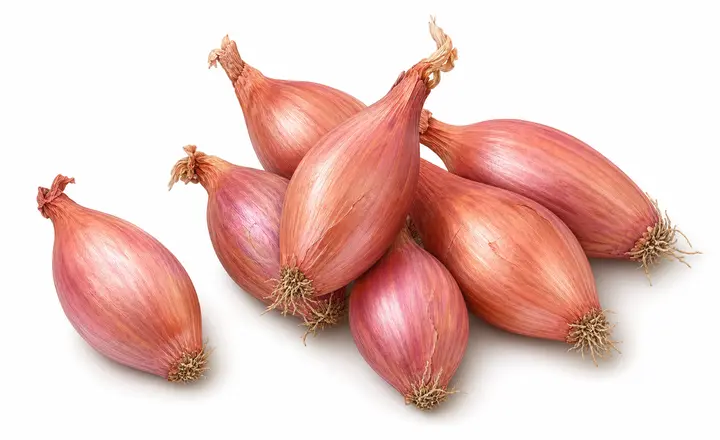
Shallots are clump-forming members of the onion species, commonly listed as Allium cepa Aggregatum Group. The RHS plant profile places them in the Amaryllidaceae family and describes them as perennial bulbs usually cultivated on an annual cycle.
Sets are immature bulbs and the easiest starting material. Buy firm, disease-free, named stock; each set can divide into several new bulbs. Seed costs less and offers useful cultivars, but seedlings need a longer start and each normally makes a single bulb. Multi-sowing three or four seedlings in one module deliberately creates a harvestable group without forcing the roots apart.
Success depends most on uninterrupted leaf growth before lengthening days trigger bulbing, enough room for a set to divide, and drainage that prevents the base sitting wet. Cultivar choice affects shape, planting season, bolting resistance and storage life, so the packet or supplier instructions should override a blanket calendar.
Site, soil and rotation
Choose a position with at least six hours of direct sun; eight hours is preferable where available. Shallots have a limited root system and compete poorly in shade or among weeds. Use fertile soil that holds useful moisture but drains freely after rain. A soil-test range of pH 5.5–7.5 is supported by Utah State University Extension; do not add lime without a test.
Work mature garden compost into low-organic-matter soil before planting. Avoid fresh manure and waterlogged ground. A raised bed or container is safer than an autumn planting in heavy, wet clay.
When practical, rotate shallots away from onions, garlic, leeks and other alliums. Rotation will not cure an established soil-borne problem, but it reduces repeated host pressure. Do not move soil or save bulbs from a bed where white rot is suspected.
Planting sets and sowing seed
Plant spring sets once the soil is workable, usually from early to mid-spring in UK conditions. Plant each set root plate down with its tip just showing, 15–20cm from the next set and with 25–30cm between traditional rows. Firm and water once. If birds pull sets out before they root, replace them and use securely fixed fleece or suitable netting that cannot trap wildlife.
Only plant in autumn or winter when the cultivar is sold for that season. Cold exposure can trigger bolting in susceptible material, while saturated winter soil can rot sets. Heat-treated sets may reduce bolting risk, but the supplier's treatment and planting instructions still matter.
For seed, sow under cover in late winter in modules, thinning each module to three or four seedlings, then harden off and plant the intact group outside in spring. Alternatively, direct-sow about 1.5cm deep once the soil is warming in mid-spring. Thin gradually to about 10cm for individual seed-raised bulbs. Closer spacing produces more but smaller bulbs; wider set spacing gives multiplying clusters room to develop.
Growing in containers
Use a pot at least 30cm wide and 30cm deep with unobstructed drainage holes, filled with a peat-free, soil-based growing medium. Keep the same 15–20cm spacing: in a broad 30cm container this generally limits planting to three evenly spaced sets. A single set or two sets will have more room to form large clusters.
Pots dry faster than garden soil but can also remain saturated in a saucer. Check the medium rather than watering by calendar, empty standing drainage water, and protect overwintered containers from prolonged waterlogging and repeated freeze-thaw exposure. Growing bags are generally too shallow and moisture-variable for a dependable storage crop.
Watering, feeding and routine care
Water newly planted sets and transplants to settle the soil. Once rooted, in-ground plants normally need extra water only during prolonged dry weather in early summer. Apply water to the soil, not the foliage, and wet the root zone thoroughly rather than sprinkling every day. Container crops need more frequent checks.
Reduce and then stop watering once bulbs are fully swollen and foliage begins to mature. Late wetness encourages disease and can shorten storage life. Shallow hoeing or hand-weeding is important, but keep tools away from bulbs and roots.
Mature compost before planting is often sufficient in ordinary garden soil. Base additional feeding on a soil test. If an autumn crop in poor soil needs nitrogen, apply it during renewed early growth; avoid late nitrogen once bulbing is under way. Container plants can receive a label-rate general liquid feed during active growth, stopping by mid-summer.
Shallots need no staking, training or routine pruning. Do not earth up the expanding clusters. If a firm flower stalk appears, remove it promptly so growth is not diverted from the bulbs, and mark that cluster to use first because bolted bulbs store poorly.
Bulb division and bolting
Each planted set contains growing points that develop into a cluster as days lengthen. Cluster size and individual bulb size depend on cultivar, starting-set size, spacing, leaf growth and season. Crowding may produce smaller bulbs or little division; shade, drought and heavy weed competition reduce the leaf area that powers bulbing.
Bolting is premature flowering, commonly associated with cold stress in susceptible plants. A flower stalk does not make the crop unsafe, but it usually leaves a hard centre and poorer storage potential. Remove the stalk, keep the plant growing, and use its bulbs soon after harvest rather than placing them in the main store.
Diagnosing common problems
| Symptom | Likely causes to investigate | First checks |
|---|---|---|
| Set sits loose or disappears | Bird disturbance, poor firming or rot | Rooting, surface holes and bulb firmness |
| Leaves yellow and wilt early | Waterlogging, onion fly damage or white rot | Root plate, larvae, white growth and spread in the bed |
| Grey-white growth on leaves | Downy mildew or another foliar disease | Humidity, crowding and whether lesions are spreading |
| Orange raised spots | Leek rust | Pustules on both leaf surfaces and nearby alliums |
| Flower stalk develops | Bolting after cold stress or cultivar sensitivity | Planting date, temperature history and stock type |
| Cluster is small | Shade, weeds, drought, low fertility or crowding | Sun hours, spacing, soil moisture and test results |
| Bulbs soften in storage | Incomplete curing, neck rot, injury or humid storage | Neck dryness, bruising, airflow and affected neighbours |
Remove rotting bulbs and do not compost or replant material from a suspected serious disease outbreak. White rot can persist in soil for years; seek confirmation from a local plant-health or diagnostic service before deciding how to manage the site. Use physical and cultural controls first, and follow local rules and the product label if any plant-protection product is considered.
Harvest, curing and storage
Shallots usually mature in mid- to late summer. Harvest when most foliage has yellowed, flopped and begun to dry, rather than forcing green tops down. Loosen the whole cluster with a hand fork, lift without bruising it, and separate bulbs gently.
Dry bulbs in a single layer on a rack or slatted tray with air moving beneath. Outdoor sun is suitable in settled dry weather; use a bright, dry, well-ventilated shed or greenhouse when conditions are damp. Curing is complete when necks, foliage and outer skins are fully dry and papery.
Trim only after curing. Store undamaged bulbs in nets or shallow trays in a cool, dry, light and ventilated place, checking periodically for softness or sprouting. Use bruised, bolted or thick-necked bulbs first. Save only the healthiest well-formed bulbs for replanting, and keep them dry and separate from eating stock until the next suitable planting window.
Sources and review basis
- How to grow shallots — Royal Horticultural Society
- How to grow shallots in your garden — Utah State University Extension
- Allium cepa Aggregatum Group plant profile — Royal Horticultural Society
Planting dates, cold exposure, day length and storage performance vary with cultivar and climate. This guide was reviewed for UK use; locally recommended cultivars, current supplier instructions, soil tests and regional plant-health advice take precedence.