Quick answer
Grow sweet potatoes from slips or rooted plug plants, not by planting them like ordinary potatoes. Keep the young plants warm and bright, then plant them into reliably warm soil after frost risk has passed. In most of the UK, a greenhouse, polytunnel or cloche-protected bed gives a much better chance of a useful crop than an exposed plot.
Give each plant full sun, free-draining soil, at least 30cm of space and steady moisture while it establishes and makes storage roots. Allow four to five warm months. Lift before frost, handle the thin-skinned roots gently and cure only sound roots in warm, humid, well-ventilated conditions before storing them above chilling temperature.
Understand what determines success
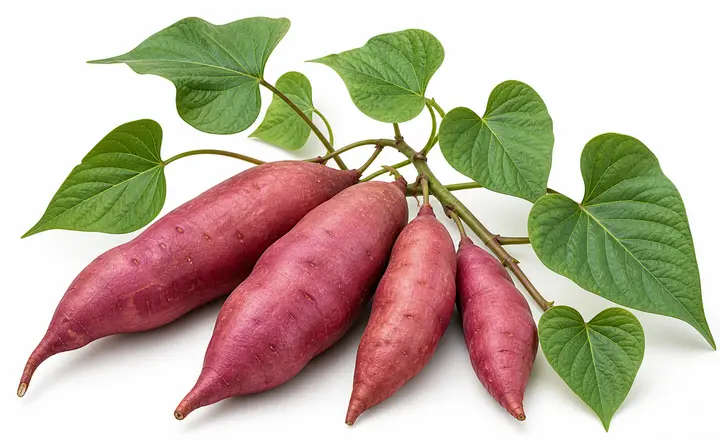
Sweet potato, Ipomoea batatas, is a tropical member of the morning-glory family, not a close relative of the ordinary potato. The edible parts are swollen storage roots rather than stem tubers. Earthing up the vines as if they were potatoes is therefore unnecessary.
Warmth and season length are the main limits. The RHS sweet potato guide gives 21–26°C as the best cropping range and says that most varieties need at least four to five months. Choose an early cultivar sold for the UK climate, especially for outdoor growing. A vigorous long-season cultivar can produce impressive foliage yet very little harvest if autumn arrives before its roots bulk up.
Provide at least six hours of direct sun, preferably eight or more. Outdoors, use the warmest sheltered position available and warm the soil under a cloche or fleece before planting. Do not confuse a windless, stagnant greenhouse with a good site: ventilate in hot weather and inspect leaves regularly for glasshouse pests.
Start plants from slips
A slip is a leafy shoot produced by a sweet potato root. Buying healthy slips or rooted plugs from a reputable supplier is the simplest method. Pot unrooted slips promptly into moist peat-free compost, or root their bases in clean water before potting. Keep them warm, humid at first and in strong light; gradually reduce humidity once new growth shows that roots are working.
To produce your own, start a sound, disease-free root in warm, moist sand or potting mix in spring. Cut off sturdy leafy shoots when they are large enough to handle and root them individually. The University of Maryland Extension guide allows about six weeks for producing slips and recommends 24–29°C for sprouting. Supermarket roots may be slow to sprout and have no assurance of cultivar identity or freedom from crop diseases, so they are an experiment rather than dependable planting stock.
Grow slips on in small pots until they have a useful root system. Harden them off gradually before an outdoor move, but do not expose these tender plants to cold simply to make them “tough”. They should go into their final position only after frost risk and when the soil is reliably around 18°C or warmer.
Prepare the site and soil
Use moisture-retentive but freely draining soil. A light loam is easy to harvest from; heavier ground can work if it is improved with mature organic matter and shaped into a low ridge to warm and drain. Remove stones and compacted clods that can obstruct expanding roots. Do not make a small pocket of fresh manure around each plant.
A working soil-pH range of 5.5–6.8 suits the crop. Oklahoma State University Extension places the optimum for high-quality roots near pH 5.8–6.0, but a soil test should come before liming or acidifying. Rotate away from sweet potatoes and other morning-glory relatives where soil-borne disease has occurred.
Plant in the ground or a container
Set rooted plants at the same depth they occupied in their pots and water immediately. Space them 30–45cm apart within a row. If the vines will sprawl, leave roughly 90cm between conventional rows or plan an equivalent open area; closer paths are possible when vines will be trained upward. Black or biodegradable mulch can warm the root zone, but the soil must already be moist and every planting hole must drain.
For one plant, use a container at least 30cm wide and about 20 litres, with unobstructed drainage. This is a practical minimum; a wider, deeper planter or grow bag buffers heat and water better and leaves more room for storage roots. Use fresh peat-free potting compost and do not put several slips into a minimum-size pot.
Plants may trail for 1.5m or more. Let vines cover a bed or tie them loosely to a sturdy trellis, cane wigwam or greenhouse strings. Support is for managing foliage, not for supporting the underground crop.
Water, feed and manage the vines
Water thoroughly after planting and keep the root zone evenly moist during establishment and root expansion. Check containers frequently in hot weather. Waterlogging excludes air and encourages decay, while repeated drying and flooding can contribute to stalled growth or split roots. Apply water to the compost or soil rather than routinely wetting the whole canopy.
In prepared ground, feed according to a soil test and plant response. Excess nitrogen can favour vines over storage roots. Container nutrients wash out through drainage, so use a complete crop feed at the label rate once the compost's initial charge is depleted; where a suitable high-potassium liquid feed is used, the product label—not a blanket calendar—sets the safe concentration and interval.
Sweet potatoes do not need pollination or flowering to make their edible roots. Healthy leaves power root development, so do not prune routinely. Trim only damaged growth or stems that cannot be redirected, and tie in climbing vines before they become tangled. Keep young plants weed-free; established foliage usually shades much of the soil.
Diagnose common problems
| Symptom | Likely causes to investigate | First checks |
|---|---|---|
| Large vines but few or thin roots | Short or cool season, excess nitrogen, shade or compact soil | Root-zone warmth, sun hours, feeding history and harvest date |
| Plant stalls or yellows after planting | Cold soil, transplant stress, drought or waterlogging | Soil temperature, moisture below the surface and root condition |
| Fine pale stippling or webbing | Glasshouse red spider mite | Leaf undersides, nearby plants and hot, dry glasshouse conditions |
| Sticky leaves with small white insects | Glasshouse whitefly | Leaf undersides and whether adults rise when foliage is disturbed |
| Forked, rough or misshapen roots | Stones, compaction, poor drainage or uneven growth | Soil structure, bed history and moisture pattern |
| Roots split | Abrupt moisture change or roots left to become oversized | Recent irrigation or rain and cultivar maturity |
| Soft dark areas after lifting | Harvest injury, chilling or storage rot | Cuts and bruises, curing conditions and storage temperature |
| Roots have holes or gnawing | Wireworms, grubs, slugs or rodents | Damage shape, previous turf and signs around the bed |
Confirm a pest before acting. Remove badly affected plant material, improve airflow and growing conditions, and use physical controls where practical. If a pesticide is considered, use only a product currently authorised for the pest and edible crop in your region, and follow its label exactly.
Harvest without damaging the roots
Check the cultivar's maturity range and begin investigating after roughly four months of good warm growth. Lift before frost, usually in September or October in the UK. Yellowing foliage can accompany maturity, but approaching cold is a firmer deadline than waiting for every leaf to die.
Cut back the vines, then loosen the soil with a fork placed well outside the crown. Lift the root cluster and separate it by hand. Sweet potato skin is easily rubbed or bruised at harvest, so do not throw the roots into a container or scrub them clean. Set aside cut, cracked or bruised roots for prompt use; only sound roots are candidates for storage.
Cure, store and finish the season
Curing heals minor skin wounds and improves eating quality, but it requires warmth, humidity and airflow together. Commercial guidance uses about 29°C and 80–90% relative humidity for five to ten days. The Maryland Extension source notes that this is difficult to reproduce at home; a warm, covered, ventilated place for about a week is a practical partial cure. Do not wash roots first, expose them to rain or seal damp roots in plastic.
After curing, store sound roots in a dark, ventilated place ideally around 13–16°C. Do not refrigerate them: temperatures near or below 10°C can cause chilling injury. Check the crop regularly and remove any root that softens, leaks or develops rot. Home storage conditions vary, so use the roots rather than assuming they will keep for a fixed number of months.
Frost ends the outdoor crop. Remove killed vines promptly and do not overwinter roots in cold ground. If saving planting material, select only sound, correctly identified roots from healthy plants, cure and store them separately, and reassess them for decay before starting next year's slips.
Sources and review basis
- How to grow sweet potatoes — Royal Horticultural Society
- Growing sweet potatoes in a home garden — University of Maryland Extension
- Sweet potato production — Oklahoma State University Extension
Temperature, maturity, spacing and storage are working ranges. Cultivar instructions, measured soil conditions, product labels and reliable regional guidance take precedence where they are more specific.