Quick answer
Sow Swiss chard in spring for summer and autumn leaves, with another midsummer sowing where plants can overwinter for early spring harvests. Give mature plants 20–40cm spacing, fertile moisture-retentive soil and regular water. Harvest the oldest outside leaves at their base while leaving the centre intact.
Chard tolerates heat better than spinach and light frost better than many summer leaves, but sustained drought produces tough growth. Coloured and white-stemmed varieties grow similarly; choose for mature size, cold tolerance and appearance.
Understand the names and types
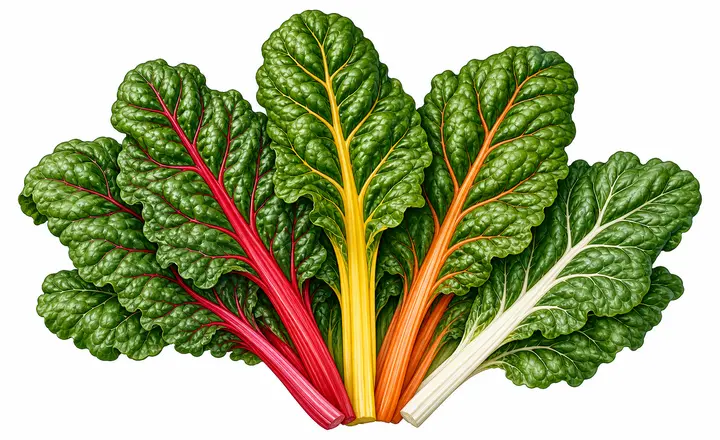
Swiss chard, silver beet, leaf beet and perpetual spinach are closely related forms of Beta vulgaris. Large chard types develop thick edible midribs in white, red, pink, orange or yellow. Leaf-beet forms often have slimmer stems and are grown mainly for repeated leaves.
Mixed-colour seed produces plants with different stem colours, not several colours on one plant. White-stemmed cultivars are often vigorous and cold-tolerant, while compact coloured forms work well in ornamental edible beds and containers.
The RHS chard guide describes repeated leaf harvests over a long season and a second midsummer sowing for overwintering.
Site and soil
Use full sun for maximum growth or partial shade where summers are hot. Less than four hours of direct sun slows regrowth and can prolong leaf wetness. Shelter broad leaves from severe wind.
Chard grows best in fertile soil that drains while retaining moisture, with a tested pH around 6.0–7.0. Add mature compost where soil needs organic matter, then base fertiliser on soil condition. It is a leafy crop, but excessive nitrogen produces soft growth without correcting low light or root stress.
Sow and thin
Direct-sow into shallow drills once soil is workable, or start in modules when pests, weather or bed availability make that useful. Chard seed clusters can produce more than one seedling, so thin decisively. Use thinnings as baby leaves only when they are clean and healthy.
Space baby-leaf sowings closely for an early cut, but treat them as a separate short crop. For repeated full-sized leaves, thin plants to roughly 20–40cm according to cultivar. Crowding reduces stem size, airflow and picking access.
Transplant young modules before they become root-bound, harden them and preserve the root ball. Keep the growing point level with the surrounding soil.
Containers and succession
Grow one mature chard plant in a pot about 30cm wide, or use a broad container for several baby-leaf plants. Ensure free drainage and enough depth for the substantial taproot. Small pots wilt rapidly under a canopy of large leaves.
Sow a small spring batch and another in midsummer rather than allowing old plants to occupy space indefinitely. In mild climates or under protection, later plants can survive winter and resume growth early, but replace them once they bolt in their second season.
Water, feed and overwinter
Water deeply when the root zone begins to dry, especially during establishment and after a heavy harvest. Mulch established plants to reduce evaporation while keeping material away from the crown. Container plants can receive a balanced feed when the mix's initial nutrition is depleted.
In cold regions, protect selected late-sown plants with cloches or fleece where locally appropriate. Remove damaged leaves and maintain ventilation. Frost tolerance varies with cultivar, plant condition and exposure; do not expect actively growing leaves to remain perfect through severe cold.
Protecting and diagnosing chard
| Symptom | Likely causes to investigate | First checks |
|---|---|---|
| Pale winding tunnels | Leaf miners | Mines and larvae within the leaf |
| Small ragged holes | Flea beetles, slugs or other chewing pests | Damage size, slime and leaf undersides |
| Leaves wilt in wet soil | Root damage, waterlogging or disease | Drainage and root condition |
| Brown leaf margins | Drought, salt buildup or heat | Soil moisture and feeding record |
| White or grey leaf growth | Mildew or other fungal disease | Leaf surface, spacing and humidity |
| Central stalk elongates | Bolting from age or stress | Plant age, heat and moisture history |
Remove badly mined leaves while plants are small and use locally appropriate barriers before adult insects lay eggs. Diagnose diseases before composting residues or treating edible foliage.
Harvest and storage
Cut outside leaves at the base with a clean knife, leaving several central leaves and the growing point. Regular light harvests maintain quality. For a larger cut, leave enough base and centre for regrowth rather than slicing through the crown.
Separate thick stems from leaves in cooking because they soften at different rates. Cool harvests quickly and use them fresh; chard stores for only a short period. Record sowing date, stem colour, first harvest, winter survival and bolting date to select the best local sequence.
Sources and review basis
- How to grow chard — Royal Horticultural Society
- Growing spinach and Swiss chard — University of Minnesota Extension
Follow cultivar spacing and local overwintering guidance where it is more specific. Pest generations and frost exposure differ substantially by region.