Quick answer
Grow thyme in full sun and sharply drained soil or potting mix. Plant into warm ground from mid-spring, spacing culinary shrubs about 20–30cm apart. Water during establishment, then avoid keeping mature plants wet—especially in winter.
Snip green shoot tips throughout the year and trim lightly after flowering to keep plants compact. Leave foliage below the cuts, because old bare wood may not reshoot. Replace ageing, open-centred plants with cuttings or divisions.
Choose a useful thyme
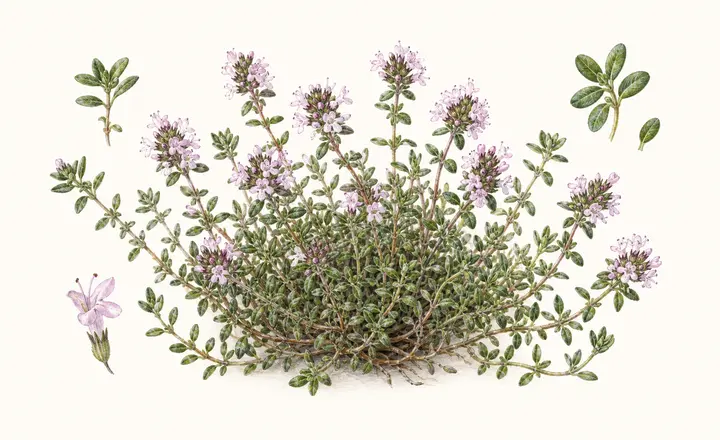
Common thyme, Thymus vulgaris, is an upright, woody culinary herb. Lemon thyme contributes citrus aroma, while creeping and woolly thymes form lower mats better suited to edging and ornamental ground cover. Not every decorative thyme has the same flavour or kitchen value.
Compare mature height, spread, hardiness, aroma and intended use. Low forms between paving must still have drainage and enough soil; they are not tolerant of constant foot traffic simply because they make a mat.
The RHS thyme guide recommends a warm sunny position and gives a general spacing range of 20–30cm.
Site and soil
Allow six or more hours of direct sun. Shade creates looser growth, fewer flowers and slower drying. Thyme performs best in light, relatively lean soil where water moves away from the crown. Heavy or winter-wet ground is better handled with a raised bed or container than with a small amended planting hole.
Plant at the nursery depth and keep mulch clear of the woody crown. Gravel mulch can reduce soil splash and retain warmth where it suits the wider garden; deep moisture-holding organic mulch around the stems is less appropriate.
Thyme tolerates neutral and moderately alkaline soil, but drainage matters more than trying to adjust a slightly imperfect pH. Do not apply lime without a soil test.
Propagation and planting
Named plants or cuttings preserve flavour and growth habit. Seed can produce useful variation but germinates slowly and gives small seedlings. Sow on the surface of a fine, free-draining medium, keep it just moist and give seedlings strong light.
Take softwood cuttings from non-flowering shoots in late spring or early summer. Creeping forms may root where stems touch soil and can be divided or layered. Pot new plants before winter so each develops an independent root system.
Set plants out from mid-spring into early summer after hardening off indoor-raised material. Water the root ball and surrounding soil thoroughly at planting, then let the surface begin to dry between later waterings.
Containers and mixed herb pots
One thyme plant can begin in a pot about 15cm wide and 10cm deep, as recommended in the RHS guide, although a slightly larger volume is more stable in hot weather. Ensure the drainage holes remain open and raise the pot off a solid surface if water collects beneath it.
Thyme shares its preference for sun and drainage with rosemary, sage, oregano and winter savory. The RHS Mediterranean herb-container guide recommends a sunny sheltered site and generous drainage. Do not mix thyme with mint in a small pot: mint prefers more moisture and spreads aggressively.
In winter, move vulnerable containers out of prolonged rain and prevent the root ball from freezing solid. Do not bring hardy thyme into a dim, heated room unless there is a specific reason.
Water, feeding and trimming
Water new plants during dry spells until established. Mature ground plants usually tolerate drought, while pots still need checks because their root volume is small. Water thoroughly and drain; frequent small sips can leave the centre of a root ball dry.
Use little fertiliser. Rich feeding encourages soft growth at the expense of the compact, aromatic habit. Refresh exhausted container mix and use a dilute balanced feed only where the plant clearly needs it.
Lightly trim shrubby thyme in mid- to late spring and/or soon after flowering. Remove faded flower stems and a little green growth, keeping leafy nodes below each cut. Creeping thyme needs only a light tidy. Replace plants that have become mostly bare wood.
Diagnosing thyme problems
| Symptom | Likely causes to investigate | First checks |
|---|---|---|
| Brown centre with wet soil | Crown or root rot | Drainage and buried stems |
| Long weak shoots | Too little direct sun or excess feeding | Light and recent fertiliser |
| Leaves dry while soil is wet | Damaged roots rather than drought | Root colour and smell |
| Sudden winter browning | Cold wind, frozen pot or saturation | Exposure and drainage |
| Grey fuzzy growth | Dead material and stagnant humidity | Airflow and plant density |
| Sparse old woody plant | Age or hard pruning | Green growth available for cuttings |
Thyme is generally robust in the conditions it prefers. Correct light and drainage before treating a symptom as a nutrient deficiency.
Harvest and kitchen storage
Snip young shoots whenever needed, taking small amounts from across the plant. Regular picking encourages compact growth. The leaves and flowers are both aromatic, with soft shoots in late spring and summer especially easy to use.
Use thyme fresh, freeze clean sprigs or dry small bunches in a warm, dark, ventilated place. Strip leaves only after stems are fully dry, then store them airtight. Avoid harvesting a heavily flowering plant so aggressively that pollinators lose the whole resource.
Sources and review basis
- How to grow thyme — Royal Horticultural Society
- Mediterranean herbs in a pot — Royal Horticultural Society
Cultivar descriptions should determine final size and use. Winter survival depends strongly on drainage and container exposure.