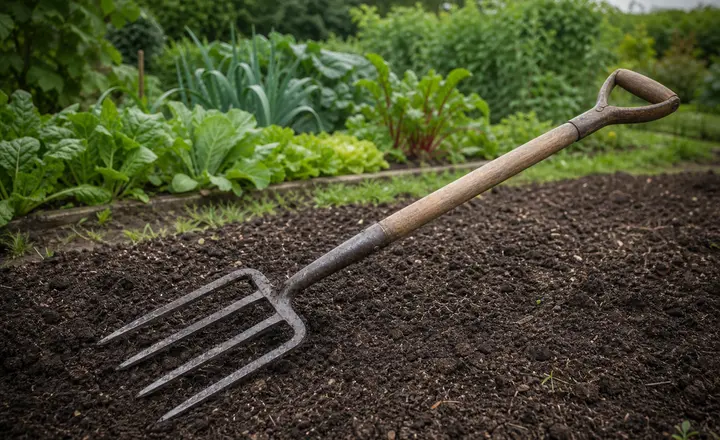
Match the fork to the task
A digging fork normally has four strong, relatively broad tines. Use it to loosen compacted soil, lift potatoes and other root crops, turn a compost heap or ease perennial clumps from the ground. A lighter border fork suits confined beds and smaller users. A manure or pitchfork has longer, finer tines for loose fibrous material and is not a substitute for digging in hard soil.
Forking can preserve more soil structure than repeatedly turning the ground. Insert the tines and gently rock the handle to open compacted layers without inverting each section. Work only when moisture allows the soil to fracture rather than smear. For opening new beds and double digging without inverting the soil, a wider broadfork is the purpose-built tool.
Inspect the high-stress points
Choose forged or otherwise robust tines that are straight, evenly spaced and firmly joined to the head. The socket and the lower section of the shaft take high leverage loads, so examine them closely. A fork should not creak, flex excessively or show movement between its parts.
Test the shaft length and grip while wearing the footwear and gloves used for digging. A smaller fork is often more productive than a heavy model if it allows a steady rhythm and precise placement. Broad, smooth treads make applying boot pressure more comfortable.
Loosen ground in small stages
Check the area for buried irrigation, cables and other services before penetrating the soil. Place the fork vertically, push with your boot and keep your weight centred. Ease the handle back only as far as needed; extreme levering can bend tines or split a shaft.
When harvesting root crops, insert the fork outside the expected root zone and lift gradually. Feel for resistance rather than driving the tines blindly. For compost, take smaller forkfuls and keep bystanders clear of the working arc.
Keep tines clean and straight
Knock off clinging soil without striking the fork against hard masonry. Wash persistent dirt away, dry the metal and store the fork under cover. Light surface protection may be useful on non-stainless steel, especially before long storage.
Do not continue working with a loose head, cracked handle or badly bent tine. Straightening hardened or damaged metal can cause it to fail, so seek a competent repair or replace the head when necessary.