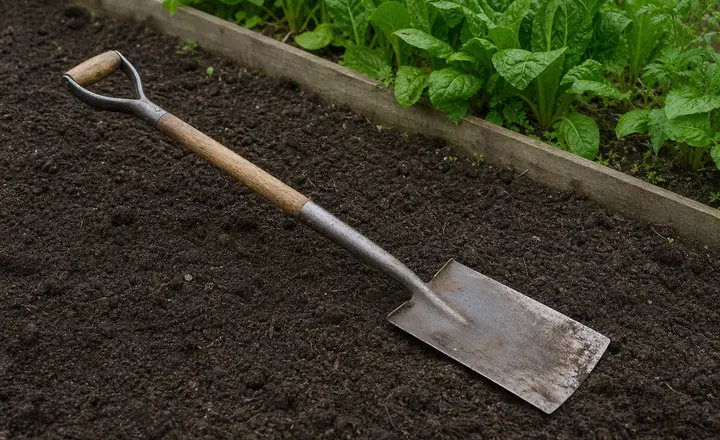
Know when a spade is the right tool
Use a spade to cut straight bed edges, divide manageable clumps, open planting holes and transfer loose soil or compost. Its flat blade makes a cleaner cut than a pointed digging shovel. A shovel, with its dished or pointed blade, is usually better for scooping loose bulk material.
Do not force a spade through stony, heavily compacted ground or large woody roots. Loosen resistant soil first with a digging fork, and use an appropriate saw or root-cutting tool for substantial roots.
Choose a blade and handle that fit
A smaller blade takes a lighter bite and is often easier to control in dense soil. Stainless steel sheds sticky soil readily and resists corrosion; carbon steel can be lighter and takes a good edge but needs prompt drying. More important than the finish is a strong socket where blade and shaft meet.
Stand the spade upright and test the working height. The shaft should let you place the blade accurately without excessive bending, while the D or T grip should feel secure with work gloves on. Check that the tread at the top of the blade gives your boot a stable surface.
Let body weight do the work
Place the blade where the cut is needed, keep it close to your body and press the tread with the middle of a sturdy boot. Take shallow bites rather than levering a full blade of wet soil. Turn your feet toward the destination before moving material instead of twisting through the lower back.
When edging, use a line for straight runs and make overlapping vertical cuts. When digging a planting hole, keep excavated topsoil separate if the soil layers differ. Avoid standing or digging in saturated ground, which compacts easily and clings heavily to the blade.
Maintain the edge and handle
Remove soil after each use and dry the blade before storage. Touch up a dull cutting edge with a suitable file, following the existing bevel and securing the tool while you work. The goal is a serviceable edge, not a knife-like finish.
Inspect wooden handles for raised grain, cracks and looseness at the socket. Smooth minor roughness and protect bare wood with an appropriate handle oil. Retire the tool until repaired if the shaft is split or the blade moves independently of it.