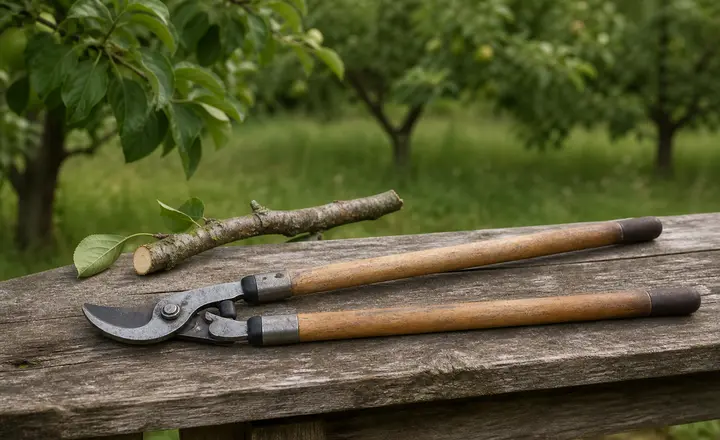
Select the cutting mechanism
Bypass loppers use a passing blade for clean cuts on live wood. Anvil loppers press a blade onto a flat surface and may suit dead, brittle growth. Compound, geared or ratcheting mechanisms reduce the force needed but can add weight and require more handle movement around dense branches.
Use the manufacturer's stated cutting capacity as a maximum, not a target for every cut. Wood hardness, dryness and access all affect the real effort required. A pruning saw is safer and cleaner when the branch does not cut with controlled pressure.
Balance reach against control
Long or telescopic handles increase reach and leverage, but they also magnify movement at the blade and become tiring. Test whether you can open the handles fully in the intended shrubs or tree canopy. Confirm that telescopic locks engage positively and do not slip under load.
Look for undamaged grips, strong handles and replaceable blades or anvils. Bumpers near the pivot can reduce the shock when a cut completes. Choose a weight you can hold away from the body without losing control.
Work from stable ground
Clear people and obstacles from the drop zone. Stand with balanced footing, position the branch deep in the jaws near the pivot and close the handles smoothly. Keep fingers away from both the blade and the point where the handles meet.
Do not use ordinary loppers near overhead electrical conductors, from an unstable ladder or directly above your head. High tree work and heavy limbs can behave unpredictably and may require a qualified arborist. Never twist the handles to finish a stalled cut.
Protect the alignment
Clean sap and fragments from the jaws after work, then dry them. Check that bypass blades pass closely without colliding and that fasteners remain secure. Lubricate the pivot in line with the manufacturer's guidance.
Sharpen the cutting blade to its existing angle, or replace it when nicked or worn beyond adjustment. Bent handles, cracked mechanisms and slipping extensions are reasons to stop using the tool until properly repaired.