Quick answer: divide a rooted clump, not simply a stem
Division separates an established perennial into independently rooted plants. It is useful when a suitable clump becomes crowded or develops an ageing centre, or when you want more plants. Each section needs living growth points and enough healthy roots to support them. A detached leafy stem without roots needs a different propagation method.
This guide covers outdoor beds and soil-based container growing in temperate climates. Timing depends on the species, local winter conditions and soil drainage; the same calendar date will not suit every garden. General principles are supported by University of Minnesota Extension’s division guide.
| Plant | Approach | Decision before cutting |
|---|---|---|
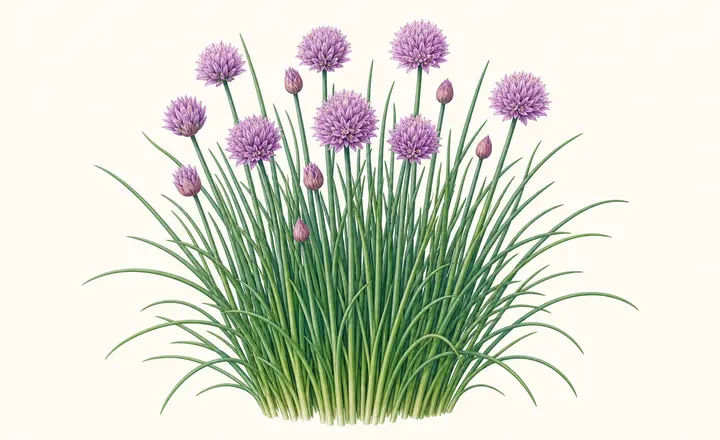
| Chives | Separate a rooted cluster of bulbs. | Keep several bulbs together rather than making the smallest possible pieces. |
| Mint and lemon balm | Lift and separate rooted portions. | Inspect both foliage and roots before potting or sharing. |
| Culinary rhubarb | Cut the dormant crown into substantial sections. | Keep visible buds and a generous portion of the underground stem and roots. |
| Rosemary, lavender and woody sage | Take suitable stem cuttings. | Do not treat a single woody base as a divisible herbaceous clump. |
Cornell Cooperative Extension identifies chives, mint and lemon balm as division candidates, and rosemary, lavender and sage as suitable for cuttings. Its advice concerns herbs being potted for indoor growing; the propagation choices also help distinguish rooted clumps from woody plants. See rooting herb cuttings for that separate technique.
Keep cultivar labels with the divisions. Do not label an unidentified parent as a named variety.
Choose a season and a workable day
For many summer-flowering herbaceous perennials in the UK, spring or autumn offers a useful window. Delay autumn work if the ground is waterlogged; spring is also preferable for plants of borderline hardiness. These are general guidelines, not instructions to divide every species on the same schedule. See RHS guidance on dividing perennials.
In colder northern climates, autumn divisions need time before winter: Minnesota Extension recommends allowing four to six weeks before the ground freezes. Choose a cool, overcast day and water dry soil the day before lifting. Avoid dividing while the plant is flowering where possible. See Minnesota’s seasonal guidance.
Rhubarb has its own dormant-season guidance, explained below.
Assess health before making more plants
Crowding is a reason to investigate; poor growth alone is not a diagnosis. Check the planting conditions and inspect leaves, crowns and roots before deciding to divide. Inspect container herbs for insects and eggs as well as disease symptoms, as advised by Cornell Cooperative Extension.
For rhubarb, retain vigorous outer sections and reject weak or decayed material. The RHS rhubarb guide recommends propagating only healthy plants. A practical precaution is to stop and identify unexplained rot or distorted growth before sharing divisions; cutting a plant into pieces is not a disease treatment.
Lift, separate and replant
- Prepare the destination. Have planting holes or clean pots ready before lifting. Use pots with drainage holes and suitable fresh potting mix.
- Lift carefully. Loosen the root ball with a garden fork and lift it without pulling on the foliage. Remove loose soil so you can see the structure.
- Find natural divisions. Tease apart small fibrous clumps by hand. Dense clumps may need two forks placed back-to-back or a sharp cutting tool. Keep hands clear of the cutting path.
- Retain viable sections. Check that every piece has shoots or buds connected to roots. Keep exposed roots shaded and moist while working.
- Replant promptly. Set roots into the prepared soil, firm gently and water in. Follow the species’ crown-depth requirements rather than burying every plant deeply.
The lifting and separation methods follow the RHS division guide; root protection is also covered by Minnesota Extension.
Worked example: divide a crowded pot of chives
Suppose the lifted plant separates naturally into three rooted clusters. Check each cluster before deciding that you have three usable divisions: a leafy section with no attached roots does not count.
For chives being potted up, Cornell recommends at least four to six bulbs per clump. If one proposed section is too small, keep it attached to a neighbouring cluster. Pot the resulting divisions into moist, freely draining potting mix and label them. This example illustrates a decision process, not a promised multiplication rate. See Cornell’s herb propagation advice.
Rhubarb: divide the dormant crown and allow recovery
UK RHS guidance places division between mid-autumn and early spring while rhubarb is dormant. Each section needs some rhizome and at least one growing bud. Replant with the crown tip just above soil level. Do not harvest in the first year after planting; take only a few stalks in the second. See the RHS rhubarb guide.
For Iowa conditions, Iowa State recommends early spring as soon as soil can be worked, retaining at least two or three buds or shoots and a substantial root portion per division. Replant immediately at the previous depth, water thoroughly and continue watering during dry weather. These are regional recommendations, not interchangeable calendar rules. See Iowa State’s rhubarb division advice.
Keep the cultivar name with each crown. For ongoing crop care, use the rhubarb guide.
Aftercare and troubleshooting
Prevent newly planted divisions from drying out while roots re-establish, following RHS aftercare guidance. Check conditions rather than applying the same amount of water to every plant.
The following checks are practical diagnostic prompts, not definitive diagnoses:
- Wilting: feel the root zone before watering. Dry soil and saturated soil call for different responses.
- Persistent saturation or a soft crown: investigate drainage and planting depth before adding more water. Use the guide to diagnosing waterlogged beds.
- A section fails to grow: check whether it retained both a living growth point and roots, and whether it was divided during its dormant season. Lack of immediate shoots alone does not prove failure.
- A pot dries much faster than the bed: monitor it separately; one watering schedule will not necessarily suit both growing systems.
Record which divisions establish successfully before planning the next round of propagation.
Horticultural sources
- Royal Horticultural Society — Perennials: dividing. UK timing, separation methods and aftercare.
- University of Minnesota Extension — How and when to divide perennials. Handling and cold-climate timing.
- Cornell Cooperative Extension — Propagate Herbs Now to Enjoy All Winter. Herb division and cutting choices.
- Royal Horticultural Society — How to Grow Rhubarb. Crown division, planting depth and establishment.
- Iowa State University Extension and Outreach — When can I divide rhubarb plants? Iowa spring division guidance.