Quick answer
Start French tarragon with a labelled plant, division or cutting, not a packet of seed. Give it sun and freely draining soil. In a wet-winter garden, choose a container you can move into shelter. Pick young tips during active growth, and expect the stems to die back for winter.
The useful decision is where the plant will spend winter. Choose that location before buying a large, heavy pot: easy access to shelter matters more than an elaborate herb display.
Buy French tarragon, not Russian
French tarragon, Artemisia dracunculus var. sativa, has slender leaves and an anise-like flavour. Russian tarragon is coarser and less aromatic. True French tarragon produces sterile flowers, so seed-grown tarragon is not the reliable route to this kitchen herb. Illinois Extension's French tarragon reference explains this distinction.
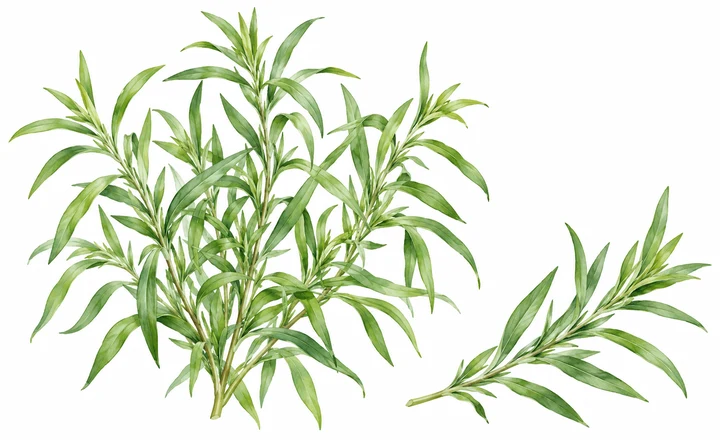
Ask the nursery whether its stock was propagated from a French parent plant. A generic “tarragon” label is insufficient. Keep the label with your plant so future cuttings have a traceable identity; an illustration alone cannot establish which culinary form you have.
Match the site to the plant
| Your conditions | Practical choice |
|---|---|
| Sunny bed that drains after rain | Consider planting in the ground if winter shelter is also good |
| Clay bed that stays wet | Use a draining container rather than a specially amended planting hole |
| Patio with access to a porch or greenhouse | Grow one plant in a movable pot |
| Very hot summers | Try morning sun and afternoon shade |
| Dim kitchen windowsill | Find a brighter growing position before buying |
Aim for about six hours of direct light as a planning target, rather than a biological threshold. Utah State University Extension recommends full sun, afternoon protection in very hot conditions and soil around pH 6.5–7.5. Do not add lime simply to reach a number without testing the soil.
Planting and containers
Plant in spring after frost risk has passed, acclimatising protected nursery plants first. Water the root ball, plant at its existing depth and settle the surrounding soil without burying the crown.
The RHS tarragon guide recommends a container at least 20cm wide and deep, peat-free soil-based compost and added grit for drainage. Choose drainage holes that remain unobstructed after the pot is positioned.
For this guide's planning record, allow one plant in at least 5 litres of compost and roughly 30–60cm between ground plants. These are working allowances, not experimentally determined minima: the RHS permits closer planting, while Utah State recommends about 60cm. A wider spacing makes individual plants easier to inspect and harvest. Measure usable pot volume; decorative containers with narrow bases can hold surprisingly little compost.
Water, feeding and routine care
Water new plants while they establish. Later, let the soil surface dry between waterings; a wilting plant in wet compost needs a drainage check before more water. French tarragon needs little fertiliser. Utah State recommends basing soil preparation on a soil test and avoiding excessive feeding.
Use a simple weekly inspection rather than a fixed weekly watering dose: check moisture, new shoots, drainage holes and leaf condition. During hot weather, inspect small pots more often. Record when the pot actually needs water so you learn its behaviour in your own location.
Keep weeds under control without deep hoeing near the shallow roots. If a container plant deteriorates, compare it with nearby herbs: widespread poor growth suggests a shared exposure or watering problem; one affected pot warrants closer inspection of its roots and drainage.
Make replacement plants
Divide an established clump in spring as shoots appear. Lift carefully and separate rooted portions with a clean knife, retaining roots and buds on each piece. Alternatively, take young stem cuttings about 10–15cm long, remove lower leaves and insert them into moist, draining propagation compost. Keep them protected until rooted. These methods and renewing plants every two to three years are described by Utah State's propagation guidance.
Keep one replacement separately as insurance. Label its propagation date; this turns replacement into a planned task instead of an emergency when the main plant declines.
Winter protection and spring restart
French tarragon is a herbaceous perennial, not an evergreen like rosemary. The RHS highlights cold combined with wet as a particular UK risk. Move pots into a sheltered porch or greenhouse; a rain-shadow position beside a building is another option. A cloche can help protect a ground plant. Check protected pots occasionally rather than continuing summer watering.
Leave sound old stems over winter and remove them when new growth resumes in spring, following Illinois Extension's guidance. Do not assume a bare winter pot is dead. Mark the crown's position so it is not accidentally dug up.
Cold-hardiness advice from a dry continental climate does not guarantee survival in wet British soil. Our planting record uses frost-free conditions above 0°C for new shoots; this is not a mature plant's winter survival limit.
Troubleshooting
| Symptom | Investigate | First response |
|---|---|---|
| Wilting despite wet compost | Poor drainage and possible root rot | Stop automatic watering; check drainage and roots |
| White powdery coating | Powdery mildew | Improve spacing and confirm the diagnosis |
| Rust-coloured pustules | Rust disease | Inspect other leaves and remove badly affected material |
| Bare stems during winter | Seasonal dormancy | Wait for spring growth before judging survival |
| Weak aroma in a seed-raised plant | Russian rather than French tarragon | Check its origin before changing feeding |
The RHS lists rust and powdery mildew as possible problems. Symptoms alone are not a firm diagnosis. Avoid treating an edible herb with a product unless its label specifically permits that use.
Harvest, storage and indoor use
Pick young shoot tips as needed, leaving enough leafy growth for the plant to recover. Treat April–October as a provisional UK harvest window, adjusted to actual spring regrowth and autumn weather. Try a little chopped tarragon in scrambled eggs or a salad dressing before increasing the amount.
Use fresh leaves for the strongest flavour. Illinois Extension notes that drying loses aroma; dry sprigs in a dark, airy place and seal the leaves only when fully dry. Freezing small portions is another option. Label stored portions so they are easy to distinguish from other herbs.
A very bright indoor position can supply occasional sprigs, but Illinois Extension cautions that indoor growth is poorer than outdoor growth. For a dependable kitchen supply, plan a summer harvest and stored portions rather than expecting a dim windowsill to produce all winter.
Sources and review basis
- How to grow tarragon — Royal Horticultural Society: UK planting, containers, winter care and diseases.
- How to grow French tarragon in your garden — Utah State University Extension: soil, propagation, spacing, watering and renewal.
- Tarragon: French — Illinois Extension: identity, spring pruning, indoor growing and harvest quality.
Reviewed 23 September 2026. The light target, pot volume, spacing range and harvest months are practical planning allowances; adjust them to plant size, local weather and observed growth. Winter guidance prioritises UK drainage and exposure rather than importing a US hardiness zone unchanged.