Quick answer
Grow lemon balm in sun or partial shade, in soil that drains freely but retains some moisture. Start with a labelled plant for a quick kitchen supply, or raise a few plants from spring-sown seed. Pick young shoots regularly and remove flowering stems before seed ripens if you want to limit spread.
A container is a useful choice for a small garden, but it does not catch every seed. Put the pot somewhere you will notice flowers and can reach it easily with scissors. Plan for seasonal leaves rather than an uninterrupted winter crop.
Know which herb you are buying
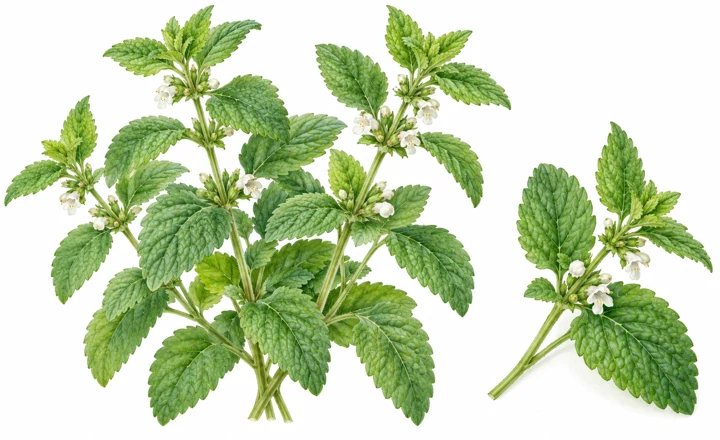
Lemon balm is Melissa officinalis, a herbaceous perennial in the mint family, Lamiaceae. Its paired, crinkled leaves release a lemon scent when crushed. Small summer flowers attract bees. It is a different plant from lemon verbena, lemongrass and culinary mint; do not transfer their growing instructions or identify an edible plant from scent alone. Wisconsin Extension's lemon balm profile describes its foliage, habit and cultivars.
Choose ordinary green lemon balm for a straightforward leaf crop. Golden forms such as ‘All Gold’ suit light shade. Buy a named plant if leaf colour or scent matters, and keep its label: seedlings are not a dependable way to preserve a cultivar. Division preserves the identity of a plant you already like.
Match lemon balm to your conditions
| Your site | A practical choice |
|---|---|
| Sunny bed with reliable moisture | Plant where the mature clump remains accessible for cutting |
| Patio with morning sun and afternoon shade | Use one plant in its own draining pot |
| Soil that stays saturated after rain | Choose a container and check where its drainage water goes |
| Small mixed herb planter | Give lemon balm a separate pot so you can renew it independently |
| Dim indoor shelf | Find a brighter position before expecting regular harvests |
Use four hours of direct sun as this guide's starting allowance for partial shade, with six hours preferred where moisture is adequate. These are planning targets, not measured survival limits. Compare actual growth in your location rather than rejecting a useful site because it misses an hour.
For soil pH, the record uses the general herb range of 6.0–7.5 from University of Minnesota Extension. This is not a lemon-balm-specific tolerance limit. Test before adding lime or other pH amendments; correcting persistent waterlogging is the more immediate priority.
Start from seed, a plant or a division
Sow indoors in spring in peat-free seed compost, covering the small seeds very lightly. Keep the compost slightly moist and the pot bright and warm; remove its humidity cover when seedlings appear. Harden indoor-raised plants off before planting outside from late spring. The RHS growing guide gives UK sowing and establishment guidance.
Label the sowing date and avoid filling a whole tray unless you have homes for the plants. A purchased plant avoids the seedling stage; check that it has healthy shoots and a root ball that is moist without smelling sour. Plant at the existing compost level and water it in.
For an established clump, lift and divide in spring or early autumn, keeping roots and growing points with each portion. Wisconsin Extension recommends dividing or replacing ageing plants after three or four seasons. Keep the healthiest portion and assess it before distributing surplus plants; there is little benefit in propagating a struggling clump without first understanding the problem.
Beds, spacing and containers
Allow roughly 45–60cm between ground plants, rounding the 18–24-inch recommendation in Utah State University Extension's guide. Leave yourself enough access to reach the back of each clump without standing on the bed.
For pots, the RHS recommends at least 25cm in both width and depth, filled with peat-free soil-based compost. This guide additionally budgets 10 litres for one plant as a practical starting volume, not a researched minimum. Check both dimensions and actual capacity when buying a tapered planter.
Use drainage holes and empty a water-holding outer pot after watering. Position the container before filling it, particularly on a balcony where lifting and access matter. If the root ball fills the pot, plan to divide or repot rather than repeatedly adding water to an increasingly cramped plant.
Water, feed and manage regrowth
Check moisture below the surface before watering. Keep an establishing plant supplied with water, but investigate drainage if the compost stays wet. Utah State advises avoiding both water stress and over-fertilisation; too much feed can produce excessive growth with poorer flavour. Use soil-test results and the compost or fertiliser label to guide feeding rather than copying a fixed dose from another garden.
After a substantial cut, check the plant again as new shoots develop. Illinois Extension recommends thinning congested stems for airflow and describes cutting back by about half to renew growth, with watering to support recovery. Do this while the plant is actively growing, not simply because a calendar says a pruning date has arrived.
A useful maintenance note records three things: the last cut, whether the compost was dry when watered, and the quality of the next flush. That makes it easier to separate a watering problem from an over-harvested plant.
Control self-seeding and choose when to flower
Unlike the underground spread associated with mint, lemon balm is especially troublesome through abundant seed. Illinois Extension stresses cutting flower stalks before seed develops. A pot manages the clump but cannot prevent seedlings appearing nearby.
For a leaf-first kitchen plant, remove flower stems as they appear. For a bee-friendly plant, leave some flowers and remove the spent stems promptly. Choose one approach deliberately: leaving flowers unattended while expecting no seedlings is unlikely to work. Inspect nearby gravel, pot surfaces and bed edges, and remove unwanted seedlings while small.
Do not assume every compact plant is sterile. Illinois lists ‘Compacta’ as a sterile cultivar; buy it under that name from a supplier who can confirm its identity if seed control is the reason for choosing it.
Winter care and spring restart
Lemon balm normally dies back in autumn and returns in spring. Cold, saturated compost is a greater concern than bare winter stems: move exposed pots out of excessive rain, keep drainage open, and remove faded stems by early spring. This follows the RHS winter-care advice.
Mark a ground plant's position before it disappears. Inspect dormant pots occasionally instead of continuing summer watering automatically. The record's 5°C planting allowance is a conservative cue for establishing plants in mild conditions, not a winter hardiness rating. Protect unhardened seedlings from frost even though established lemon balm is hardy.
Troubleshooting before treating
| What you see | What to check | First action |
|---|---|---|
| Wilting while compost is wet | Blocked drainage, standing water, root condition | Correct drainage before watering again |
| White powder on leaves | Possible powdery mildew and crowding | Inspect the whole clump; remove badly affected stems and improve airflow |
| Sticky or distorted shoots | Aphids or mites, including leaf undersides | Identify the pest before choosing any treatment |
| Tall, sparse indoor growth | Available light and harvest pressure | Improve light and pause picking until growth recovers |
| New plants beyond the pot | Seedlings from spent flowers | Remove seedlings and change the flowering routine |
Utah State records mildew, root rot, aphids and mites as possible problems; their presence is not inevitable. Photograph symptoms before pruning if you may need diagnostic help. On an edible herb, check any treatment's permitted crop and harvest interval before use.
Harvest, kitchen use and storage
Pick tender shoots before flowering for good leaf quality. Take small amounts from several stems and leave enough foliage to regrow; avoid stripping a newly planted specimen. Utah State suggests removing about a third of the foliage for a substantial harvest. Let recovery, rather than a fixed interval, determine the next cut.
Try a little chopped fresh leaf in a fruit salad or steep a few washed leaves for a lemon-scented infusion. This is a culinary growing guide, not a basis for medicinal dosing or health claims.
Fresh leaves have the liveliest aroma. For storage, Illinois Extension describes drying sprigs in a dark, airy place and sealing the stripped leaves once dry; freezing is another option. Label small portions with the plant name and harvest date so a trial batch can be judged before storing a larger crop.
Treat April–October as a provisional UK picking window, adjusted to spring regrowth and autumn dieback. Indoor winter harvests depend on strong light: Minnesota Extension notes that insufficient light produces spindly herbs. An outdoor summer crop with stored portions is a more useful starting plan than promising year-round production from any windowsill.
Sources and review basis
- How to grow lemon balm — Royal Horticultural Society: UK sowing, containers and winter care.
- Lemon balm in the garden — Utah State University Extension: spacing, moisture, feeding, crop health and harvest.
- Lemon balm — Illinois Extension: seed control, renewal pruning, ‘Compacta’ and storage.
- Lemon balm, Melissa officinalis — Wisconsin Extension: identity, varieties and division.
- Growing herbs in home gardens — University of Minnesota Extension: general herb pH and indoor light.
Reviewed 23 September 2026. Numerical light, pot-volume, establishment-temperature and harvest-month entries are practical planning allowances. They are not experimentally established limits; adjust them to the cultivar, local weather and observed growth. The illustration is decorative, not an identification aid.