Quick answer
Grow common sorrel in a permanent spot with sun or partial shade and soil that holds moisture without staying waterlogged. Sow in spring, thin to about 30cm apart and let plants establish before picking individual young leaves. Remove flower stalks to favour leaf production. The perennial crown can produce new growth each spring, so you do not need to sow a replacement every year.
Start with one or two plants and see how much you use. Sorrel's sharp flavour works as an accent in a mixed harvest; if you want a large quantity of mild cooking greens, compare Swiss chard instead.
Choose the right sorrel
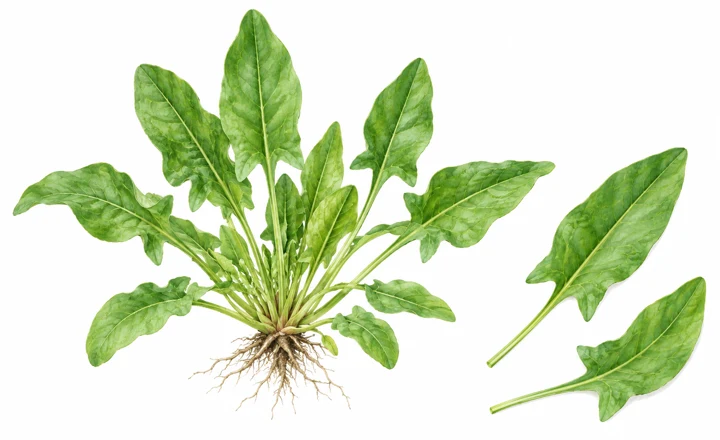
This guide and its structured record focus on common garden sorrel, Rumex acetosa, in the buckwheat family, Polygonaceae. Its green leaves are elongated with arrow-shaped bases. The RHS plant profile describes its clumping habit, deep roots and readiness to self-seed. Give it a deliberate home rather than letting seedlings establish throughout an annual vegetable bed.
| Type | What to expect | Best reason to choose it |
|---|---|---|
| Common sorrel, Rumex acetosa | Upright clumps of green, sour leaves | A straightforward perennial kitchen herb |
| French or buckler-leaf sorrel, R. scutatus | Lower, spreading growth and shield-shaped leaves | A different texture and habit in an edible border |
| Red-veined sorrel, R. sanguineus | Green leaves patterned with red veins | Decorative planting and young salad leaves |
Check botanical names when buying: common names are inconsistent between suppliers. Wood sorrels (Oxalis) are different plants. This is a cultivation guide for labelled garden stock, not a wild-food identification guide. The RHS sorrel guide compares the cultivated types.
Match sorrel to your conditions
Choose accessible ground where you can pick a few leaves frequently. A perennial border edge avoids repeated disturbance from digging or rotating annual crops. Mark the position so that a dormant crown is not accidentally dug up in winter.
The University of Minnesota Extension recommends sun, drainage and compost where soil needs better structure or moisture retention. Hand-weed close to the plant rather than cutting into its roots with a hoe. Water according to rainfall and the actual soil, rather than applying the same amount every week.
For planning, use four hours of direct sun as a starting target, with six in a cool site; these are practical comparison values, not tested survival thresholds. Afternoon shade is a useful option for a hot container position. The record's pH target of 6.0–7.0 represents mildly acidic to neutral soil within the RHS profile's broader acid-to-neutral preference. Test before attempting to change pH; sorrel does not justify repeated soil amendments based on guesswork.
Sow, transplant or divide
The RHS recommends spring sowing about 1cm deep, with germination taking roughly one to two weeks around 15°C. Use a small labelled pot or a short outdoor drill rather than sowing an entire packet. Keep seed compost moist and transplant indoor seedlings only after acclimatising them outdoors. Set plants at their previous depth.
Use approximately 30cm spacing for common sorrel; widen it for vigorous plants or easier picking access. Minnesota recommends at least a foot between mature plants. Leave a clear route to reach the clump without walking on its root zone.
The quick-reference temperature of 10°C is a conservative working target for establishing young plants in mild spring conditions, not a germination minimum or a limit on mature-plant hardiness. Avoid planting into frozen or saturated ground. Established crowns and soft seedlings should not be treated as equally weather-resistant.
Growing sorrel in a pot
The RHS recommends a container at least 30cm wide and 20cm deep. Choose one with unobstructed drainage and a peat-free mix suitable for long-term planting. This guide uses 15 litres for one plant as a practical volume target; pot shapes vary, so check dimensions as well as capacity.
A useful first setup is one plant near the kitchen door, with space to move the pot if summer heat becomes excessive. Check moisture below the surface before watering. If water runs straight down the pot's sides while the root ball stays dry, wet the compost slowly and thoroughly, then allow it to drain. Never leave the pot standing in a full saucer.
Watering, feeding and seasonal maintenance
Inspect new plants frequently while roots establish. Once rooted, ground-grown sorrel needs less attention than a pot, but persistent wilting and dry soil are reasons to water. Keep an observation record: a pot that dries every afternoon may need a larger container or a cooler position, rather than repeated small splashes.
Base fertiliser decisions on soil testing and growth. Pale leaves alone do not prove a nutrient shortage: first check drainage, moisture and whether roots have filled the pot. For container feeding, follow the compost and fertiliser labels; extra feed cannot correct a waterlogged root system.
Cut out emerging flower stalks if your priority is leaves. In their Sacramento herb garden, UC Master Gardeners manage sorrel in containers, thin it regularly and remove flower spikes to restrain vigorous growth. A container limits the root area but cannot catch wind-blown or dropped seed.
Divide congested clumps in spring or autumn; the RHS suggests roughly every four or five years. Replant healthy rooted portions and water them in. Winter leaf loss can be normal dormancy. Keep the site marked and wait for spring growth before deciding a leafless plant has died.
Troubleshooting
| What you see | Check first | Practical response |
|---|---|---|
| Ragged holes or missing seedlings | Slugs and snails, especially after dark | Inspect and remove pests; protect vulnerable young plants |
| Distorted new growth | Aphids on shoot tips and leaf undersides | Monitor small colonies before deciding whether control is needed |
| White powder on leaves | Possible powdery mildew | Remove badly affected foliage and reduce crowding |
| Wilting despite wet compost | Blocked drainage or damaged roots | Let excess water escape; inspect the root zone before feeding |
| Coarse, strongly flavoured leaves | Leaf age and harvest frequency | Pick younger growth and remove old leaves |
| Seedlings appearing beyond the bed | Flower stalks left to ripen | Remove unwanted seedlings while small and prevent further seed set |
The RHS profile identifies slugs and aphids as possible pests; UC Master Gardeners report mildew and snails in their garden. These are checks to make, not diagnoses from symptoms alone. Photograph persistent damage and consult local advice before treating edible foliage.
Harvest, use and storage
Begin with light picking once the plant is established, leaving the growing centre and enough foliage to support regrowth. Minnesota describes a harvest window from early spring until frost stops top growth. The record's April–October UK window is an approximate planning season, not a promise for every location or newly sown plant.
Pick only what you need that day where possible. Wash leaves before use, discard damaged or decaying material and refrigerate surplus promptly. Young leaves suit a mixed salad; chopped sorrel can add sharpness to a sauce or soup. UC Master Gardeners note that cooking changes the bright green colour to grey, so colour loss during cooking is not itself a sign of spoilage.
Use sorrel in modest culinary quantities. Kew's common sorrel account explains that its sourness comes from oxalic acid and cautions against consuming large quantities. Do not assume that a milder cooked flavour means unlimited portions are appropriate.
Sources and review basis
- How to grow sorrel — Royal Horticultural Society: cultivated types, sowing, containers and division.
- Rumex acetosa — Royal Horticultural Society: identity, family, soil preference and pests.
- Growing sorrel in home gardens — University of Minnesota Extension: establishment, soil management and harvest.
- Grow herbs! — UC Master Gardeners of Sacramento County: container experience, problems and culinary handling.
- Common sorrel — Kew Grow Wild: oxalic acid and culinary caution.
Reviewed 23 September 2026. Numeric planner targets for light, container volume, pH and establishment temperature are editorial working values explained above. Climate, species and plant age affect performance; these values are not universal biological limits.