Quick answer
Grow watercress in a pot of consistently wet compost, using drinking-quality water and a position with sun or partial shade. You do not need a stream. A container near the kitchen is a practical starting point because it makes water checks and frequent small harvests convenient.
Start with labelled seed or cultivated plants, keep the growing setup clean and pinch out leafy shoots regularly. Do not collect wild plants for food or use an ornamental pond as your salad bed.
Choose the right crop for your conditions
True watercress is Nasturtium officinale, an aquatic perennial in the cabbage family. It spreads through rooting stems. Garden cress, Lepidium sativum, is a different, annual crop: a tray of mustard-and-cress seedlings is not a substitute for establishing watercress plants.
The RHS watercress profile supports growing it in humus-rich wet soil or soil that stays reliably moist through summer. That makes water availability the first selection test.
| Your conditions | Practical choice |
|---|---|
| A bright patio and time for regular water checks | Try one watercress pot in a water-holding tray |
| A dry allotment visited only at weekends | Choose another crop or arrange reliable watering before planting |
| An ornamental pond with fish or wildlife | Keep edible watercress in a separate, controlled container |
| Space for a conventional salad trough | Compare rocket and lettuce before committing to a wet-growing setup |
Set up a container
For a first trial, use one plant in a pot about 25cm wide holding at least 5 litres of fresh potting compost. These are practical starting dimensions, not experimentally established minimums. Choose a pot with drainage holes and a watertight outer tray that can be emptied easily. Keep the leafy canopy above the water.
Utah State University Extension recommends a shallow reservoir about 5–8cm deep beneath potted plants, with water replaced once or twice weekly. Saturate the medium before planting. Its preferred pH range is 6.5–7.5; avoid adding lime without a test.
Use a bright location with morning sun and relief from fierce afternoon heat. The reference card's four to six hours is a planning estimate for partial shade to sun, not a measured threshold. Place the pot where you can reach the tray without lifting a heavy, sprawling plant across other crops.
Start from seed or cuttings
Sow thinly just below the compost surface, approximately 5–6mm deep, and keep moist. USU gives 10–16°C as suitable germination conditions. Start under cover ahead of the last frost, then acclimatise seedlings and plant out after frost risk has passed. Allow about 20cm between plants in a larger trough.
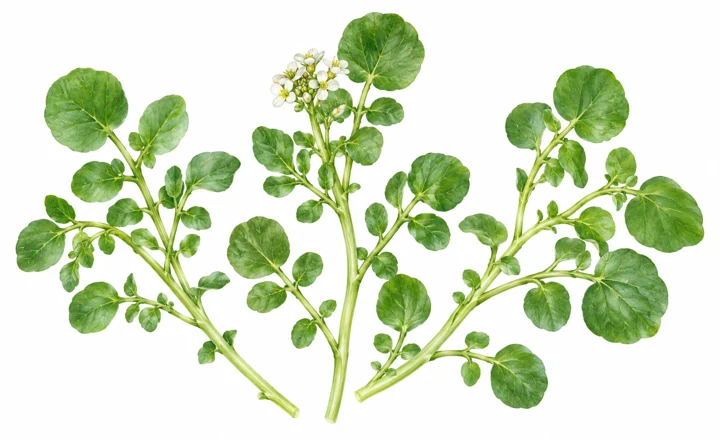
Alternatively, root stem cuttings from a healthy cultivated plant in wet growing medium. Rooted runners can also be separated in spring. Use labelled nursery stock if you are uncertain of identity; this page and its decorative illustration are not a wild-plant identification key.
Label each batch with its start date. For a household trial, compare a seed-grown pot with a rooted plant and record when each first supplies a useful picking. This is more informative than expecting a fixed number of days to harvest.
Water, feed and maintain
Check the compost and reservoir daily during warm weather. Replace the water rather than repeatedly topping up old water, and clean the tray when debris accumulates. Use potable water; do not introduce stream water, pond sediment or fresh manure. A green canopy does not prove the water is safe.
Watercress has modest nutrient needs. If growth weakens, check the roots and growing conditions before using a complete soluble fertiliser at its labelled edible-crop rate. Record feeding dates to avoid accidental repeat doses.
Keep stems within the container and remove fallen leaves. Do not release surplus plants into waterways. Regular pinching encourages a supply of young foliage. Flowering is a normal seasonal change, not automatic crop failure: UK watercress growers note that flowers are edible and the plant remains usable. Choose tender shoots rather than relying on flowering alone to judge quality.
Troubleshoot before treating
The RHS lists slugs, snails, aphids, caterpillars, leaf spot and root rots as possible problems. Inspect leaves, stems and the container before choosing a remedy.
| Observation | First action |
|---|---|
| Missing leaves or chewed edges | Inspect for caterpillars and slugs, including beneath the pot rim |
| Clusters of insects on shoot tips | Check for aphids and remove heavily affected tips |
| Yellow leaves or weak growth | Check moisture, root condition, light and feeding history; colour alone is not a diagnosis |
| Spotted leaves or collapsing stems | Remove affected material and investigate disease before taking cuttings |
| Slimy debris or unpleasant-smelling reservoir | Stop harvesting, empty and clean the setup, and replace compromised plants |
Do not improvise pesticide mixtures in the reservoir. Any treatment must be labelled for the edible crop and intended use; observe its harvest interval.
Harvest, store and overwinter
Pick when plants have enough leafy growth to spare, leaving shoots for regrowth. For a larger cut, USU advises retaining about 10cm of stem. Harvest only what you need, rinse with drinking-quality water and refrigerate promptly. Use soon; discard slimy or deteriorating leaves.
The UK commercial season broadly runs from May to November, but a home container may crop for a shorter period. Winter survival does not guarantee winter harvests. In a cold garden, place a pot in a bright sheltered position or cold frame, maintain moisture and wait for active growth before cutting heavily.
Keep the edible crop separate from wild water
The CDC explains that contaminated raw watercress can transmit liver fluke, and contaminated irrigation or washing water can also carry infection. Clear, moving water is not evidence of safety. Do not eat watercress from streams, ditches, livestock runoff or ponds of uncertain quality, and do not assume rinsing makes it safe.
Growing in a controlled container reduces avoidable exposure; it does not sterilise the crop. If the setup has been contaminated by animal waste or floodwater, discard the edible crop and restart with clean equipment and material.
Sources and review basis
- Nasturtium officinale — Royal Horticultural Society: identity, site, propagation and plant problems.
- How to grow watercress in your garden — Utah State University Extension: pH, sowing, spacing, water management and harvest.
- Growing watercress FAQ — Watercress.co.uk: home growing, pond caution, UK season and flowering.
- About Fasciola — CDC: contaminated freshwater plants and water.
Reviewed on 23 September 2026. Container size and sun-hour figures are conservative planning choices. The 10°C planting figure in the reference card is an establishment planning value, not a frost-hardiness limit; delay tender transplants until local frost risk has passed. Harvest months describe a broad UK outdoor window, not a guaranteed schedule.