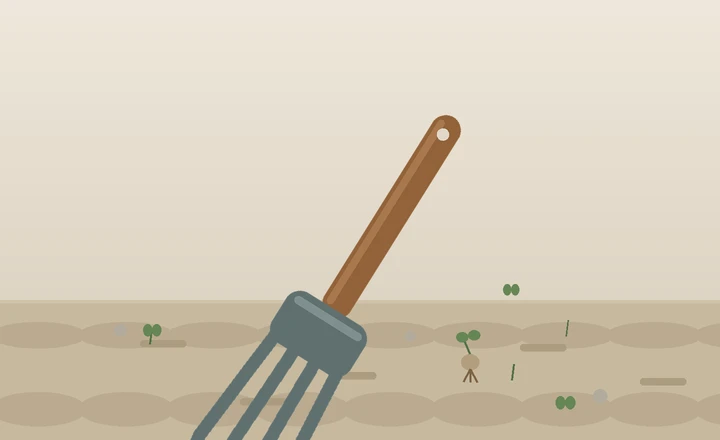
What a hand cultivator is for
A hand cultivator handles the short, firm strokes a larger tool cannot. You reach for it to loosen compacted topsoil in beds and containers, break the sealed crust that forms after rain or heavy watering, stir compost or fertiliser into the top few centimetres, and rough up a seedbed before and after sowing. Because the tines are short, the tool works accurately between established plants and in pots where a digging fork or garden hoe would not fit safely.
Keep the roles separate: a hoe manages weeds across open, even surfaces, a digging fork opens up compacted ground without turning it over, a hand trowel opens planting holes, and the cultivator works the top layer where you can see what it is doing. The Penn State Extension guidance on using the right tool frames the same principle — matching the tool to the job reduces effort and protects your wrists and back across a full session.
Match the head to the job
Three-tine heads are the most common and the most precise: the wider tine spacing suits tight planting gaps and containers, and fewer tines bend less in resistant soil. Five-tine heads cover more ground per pass, which makes pre-plant bed preparation faster, but they are less forgiving between closely spaced crops. Some cultivators replace the tines with a short curved blade that slices weeds at the surface rather than pulling them; this suits fine weeding work between paving or mulch edges.
Material matters as much as tine count. Stamped steel is the budget option and is fine for light, friable soil; forged or drop-forged tines hold up better in heavy clay and compacted beds and are worth the cost if that is your ground. Whichever type you choose, the head should be firmly attached to the handle with no crack or play at the joint, and the grip should fill a gloved hand without forcing the wrist sideways.
Loosen the surface, not the whole bed
Work the top two to five centimetres only. After rain or irrigation, the surface seals into a crust that blocks air and water; a few short strokes reopen it so moisture and air reach the roots and the seedbed drains and dries faster. The same motion stirs a thin layer of compost, well-rotted manure or granular feed into the topsoil, and roughs a smooth surface before you sow.
Use short, controlled strokes with a slight pull toward you, keeping the tines just under the surface rather than jabbing deep. Going deeper breaks soil structure, dries the layer below and brings buried weed seed up to germinate — the Harvest to Table hand-cultivator review makes the same point, limiting useful cultivation to the top two to four inches. Loosen when the soil crumbles in a closed fist; saturated ground smears into the tines and recompacts as it dries.
Pull young weeds from tight spots
The cultivator's best weeding job is small, shallow-rooted annuals sitting between established plants. Loosen the seedling, shake off the soil and lift it out while the roots are still thin and easy to break. Repeat after every rain so the next flush never gets a foothold.
Do not force the tool on weeds it cannot beat. A perennial with a deep taproot is better levered out whole with a hand fork inserted to full depth, as the RHS non-chemical weed control advice recommends, and any weed that has already set seed should be removed intact rather than chopped, so the seed does not drop back into the bed.
Keep the tines true and the head clean
Brush soil from the tines after each use, dry the head and oil non-stainless steel before a long storage period, following the RHS hand-tool cleaning guidance, which notes that drying also protects wooden handles from swelling. Straighten a bent tine gently with pliers rather than levering it against the ground, and retire or replace a head whose tines have spread, cracked or pulled through the attachment.
Disinfect the tool when moving from a plant with a known disease to healthy ones, because soil on the tines can carry pathogens between beds. Store the cultivator dry under cover with the rest of the hand tools, tines out of the soil.
Sources and review basis
- The Best Hand Cultivators: What Actually Works — Harvest to Table
- Cleaning hand tools: maintenance tips — Royal Horticultural Society
- Weeds: non-chemical weed control — Royal Horticultural Society
- Using the Right Tool is Self-Care — Penn State Extension
Tine-count, material and depth guidance follows the Harvest to Table hand-cultivator review; cleaning, oiling and disinfection follow the RHS hand-tool cleaning advice; deep-rooted weeding and seedling timing follow the RHS non-chemical weed control guidance, with tool-to-job matching informed by Penn State Extension. The depth range is a working generalisation, so adjust to your soil, and your own strength and any manufacturer instructions take precedence.