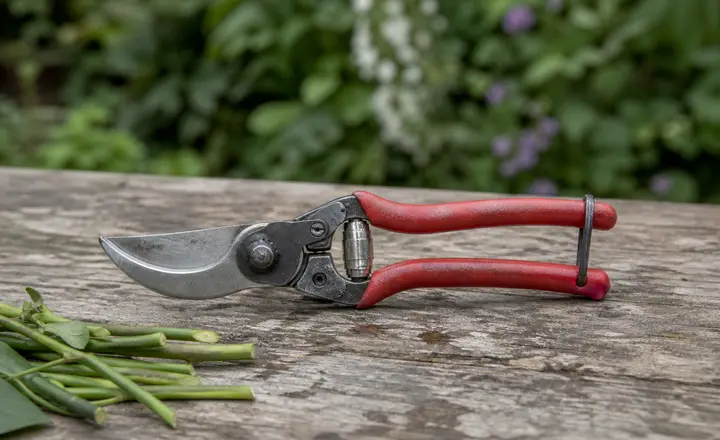
Choose bypass or anvil action
Bypass secateurs have a sharpened blade that passes a thicker counter-blade, producing a clean scissor-like cut on live growth. Anvil secateurs close a blade onto a flat block and can suit dry, dead material, though they may crush soft living stems. Keep both types within the cutting diameter stated by the maker.
If a branch requires two hands or repeated twisting, move up to loppers or a pruning saw. Forcing secateurs damages the pivot and can leave a ragged wound on the plant.
Fit the tool to your hand
Try the secateurs with gloves and check the span when fully open. You should be able to close them without stretching the fingers or shifting the handles in your palm. Models come in different sizes, and some include rotating handles or adjustable opening widths for repeated work.
Test the safety catch with one hand while keeping fingers away from the blade. The spring should open the handles smoothly, the pivot should have no sideways play and replacement blades, springs and catches should be obtainable for a repairable pair.
Position each cut deliberately
Identify why and where the plant should be cut before placing the blade. For bypass secateurs, keep the thinner cutting blade toward the part of the plant that will remain so any slight bruising falls on the removed piece. Make one decisive cut without twisting.
Pruning position varies with the plant, season and purpose, so use crop-specific guidance. Keep the free hand beyond the cutting point, watch for stems under tension and never carry open secateurs in a pocket.
Clean the blade and tune the pivot
Wipe away moisture and sap after use. Clean and, when disease is a concern, disinfect between affected and healthy plants with a product and contact time suitable for pruning tools. Dry the parts afterward to limit corrosion.
Sharpen only the bevelled face of a bypass cutting blade unless the maker specifies otherwise, and remove the smallest amount of metal needed. Adjust the pivot so the blades move freely without wobble, lubricate the joint lightly and store the secateurs closed and locked.