Know when shears are the right tool
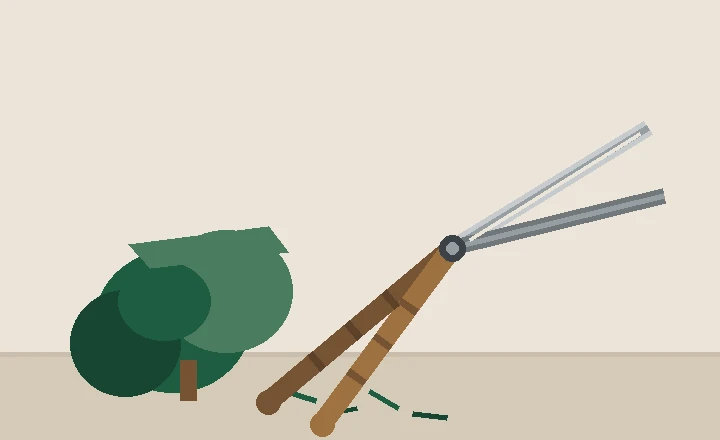
Garden shears, often sold as hedge or topiary shears, cut many small stems at once, so they suit dense, soft growth such as hedging, shrubs and shaped topiary. The RHS notes that hand shears are the right tool for small hedges and soft growth, with powered trimmers taking over for large hedges. Where a stem is too thick for the shear blades, switch to secateurs or loppers instead of forcing the cut, and use secateurs or loppers for large-leaved evergreen hedges, where shear blades leave ragged leaf surfaces.
Do not use garden shears for structural pruning, deadwood or branches. They are a trimming tool, not a cutting tool, and they cannot take the stems that a pair of secateurs would struggle with. When a job needs a deeper cut into a shrub's framework, a pruning saw is the next step up.
Choose bypass or anvil action
Bypass garden shears have two curved blades that pass each other in a scissor-like action, giving a clean slice through living growth. They are the standard choice for hedges and shaped shrubs. Anvil shears press a blade onto a flat bed; the action is simpler and stronger, and suits dry, old or hard wood where a clean cut matters less, though it can crush soft green stems. The Burgon & Ball guide to cutting actions draws the same line: bypass for living material, anvil for dead, old or very hard wood.
Check the gearing too. Single-sided shears cut in one direct pass, while double-sided or compound action takes more material per stroke, which can suit dense hedges but adds weight and fatigue over long sessions. If you work overhead or for extended periods, choose the lightest pair you can still drive through your growth, and confirm the blades close positively when the handles are fully squeezed together.
Match the blade shape to the hedge
Straight blades are the all-round choice and the easiest way to keep flat sides and clean lines; curved blades sweep through rounded and contoured shapes such as topiary without losing contact with the growth. Longer blades take more growth in one pass, which saves time on dense hedges, but they demand more strength and become tiring if they are too long for you. The Burgon & Ball cutting-tools guide points out that wavy or notched blade edges help the shear catch growth when you are working overhead on higher hedges.
Try the shears before you buy. Open the handles fully and check the span is comfortable with gloves on, and that the pivot is firm with no sideways play. Look for a secure bolt, undamaged grips and blades that pass closely without colliding. A pair with replaceable or re-sharpenable blades will outlast a cheaper pair by many seasons.
Trim in the right order
Walk the hedge before you start. In the UK it is an offence under the Wildlife and Countryside Act 1981 to damage or destroy the nest of any wild bird while it is in use or being built, so the RHS advises checking for active nests and delaying trimming until the young have fledged. Then cut the sides before the top: start at the bottom and work upwards, keeping the blades parallel to the side of the hedge, and use a string line or straight edge as a guide.
Keep the top slightly narrower than the base, or chamfer the upper sides at 45 degrees on taller hedges, so light reaches the lower branches. For a neat top, trim to leave about 1 cm of new growth against your guide line. The RHS trimming guide treats trimming as light pruning that removes only growth less than a year old, recommends up to three trims a year for formally kept hedges, and suggests taking light cuts at first — conifers in particular do not regrow from old wood. Rake clippings off the finished surface so light reaches the cut stems, and use a garden rake to tidy the ground beneath.
Maintain the blades and pivot
Wipe sap and moisture from the blades after use and dry them to limit corrosion. Clean the blades and, when disease is a concern, disinfect them between affected and healthy plants with a product and contact time suitable for pruning tools. Check the alignment: bypass blades should pass each other closely without dragging or colliding, and the bolt should stay secure without being over-tightened, which binds the action.
Sharpen the cutting edges with an oilstone or fine file, following the existing bevel and removing only the smallest amount of metal needed; the goal is a clean working edge, not a knife-sharp finish. Lubricate the pivot lightly in line with the manufacturer's guidance. A cracked bolt, bent blade or loose joint is a reason to stop using the shears until they are properly repaired or replaced.
Sources and review basis
- How to trim a hedge — Royal Horticultural Society
- Pruning hedges — Royal Horticultural Society
- Anvil, bypass or scissor? A guide to loppers and shears — Burgon & Ball
Tool-choice, hedge shape, cutting order, nesting-season and trimming-frequency guidance follows the RHS, while blade action, blade shape and overhead edge behaviour follow the Burgon & Ball cutting-tools guide. Blade care follows general sharpening practice consistent with the other tool guides on this site; manufacturer instructions for a specific pair take precedence, and local regulations take precedence over the general nesting-season note.